Monday, September 11, 2006

Jersey Girls Survive Attacks, Continue To Press For Truth About 9/11

Sidestepping the Queen of Hate must have been easy compared to Confronting the King of War Crimes

Excellent coverage from Paul McGeough in Saturday's Sydney Morning Herald ties it all together

Originally blogged at The BRAD BLOG
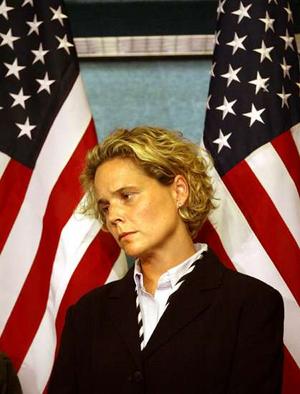


From the Sydney Morning Herald's main man in New York, Paul McGeough, September 9, 2006: Right sets attack dogs on Jersey Girl widows
The angel-faced Kristen Breitweiser had it all. She hung out in the bars on the beaches of New Jersey. She did the law degree - but did not need to practise. She eloped and married on a tiny Caribbean beach.
...
Americans warmed to Breitweiser and three other September 11, 2001, widows. They were dubbed "the Jersey Girls" as they campaigned for the US equivalent of a royal commission into the al-Qaeda attacks on Washington and New York.
...
There were shades of Thelma and Louise as they wore a path to the capital, finding the courage to stare down the President, George Bush; Vice-President, Dick Cheney; and [now] Secretary of State, Condoleezza Rice. They demanded an explanation of the failures that allowed their husbands to be incinerated in the World Trade Centre.
Do you know this story already? If not, here's some more of the background:
Ron Breitweiser's office was on the 94th floor of the World Trade Centre south tower. On the morning of September 11 he called just after the first strike, on the north tower. He assured his wife that he was safe, but she turned on the TV and within minutes she watched a huge fireball consume the top of the south tower.

The weeks that followed were numbing. But as the process of compensation was explained to families, Breitweiser's untried legal training kicked in and she wondered: if the families signed away their right to legal action as part of any compensation settlement, how would there ever be a proper public examination of what had gone wrong?
...
She met the other three widows in the aftermath of the attacks and they bonded in phone calls that went into the early hours of the morning - when they could cry without distressing their children."
A proper public examination of what had gone wrong? That was going to be a problem, because in order to have a proper public examination you need to have some political support for the idea. High-level political support. And instead there was fierce opposition -- coming from the highest level. Breitweiser's book, "Wake-Up Call" describes
Cheney as "the principal attack dog" in opposing calls for an inquiry...
and says he was
"a big fat stumbling block from day one … the puppeteer pulling strings in the background."
But they persevered. How could they not have? Their lives had been torn apart, and they wanted to know why.
They wanted to know more about the CIA's role in flying members of the bin Laden family out of the US in the days after the attacks; why workers in the towers were ordered to stay at their desks after the strikes; they wanted to know how the attacks had been executed when US intelligence agencies seemed to know so much about the attackers.
And they, along with many others, managed to raise enough hell -- and enough tough questions! -- to get an investigation started.
[T]hen they went head to head with the White House's first candidate as head of the investigation - the fabled Henry Kissinger.
Do you already know this part of the story, too?

I knew some of it...

I remember when Henry Kissinger was selected to run the investigation. The New York Times saw the appointment more or less the same way as I did, but they had to be a lot more subtle about it:

From the New York Times of November 30, 2002:
The Kissinger commission
In naming Henry Kissinger to direct a comprehensive examination of the U.S. government's failure to prevent the Sept. 11 attacks, President George W. Bush has selected a consummate Washington insider. Kissinger obviously has a keen intellect and vast experience in national security matters. Unfortunately, his affinity for power and the commercial interests he has cultivated since leaving government may make him less than the staunchly independent figure that is needed for this critical post. Indeed, it is tempting to wonder if the choice of Kissinger is not a clever maneuver by the White House to contain an investigation it long opposed. [emphasis added]
As for me, I was none too subtle. I was thinking: "Kissinger, Kissinger, Why does Kissinger's name keep popping up in this?"

I had been suspicious of Henry Kissinger since the morning of September 11th, when he appeared on TV along with scads of other current and former national security dweebs; They were all cool and composed, all saying the same thing.

I've since blogged (once!) about my personal reaction to that day; read if it you wish. My point here is just one of many that hit me hard before noon on a terrible Tuesday five years ago:

All these people, Kissinger and the others, were all saying the same thing, at the same time.

It was, as I imagine you remember very well, a time when the rest of America -- the rest of the world! -- was virtually incoherent. And to see all these guys looking cool as a cuke and riffing off slight variations on the same essential theme: That seemed very strange to me. It was almost as if they were reading from a script.

Strangely enough, the next day's Washington Post published an extended version of that script, under the byline: "Henry Kissinger".

Interestingly enough, Kissinger's piece opens with an observation that seems to support the sinking feeling I had been experiencing since the previous day:
An attack such as yesterday's requires systematic planning, a good organization, a lot of money and a base. You cannot improvise something like this, and you cannot plan it when you're constantly on the move.
Couldn't have said it better myself, Henry. Check it out! Has Langley moved lately? MI6 or Mossad looking for new presimses? If you want to talk about superior planning and organization, tons of money and lots of safe houses, look no further.

But he goes in a different direction. He even mentions Pearl Harbor. How could you not?
This [...] is an attack on the territorial United States, which is a threat to our social way of life and to our existence as a free society. It therefore has to be dealt with in a different way -- with an attack on the system that produces it.
...
the government should be charged with a systematic response that, one hopes, will end the way that the attack on Pearl Harbor ended -- with the destruction of the system that is responsible for it
...
until now we have been trying to do this as a police matter, and now it has to be done in a different way.

Of course there should be some act of retaliation, and I would certainly support it, but it cannot be the end of the process and should not even be the principal part of it. The principal part has to be to get the terrorist system on the run, and by the terrorist system I mean those parts of it that are organized on a global basis and can operate by synchronized means.

We do not yet know whether Osama bin Laden did this, although it appears to have the earmarks of a bin Laden-type operation. But any government that shelters groups capable of this kind of attack, whether or not they can be shown to have been involved in this attack, must pay an exorbitant price.
I had been expecting to see Henry Kissinger on TV on September 11th, 2001. But I hadn't been expecting to see him until the evening news at the earliest.

On September 10th, 2001, I watched a report (on a foreign TV network!) which talked about the murder of Salvador Allende and the violent overthrow of the democratically elected government of Chile. The coup, which happened September 11, 1973, was sponsored by Henry Kissinger, seemed to have been performed with as much horror as inhumanly possible, and sent Chile spinning into a black hole from which even now it has not recovered. The report was about Allende's son, who had spent his adult life gathering evidence about what had happened to his father -- and his country -- and was about to present that evidence in court, the following day. So I was expecting to see Henry Kissinger on the evening news on the evening of September 11, 2001, doing his old amoral globalist song-and-dance about how international diplomacy is different from everyday life and therefore the choices he had to make while in office were often choices between two evils.

As if normal everyday people never have to choose the lesser of two evils. As if leaving a democratically elected government in place in Chile would have been more "evil" than the murder and mayhem that followed. As if overthrowing every democratically elected government he could find was a lesser evil than some unspecified ... What? What would have been more evil than that?

What is Henry Kissinger afraid of? That we might see actual functional societies developing around us, societies in which they all manage to make a living despite -- because of -- governments that see their proper role as helping the poor while keeping a tight reign on the rich? Is that what Henry Kissinger thinks is more evil than destabilizing foreign countries in utterly horrifying ways, and getting millions and millions of people killed? Makes you wonder sometimes, doesn't it?

How did this man every get a Nobel Peace Prize? That's a tough one.

If he could do these things to foreign countries, what protects our country from the very same amoral globalist agenda? Hmmm ... another tough one.

How did this man get appointed to head the 9/11 Investigative Commission? Finally, an easy question!

Suppose you wanted to put a cap on an investigation: Who could you possibly choose who would be better equipped -- or more motivated -- to make sure nothing incriminating came to the surface?

In my mind, the selection of Henry Kissinger to head the "investigation" was absolute confirmation of my worst fears.

So you can imagine my surprise when, just two weeks later, Kissinger suddenly resigned!

Even Fox News had to report it. They led off their story this way:

From Fox News, December 13, 2002
Kissinger Steps Down From Sept. 11 Commission
Former Secretary of State Henry Kissinger stepped down Friday from his post as chairman of the panel investigating intelligence failures prior to the Sept. 11 terror attacks, citing potential conflicts of interest.
And that's about as much as I knew ... until I started digging.

Then I noticed that, the day before Kissinger resigned, there was already an indication of trouble:

Thursday December 12, 2002:
Kissinger Promises No Conflict With Panel
WASHINGTON (AP) - Henry Kissinger on Thursday promised relatives of Sept. 11 victims that his business interests would not conflict with his new role as chairman of a panel investigating the attacks, leaders of two relatives' groups said.
...
Stephen Push, a leader of Families of Sept. 11, said Kissinger outlined procedures he was considering for the commission's 10 members to disclose potential conflicts of interest. Push declined to provide details, but said it would not require Kissinger to release a list of his consulting firm's clients.

Kristen Breitweiser of September 11th Advocates described the procedures outlined by Kissinger as "a suggestion. If he is able to do the suggestion, I would be satisfied.''

Push said relatives still want Kissinger to abide by any legal requirements for disclosure. "We're not suggesting this as an alternative to following the law,'' he said.
...
Senate Democrats claim all commission members, including Kissinger, are required to submit financial disclosures that would reveal potential conflicts. That view was supported by a report issued last week by Congress' research arm, the Congressional Research Service.

But the White House claims Kissinger, as Bush's sole appointee, is not required to submit a report. It says federal law does not require presidential appointees to submit disclosures if they are not drawing salaries, as is the case with Kissinger.
So ... the White House tried to keep Kissinger in place, on the grounds that since they weren't paying for his services, it didn't really matter who else was paying him!

How typical!

But the idea made perfect sense to me -- from the White House point of view. Who better to keep the lid on a potential explosion than the "consummate Washington insider"?

It made sense to me from a different angle, as well. I recalled Bush's tortured syntax from Ground Zero, when he said "An act of war has been declared against the United States." And I wondered: "Is it an act of war, or just a crime? Or could it be a War Crime?" And then: "Who better to investigate the country's most famous war crime, than the King of War Crimes himself?"

So it all made perfect sense to me, from a number of viewpoints. But it didn't make Henry Kissinger reveal information his clients wanted secret.

And rightly so, I thought. After all, if you're a "consummate Washington insider", then you can get people what they want, and they will pay you for your assistance. But they won't want you divulging their names. Nor where they live. Nor what company or government or "other" organization they represent. All that information had bloody well better be kept in the strictest of confidence, otherwise the service is not worth all the bloody money it costs; and that number had bloody well better be kept secret, too.

You see, once you reach a certain level, once you're dealing with enough money -- and enough blood -- services such as those offered by Kissinger Associates are no longer considered criminal conspiracies involving high-level influence-peddling. They somehow transcend their basic nature and become part of "the way things are done in Washington".

But that doesn't mean Henry can talk about them in public.

The day after the Fox News report which I quoted earlier, there was something more substantial in the Pittsburgh Post Gazette, from Dan Eggen of The Washington Post

December 14, 2002:
Kissinger resigns 9/11 post
WASHINGTON -- Former Secretary of State Henry Kissinger abruptly resigned yesterday as head of a new commission investigating the Sept. 11 terror attacks, complaining in a bitter letter to President Bush that concerns about conflicts of interest could "significantly" delay the panel's work.

The departure [...] ended two weeks of intense political infighting over whether Kissinger's controversial past and influential business contacts would sully the commission's eventual findings.
...
Kissinger wrote to Bush, "For over half a century, I have never refused to respond to the call from a president. Nor have I ever put my personal interests ahead of the country's interests."
...
The withdrawal came as a surprising and disappointing setback for the White House, where officials had been convinced that Kissinger's name would bring credibility to an enterprise they had once resisted.

But the appointment had also prompted a steady stream of objections, including some from relatives of victims in the Sept. 11 attacks who questioned Kissinger's reliability and urged him to fully disclose his client list.

Kissinger met with 11 members of victims' families groups Thursday, telling them he did not believe that he had any conflicts of interest and promising to provide the families personally with details. But, according to several of the meeting's participants, he indicated that he did not intend to release the information publicly.

Stephen Push, a leader of Families of Sept. 11th, yesterday said he found "very puzzling" Kissinger's stated reason for resigning. "He told us that he had no conflicts, yet he's apparently resigning from an opportunity to serve his country so his clients can remain anonymous," Push said. [emphasis added]
So ... what really happened? What made Henry Kissinger decide to run away from "an opportunity to serve his country"?

Paul McGeough
spells it all out in Right sets attack dogs on Jersey Girl widows
[T]hen they went head to head with the White House's first candidate as head of the investigation - the fabled Henry Kissinger. The veteran Republican warrior and contemporary Washington lobbyist invited the Jersey Girls to his office for coffee, over which he was somewhat taken aback when they demanded to see his client list, to ensure that there was no conflict of interest.

Breitweiser writes: "Kissinger told us to trust him. We told him we couldn't … Kissinger seemed stunned … He didn't understand the fuss about his client list - they were all reputable people, he said.

"Kissinger seemed stricken and became unsteady. In reaching for his cup of coffee he bobbled, knocked the pot, spilled his own cup and nearly fell off the couch."
Notice! This is the same man who took the attacks of 9/11 in stride, who appeared on national television that very morning looking composed and confident -- at a time when nobody else in the whole country was taking anything in stride, and very few people were looking composed or confident about anything. And yet here he's reduced to pouring coffee all over himself, and struggling to stay seated on his own couch, all because he was asked a simple question -- one he probably was expecting!

Well, maybe he wasn't expecting it, but as a consummate Washington insider, he should have been expecting it.

As a veteran "diplomat", he has surely had extensive practice in the art of maintaining his composure. That's the first thing they teach you: "Never let 'em see you sweat."

So what happened?

Consider this angle: here's an old man with a long history of dating young, attractive women; a man who was famously quoted as having said, "Power is an aphrodisiac".

But in December of 2002, he ran into a very attractive young woman who had no respect whatsoever for him or for his power, and all of a sudden life wasn't quite so sexy anymore!!

The horror! The horror! The coffee wouldn't even stay in the cup!!

It must have been a powerful, memorable moment for Kristen Breitweiser and the other 9/11 truth activists in the room with her that day.

But there have been many powerful, memorable moments for Kristen Breitweiser and her family and friends, some not so pleasant. A few of these are mentioned in Right sets attack dogs on Jersey Girl widows
The first police visit came about a month after the attacks - a wedding ring engraved with Ron Breitweiser's name and the date of their engagement had been recovered at ground zero. Like so many others, she could not accept the finality.

In January last year, she and her seven-year-old daughter, Caroline, were making a new start, moving into an apartment in Manhattan when the friend who had acted as an intermediary with the authorities called again: "More of Ron's body parts [have been] recovered."

She writes: "It was Ron's right arm, from the shoulder on down, with his hand and fingers intact".

The shock prompted a conference call, during which the other three Jersey Girls stayed on the line as Breitweiser called the medical examiner. She explains: "[They] had lost his right arm in the freezer for three years."
After all this, being slandered by the nation's leading foul-mouthed purveyor of politically-charged fiction must not have come as a surprise. (I'll spare you the details. You can read all of Right sets attack dogs on Jersey Girl widows if you want to know more about it.)

It didn't pose much of a challenge, either. Obviously.

From Huffington Post, September 6, 2006:
Kristen Breitweiser's response to the lies published about her and her friends:
Dear Ann,

But for the murder of our husbands on 9/11, we would not have gone to Washington to fight for an independent 9/11 investigation. Our involvement in national security would have begun and ended at the voting booth, like most citizens. But for the initial failure of our leaders and elected officials to create an independent 9/11 Commission to investigate the terrorist attacks, we would not have not been forced to publicly fight for it.
Please read the whole letter!

Ah, the Queen of Hate! How much more pathetic can she get? But she's still a powerful distraction sometimes. And it does a nearly frozen blogger's heart a power of good to see her brushed off so easily -- and with such panache!

End of tangent. Full Stop. Now, where were we?

Ah, yes: we were going to see a movie, "9/11: Press For Truth", based on Paul Thompson's Timeline and featuring personal stories; in this movie, five prominent members of the Family Steering Committee tell their stories for the first time.

I have been promised that it is going to be very good. This promise, by the way, comes from one of the people who has been working on it, a person whose work I know from elsewhere, and whose standards are very high indeed.

It's a volunteer gig for my friend, and an anonymous one, too, as I understand it. So I'm not naming any names and I'm not trying to generate any cash here. But I can assure you that you will not be disappointed if you click this next link: 9/11: Press For Truth

Please visit the website: 911pressfortruth.com, watch the trailer on their site, and look around a bit. Offer them some help, financial or otherwise, if you can. Buy a DVD. Tell all your friends about 9/11: Press For Truth and ask them to help, too.

UPDATE: You can read more about 9/11: Press For Truth from our friend Michael Collins, who has written a review for Scoop and an in-depth look at one very telling sequence (for us!).

What Bomb? What Testimony?

Firefighters, Paramedics and Emergency Medical Technicians say they heard Bombs going off in the WTC


Excerpts from oral testimony provided by NYC firefighters, paramedics and emergency medical technicians, downloaded from this page courtesy of the New York Times, and transcribed by Agent99. These are only a few of many more first responders and others at the scene whose testimony has reference to bombs, explosions, holes in vehicles, burning metal and/or other evidence of controlled demolition. We have added the emphasis. Click on a name to download the full PDF of that person's testimony.

Richard Banaciski, Firefighter (FDNY)
... I just remember we were -- initially we were out by the street and they started having jumpers, so they all kind of moved back towards the building, so nothing could come down on us.

We were there I don't know, maybe 10, 15 minutes and then I just remember there was just an explosion. It seemed like on television they blow up these buildings. It seemed like it was going all the way around like a belt, all these explosions. Everybody just said run and we all turned around and we ran into the parking garage because that's basically where we were. Running forward would be running towards it. Not thinking that this building is coming down. We just thought there was going to be a big explosion.
Edward Cachia, Firefighter (FDNY)
... As I'm standing with my officer, the people are continuing to jump. Ganci is still on the radio trying desperately to get some information concerning this third plane in the air.

As my officer and I were looking at the south tower, it just gave. It actually gave at a lower floor, not the floor where the plane hit, because we originally had thought there was like an internal detonation explosives because it went in succession, boom, boom, boom, boom, and then the tower came down.

With that everybody was just stunned for a second or two, looking at the tower coming down. Then everybody started to turn towards the garage. That was it. We were just kind of blown into the garage with all the dust and the debris and material from the building. It came up rapidly right up the street.

As I remember turning, if you were out in the street somewhat, a good amount out in the street, you were kind of blown down the street, where we were kind of forced into the garage. ...
Dominick DeRubbio, Battalion Chief (FDNY)
... Going down Vesey, sort of in front of Seven World Trade Center. I knew they were airplane parts. You could see gears and pieces of airplane.
...
It was weird how it started to come down. It looked like it was a timed explosion, but I guess it was the floors starting to pancake one on top of the other.
Karin Deshore, Captain (EMS)
... when somebody just simply shouted and I have no idea who it was, it's blowing.

... It was the worst sound of a rolling sound, not a thunder. I can't explain it, what it was. All I know is -- and a force started to come hit me in my back. I can't explain it. You had to be there. All I know is I had to run because I thought there was an explosion.

I ran about 10, 12 feet up this little grassy hill and by then this force and this sound caught up with me already. I threw myself behind the last support column of the pedestrian overpass. It became pitch dark. The sound got worse, the force just kept passing me. At times I thought it was like an orange light maybe, coming past me.

... Whatever this explosion was simply sucked all the oxygen out of the air. You couldn't breathe and the feeling of suffocation, I can't explain no further than that.

... when I saw the second building of the World Trade Center, still unbeknown to me the first one had collapsed.

Somewhere around the middle of the World Trade Center, there was this orange and red flash coming out. Initially it was just one flash. Then this flash just kept popping all the way around the building and that building had started to explode. The popping sound, and with each popping sound it was initially an orange and then a red flash came out of the building on both sides as far as I could see. These popping sounds and the explosions were getting bigger, going both up and down and then all around the building.
...
So here these explosions are getting bigger and louder and bigger and louder and I told everybody if this building totally explodes, still unaware that the other building had collapsed, I'm going in the water.
...
I'm still standing there trying to figure out what my next move should be, when the same sergeant says fucking shit, it's coming at us, and that's a quote.

Again, I didn't see what was happening behind me, but knowing of all the explosions I thought here was another explosion coming and this sound again and this wave of this force again. ... Here whatever it was just came right at us again. The sergeant is yelling at one officer. The second officer was in the back with some of the people that had been in the back of the boat. I had no clue what was going on back there. The sergeant is yelling at the second officer, get the fuck out of here, get the fuck out of here. I'm sorry for using that word repeatedly. The poor guy behind the steering wheel is saying I can't go any place, we are tied on.

That is about what saved our lives, because this force came at us and hit us with everything. The boat was attempting to overturn and it kept hitting in the back against the pier.
Brian Dixon, Battalion Chief (FDNY)
... By the time I started to pass by in front of 10 and 10. As I got down a little further, there was what looked to be a piece of the cabin of the airplane, I guess. It looked like a piece of it maybe six feet long. It looked like the windows.

... This is on Liberty and just west of 10 and 10, whatever that next building is there. ... It actually looked like the rounded cutout of the windows of the cabin of a plane.
...
Ganci was just figuring out where they were putting people. I was watching the fire, watching the people jump and hearing a noise and looking up and seeing -- it actually looked -- the lowest floor of the fire in the south tower actually looked like someone had planted explosives around it because the whole bottom I could see -- I could see two sides of it and the other side -- it just looked like the floor blew out.

I looked up and you could actually see everything blew out on the one floor. I thought, geez, this looks like an explosion up there, it blew out. Then I guess some sense of time we looked at it and realized, no, actually it just collapsed.
...
As I just got in under the entrance there, I got a little ways back and it was just like -- you hear the noise, a boom, and then a blast of air. It just kind of threw me against the wall. That's where I decided to stay. Since it blew me there, I just hung on the wall.
...
So I'm out in the street and it had to be half an hour because I'm there when the second one comes down too and I'm not far north on Vesey when I hear the same noise again and look up and realize oh, this one's coming down.
...
When that one came down, I heard the rumble on that. That started to come down. Now I know I'm not alone. All of these people I see were running up West Street, and I just started north on West Street running. I don't know how far I got. I heard a boom behind me, I looked back and I knew I had to outrun the debris. I saw like 150 feet of the cloud. I figured I didn't outrun it the last time and I don't think I'm going to outrun it this time either. So I got caught up in that again, the thick cloud.
...
Maybe we were up there, because at that point they were talking about secondary devices.
Thomas Fitzpatrick, Deputy Commissioner for Administration (FDNY)
Q. Did you witness the second plane hitting?

A. I heard it but I didn't look up. The noise from the plane was enough to make you not want to look up. I thought the plane was actually going to land in the street to be honest with you. The noise was outrageous. When it hit the building it was even worse. I figured as long as I didn't get hit by the plane, we were ahead of the game. The next thing I was worried about was getting hit by the parts. Various pieces of the plane were falling in the street. As we went down the street you could see the parts of aircraft with stencil numbers on it and things like that. There was a wheel, or like a wheel housing or something else there in the street.

There were a lot of bodies coming down but I didn't pay much attention to it. For some reason I was more focused on the airplane parts until somebody started pointing out the body parts. I was particularly concerned with getting hit by something falling out of the building....
...
It was evident that we weren't going to be able to get the people above the fire. Based on the number of jumpers, we could only assume that hundreds of people were trapped.

... We assumed from the last explosion that there were big big chunks of glass coming down from somewhere. So we told him to get back against the building.

... We looked up at the building straight up, we were that close. All we saw was a puff of smoke coming from about two thirds of the way up. Some people thought it was an explosion. I don't think I remember that. I remember seeing, it looked like sparkling around one specific layer of the building. I assume now that that was either windows starting to collapse like tinsel or something. Then the building started to come down. My initial reaction was that this is exactly the way it looks when they show you those implosions on TV. I would have to say for three or four seconds anyway, maybe longer. I was just watching. It was interesting to watch, but the thing that woke everybody up was the cloud of black material. ... The black cloud was coming down faster than the building, so whatever was coming down was going to hit the street and it was pretty far out.

... It wasn't very loud but it was big. A big noise, it wasn't like a crash, like a car accident, more like a big thud. And a blast of air and debris came through the garage.

... I said the second one is coming down. This is getting to be a little bit too much.

... The reason I knew the second building was gone because the smoke drifted for a second, and the sunlight came through and I knew it wasn't an optical illusion, it was just gone. So that's all I know about the second one.

... When we were in the north tower, just before we left, there was a report of a third plane coming in from the Port Authority. I don't know if anybody knew whether to take that seriously or if it was true or not.
...
Still in the north tower. A lot of the marble in the lobby was falling off the walls, big slabs of marble were falling down. From the impact, I guess. The lobby didn't look too good. The integrity of the elevators - I started to think about the elevators. They had either blown out, cut off or could possibly have the cars coming down. The lobby was becoming an untenable place, especially if we wanted to continue operations.
Timothy Julian, Firefighter (FDNY)
First I thought it was an explosion. I thought maybe there was a bomb on the plane, but delayed type of thing, you know, secondary device.
...
You know, and I just heard like an explosion and then a cracking type of noise, and then it sounded like a freight train, rumbling and picking up speed, and I remember I looked up, and I saw it coming down, and I was able to make it across Washington and Albany.
...
It was the loudest rumbling I ever heard. The ground shook, and I got thrown down, and I remember being buried. ... I was able to stand up and push everything off me, but now I felt like I was in the street or the sidewalk, and it was hot, smoky. I felt like I was in a fire, and I remember digging my way out. A lot of cementation, powdery insulation, whatever you want to call it. Almost like being in a blizzard with metal debris right on me.

... and at that point the second building collapsed. I heard the same exact noise all over again. ...like a big wave again, a woosh, paper, and debris, and powder, and fire and smoke.
Daniel Rivera, EMT
As I was treating the patient with the laceration and the asthmatic patient, that's when the second plane hit. All I heard was just a thunderous noise. As I looked up, I saw a ball of flames coming down. So everyone ran, the patients and everyone.
...
It was a frigging noise. At first I thought it was -- do you ever see professional demolition where they set the charges on certain floors and then you hear "Pop, pop, pop, pop, pop"? That's exactly what -- because I thought it was that. When I heard that frigging noise, that's when the building came down.
...
Q. So you were still over there when the second building collapsed?

A. Right, because I ran back. Not too bright of me, of course. I ran right back in, and I was right -- I could actually touch the building when it collapsed, the second time when it collapsed.

But again, I was prepared because I heard that same noise. It was like a waterfall noise. That's when I ran.
...
We moved the vehicle. It had several holes.
Kenneth Rogers, Firefighter (FDNY)
Meanwhile we were standing there with about five companies and we were just waiting for our assignment and then there was an explosion in the south tower, which according to this map, this exposure just blew out in flames. A lot of guys left at that point. I kept watching. Floor after floor after floor. One floor under another after another and when it hit about the fifth floor, I figured it was a bomb, because it looked like a synchronized deliberate kind of thing. I was there in '93.
...
Then we went back from the North Cove harbor, we went back to the building and the second collapse occurred when -- the three of us were in the back of the building: myself, Oscar and Joe Petrich. There was a really heavy draft. My helmet just flew off into this black curtain of soot behind the building.
Albert Turi -- Deputy Assistant Chief of Safety (FDNY)
and what I actually thought at the time, and mistakenly so, was it's not as bad as it looks; most of the fuel was expended on the outside of the building. That's what I originally thought.

So we ran back to the car and laying right in back of my car was a large object which I thought was probably a part of one of the aircraft turbines. It was laying about ten feet from the car and it was still on fire, smoking and fire.

... people were jumping on that side, and ... I didn't want to be killed by someone falling on top of me.
...
Q. Let me stop you there for a second, chief. When you were in the lobby of 1 World Trade, can you describe the interior and the condition of the lobby?

A. Yes. I was surprised that all the glass was mostly out. I wasn't sure how it got out. I didn't think we took it out. I just assumed that it was the vibration from the aircraft hitting it. And I did notice some pieces of marble that looked like it was dislodged from the core area.
...
The next thing I heard was Pete say what the fuck is this? And as my eyes traveled up the building, and I was looking at the south tower, somewhere about halfway up, my initial reaction was there was a secondary explosion, and the entire floor area, a ring right around the building blew out. I later realized that this building was collapsing...

And I got about 20 feet down the ramp into the garage, I'm going to estimate 15 to 20 feet, when all the dust from debris blew into the garage like it was a hurricane force wind and I ducked into some small alcove.
...
And I started walking south on West Street to find out where Chief Ganci went when I heard this enormous roar. It was the same roar I heard when the south tower collapsed and I knew that this was collapsing. I didn't even look at it this time. I turned around and I started running north on West Street. I probably ran half a block before the dust was so choking that, if I continued to run, I thought I would die, and I laid down on the ground and put my coat over my face.
...
I guess the debris was steel and dust. Steel and dust, in some spots two stories high, in most spots ten feet high covering the entire West Street.
Thomas Turilli -- Firefighter (FDNY)
The door closed, and they went up, and it just seemed a couple seconds and all of a sudden you just heard like it almost actually that day sounded like bombs going off, like boom, boom, boom, like seven or eight, and then just a huge wind gust just came and my officer just actually took all of us and threw us down on the ground and kind of just jumped on top of us, laid on top of us.


with assistance from Agent99

9/11 Op/Eds: One Great Big Stupid Lie After Another

Hacks Scribble While the Official Conspiracy Theory Burns!

I don't know whether you've noticed, but I have: billions and billions of op/ed pieces coming out every day lately, purportedly "debunking" the so-called "conspiracy theorists" on the subject of 9/11. A glutton for punishment, I read as many of them as I can get my grubby little hands on.

One thing they do -- one thing they all do -- is fasten onto one or a few of the least plausible suggestions ever advanced by anyone who didn't believe the official story of 9/11, shred them (yes, very easy to do!) and then act as if such shredding nullifies every question raised by every person who does not believe the “official conspiracy theory" of 9/11.

The logic is stunning in its simplicity. It's as if -- bear with me; this gets better -- you're at a football game with sixty or seventy thousand other people, and a stranger sitting next to you says to his buddy, "They'll never score if they don't start throwing the ball!" And now suppose the next play is a straightforward running play and it goes for a touchdown.

Without necessarily being a professional logician, nor a master of sciences theoretical or applied, but simply as a semi-intelligent human being, you should be well-equipped to answer the following question:

What conclusion can you draw from this incident?

If you said:

"NOBODY IN THIS WHOLE STADIUM KNOWS ANYTHING ABOUT ANYTHING!!"

then you could be missing out on a career as a "9/11 conspiracy-theory" "debunker"!!

But first you must learn how to smile as you kill.

I'm smiling, friends, but I have the knives out. Look, here's something I found from Adam Harvey, in Australia: [my emphasis, here and elsewhere]

The big lie
Some media organisations such as Popular Science magazine are finally taking the theorists to task.

An exhaustive investigation by Popular Science stripped back each conspiracy to its core set of facts, and then used science and logic to reveal the truth behind the myth. A new book, Debunking 9/11 Myths, details the magazine's findings.

Popular Science found each conspiracy theory was supported by little more than shoddy research, misinterpretations of evidence, and leaps of logic that would embarrass a primary school student.
Ooooohhhh, did I hear "shoddy research"? You're ringin' my bell, Adam Harvey! Let's talk about shoddy research, shall we?

First of all, this is the internet so we need a link. Maybe an op/ed piece for a print-only newspaper can be fact-free, but on the net if you want to claim any credibility at all, you have to have at least one link!

So LOOK: this is the magazine Adam Harvey is writing about.

Note the date: March, 2005. Note Harvey's refreshingly current narrative:
Some media organisations such as Popular Science magazine are finally taking the theorists to task.
Impressive, isn't it? Hey, this guy's good!

No, wait! It gets better: Note the magazine's title.

Do you see
... Popular Science magazine ... Popular Science ... Popular Science ...
No??? That's because it's Popular Mechanics!!

Good goin', Adam.

Let's have a big round of applause for Adam Harvey, ladies and gentlemen, for his keen work on the front lines of the great American culture war, where he debunks the purveyors of shoddy research!!

Adam Harvey! What a putz!

Now look over here:
The theorists use flawed logic, says Jonathan Barnett, an expert in fireproofing who helped the official investigation into the towers' collapse.

"The fact that you don't have evidence to support your theory doesn't mean that the other theory is true," says Mr Barnett, from the Worcester Polytechnic Institute in Massachusetts.
Did you catch that last bit? That there was one beautiful sentence, but the way it was packaged here constitutes perhaps the most perfect example of flawed logic one could ever ask for.

In other words, Run that by me again??
"The fact that you don't have evidence to support your theory doesn't mean that the other theory is true"
Well of course it doesn't! Who ever said it did?

Ah, I remember now! Nobody ever said that, but somebody implied it.

Now who was that? Popular Science, of course -- I mean Popular Mechanics!

Did you recognize it? Maybe not -- I didn't catch it myself the first time. The quote from Mr. Barnett is pretty abstract. So let's flesh it out a bit, and re-cast it in terms relevant to the situation under discussion. What he's really saying is:
Even if the "conspiracy theorists" don't have any evidence to support their "conspiracy theories", this in and of itself would not prove the official story was true.
In other words, Jonathan Barnett, of the Worcester Polytechnic Institute in Massachusetts, is saying that the methodology used by Popular ... um ... Mechanics! ... wasn't worth the paper it was printed on!

But Adam Harvey ran that quote anyway, in a context where it made no sense -- unless you re-parse the beginning of the preceding sentence:
The theorists use flawed logic
and for "theorists", you read "official story theorists who wrote the piece in Popular Mechanics".

Now it makes sense again:
The "official story theorists" who wrote the piece in Popular Mechanics use flawed logic. Even if the "conspiracy theorists" don't have any evidence to support their "conspiracy theories", this in and of itself would not prove the official story was true.
Now think about this for a moment: that PM article is slick!! There's no way something that sophisticated could have been produced by people who didn't know what they were doing. And that means that the people who wrote that very slick piece must have known that any football fan who says: "NOBODY IN THIS WHOLE STADIUM KNOWS ANYTHING ABOUT ANYTHING!!" is a fool!

So ... are they counting on their readers being fools? I didn't say they were. Nor did I deny it. Nor would I.

I'm not going to say any more about Adam Harvey and his great big stupid lie. It's too easy to make fun of this guy; it's too easy to make fun of this article. What a putz!

But I will switch gears for a moment and examine another piece about the loony "conspiracy theorists", from Michael Shelden via England's Telegraph:
The CIA couldn't have organised this...

Michael Shelden runs through the usual array of trickery and tactics to try to make his point without actually having one. In a few instances it backfires on him in a very humorous way. Note this passage in which he denigrates the academic qualifications of the group, and impugns the intelligence of James Fetzer in particular:
In such a large group of "leading academics" - as one newspaper called them - there must be a few who have solid proof of a conspiracy.

Don't bet on it. Most of them aren't scientists but instructors in the liberal arts at second-rate colleges who have spent much of their careers tilting at various windmills. Professor James Fetzer of Minnesota, for example, thinks that JFK was killed by several shooters [...]
First of all I would expect Michael Shelden to show some respect for these "instructors in the liberal arts at second-rate colleges", considering the fact that he himself "is professor of English at Indiana State University"; hardly a grand bastion of academic progress, is it, Professor Sheldon?

Jim Fetzer has a Ph.D. and a mind like a hot scalpel. How about you? What have you got?

Oh, right! You've got:
Professor James Fetzer of Minnesota, for example, thinks that JFK was killed by several shooters [...]
As a matter of fact, the House Select Committee on Assassinations found (through investigation of acoustic evidence provided late in their investigation) that at least four and maybe even five shots were fired in Dealey Plaza that day, and that Lee Harvey Oswald could not possibly have fired so many shots in such a short time, and therefore they concluded that JFK was killed by multiple shooters: they said it was "probably" a conspiracy -- presumably leaving open the possibility that the "multiple shooters" just happened to be operating independently; in other words it could be that "two lone nuts" did it. But there was definitely more than one shooter. That's the conclusion of the House Committee. They were the last official body to investigate JFK's murder. And therefore their report is the officially accepted version of the day's events.

What all this means is that Michael Shelden just got caught trying to smear James Fetzer based on knowledge that Fetzer has -- and Shelden lacks!

Wee-Haahhh! Lookin' Good, Michael!! You da Mannnnn! What a putz!

In the large view, this is all trivial bickering: the main dish is the so-called evidence.

According to Michael Shelden,
It is going to take much more than five years for some real scholars to understand what happened on 9/11 and to explain what it meant.
I suppose that depends on how smart your scholars are. It took some people less than a day to figure out what had happened and what it all meant, and they would have been able to explain it to everybody in a lot less than five years if the big-mouthed know-nothings like Michael Shelden and Adam Harvey would shut up and let them talk ... and provided nobody sent them anthrax.
But one thing seems clear now - almost everyone in power over-reacted at the start. The exaggerations began with the initial reports of casualties, which were initially estimated to be as high as 20,000 dead. All of civil aviation in a country 3,000 miles wide was shut down for days because four planes were hijacked in a small corner of the north-east. Armed soldiers patrolled the airports and dozens of innocent terrorist "suspects" were imprisoned without charge. Most ridiculous of all, rumours were spread that Iraq was sitting on a pile of nuclear and chemical weapons to be launched in the next wave of terrorism.
Right! All of which make the official story seem somewhat fishy! This is a credibility issue, Michael: if they lied to us about all those things, why would anyone assume they were telling the truth about anything else? I'm not saying that lying about casualties, over-reacting about everything, slipping the so-called PATRIOT Act through Congress in the middle of the night six weeks after 9/11 are indications of an "inside job". What I am saying is: be very careful -- you know how reliable these people are -- don't take anything they say at face value.
Both Republicans and Democrats were caught up in this hysteria. They all thought the sky was falling and panicked, lashing out mindlessly at enemies real and imagined. Both Bush and the Clintons beat the drums warning of WMD.
Yes, rumors about Iraq's capabilities and intentions were spread, but this was not an accident. It was a deliberate policy implemented by the White House Iraq Group. If both Republicans and Democrats did beat the war drums and join in the same frenzy, perhaps it's because both groups were getting doctored and incomplete intelligence. And that was another deliberate policy of the White House.
The President and Congress wanted to launch an invasion in the Middle East, but not because they had planned it that way. It was just that nobody was going to be satisfied until this 21st-century Pearl Harbor was avenged with an old-style victory over an enemy state.
Come again? Bush wanted to invade Iraq before he even became president -- which, to remind Michael Shelden and anyone else who has lost track of the time-line, was BEFORE 9/11. And nobody in his or her right mind wanted to do anything to Iraq because of 9/11; we were told at the time that 9/11 was connected to Afghanistan!

Please notice that NOWHERE in this discussion has Michael Shelden written anything that had any bearing on the question of whether 9/11 was an inside job. NOT ONCE! I've turned it into a conversation in order to show that nearly everything he's saying is FALSE; not because it's relevant.

In other words, all this talk of Iraq is meaningful only in that it shows how the new history of the USA being constructed. One great big stupid lie after another.

I find it incredible that anyone could use the phrase "21st-century Pearl Harbor" in this context and still pretend 9/11 was as it appeared to be.

But there's been a lot of pretending going on for the past five years so I suppose I shouldn't be surprised.

How's this next bit for stupid?
It was the Second World War all over again, with Saddam Hussein standing in as Hitler and Bush trying to play the part of a Navy fighter pilot like his dad.
Whoa! If it was the Second World War all over again, then we've got the cast all wrong: we need the USA standing in for Germany -- invading defenseless countries on false pretexts, among a great many other crimes -- and that means Bush lines up squarely behind Hitler. And that makes perfect sense too.

Iraq would have to be Poland -- or Austria, maybe. One of the small countries overrun by the aggressors early on, anyway. But George W. Bush's grandfather would still be Hitler's personal banker.

The distortions and outright lies peddled by Michael Shelden cannot possibly be accidental. In other words, his shoddy essay couldn't possibly be a case of shoddy research. Shelden is deliberately lying here, and he's actually pretty good at it. Not good enough to sneak past the BS-detectors you'll find around this blog, but pretty good nonetheless.

He isn't a good enough liar to lecture us about the internet, but that doesn't stop him trying.
So why is it that millions of people on both sides of the Atlantic embrace his vague, unsupported charges of a vast conspiracy?

The Ohio University poll provides one clue. It found that the people who were most likely to believe in the 9/11 conspiracies were those who "regularly use the internet but who do not regularly use ''mainstream" media".
Well, what does that tell you? Internet users will tell you it's amazing how much real news is available from all over the world, and not just news but history and science and art and much else of course, that's not available in the "mainstream media" and never will be.

Did you stop to think about the fact that people watching TV or reading the paper are passively absorbing the news and opinions they get, without ever being able to ask a question? Or to express their own opinions? Whereas people using the net are looking for what they want, rather than sitting back and waiting for it to come along?

For me the most important benefit of the net is the peer-review aspect of it. If I post something that's wrong, somebody is going to bring it to my attention. The last time it happened was on the "Mother Jones" thread. Take a look; it's not pretty. I messed up, a reader pointed it out, I fixed it, we moved on, la-dee-dah.
Alone in a darkened room with paranoid cyber-friends as your only company, you can easily begin to entertain all sorts of bizarre notions, especially when trying to make sense of an event as grotesque as the collapse of two skyscrapers. And, after five years of seeing the event constantly replayed, many people have obviously become detached from the reality of the terror, and are ripe for imagining that it is a kind of computer-generated spectacle engineered by a fiendish team of Dr Strangeloves.
Quite the contrary, I assure you. Most of the people I know on the net are more intense about 9/11, and finding the real truth about it, than those who sit on the couch and watch mainstream news. You're right it was grotesque and in order to understand it you have to deal with some bizarre notions. But unfortunately the history of our country -- especially recently -- is littered with bizarre notions.

Including this one: Michael Shelden has done us a favor by marking his key point so we can't miss it. Here's his best shot:
The most persuasive argument against a conspiracy is the profound incompetence that subsequent events have revealed at every level among the supposed conspirators. The same people who are making a mess of Iraq were never so clever or devious that they could stage a complex assault on two narrow towers of steel and glass tucked alongside the Hudson River.
And there you have it, folks: Illogic twisted upon lies and spiraling in on itself in such a way that it can no longer be disentangled without grave danger. But I will try:

First of all, Shelden has never indicated just who he thinks the "supposed conspirators" were. Most of the "9/11 Truth" people I talk with -- not that I've done a formal survey, but most of the ones I know -- are Truth Seekers; not Proclaimers of so-called truth.

In order to make us go away, you can't just wave some half-assed "theory" at us and shout "that's been debunked!", because we don't have half-assed theories. We have questions. And in order to make us go away you will have to answer our questions.

Most of us have no idea what happened ... but we do know that the official story cannot possibly be true, and we want an independent investigation. Period.

Second, no matter which suspects or which crime, observations of what they did in the years following the crime cannot possibly constitute proof of their innocence.

So -- LISTEN! pay attention, now -- if this is Shelden's best argument, then he might as well just come out and say: "It must have been an Inside Job!"

Third, and most dangerous in my estimation, Sheldon makes too many unfounded assumptions. If events subsequent to 9/11 have revealed anything at all, it is this: this administration's aims are never what you think they are. They are always running a secret agenda.

They could have won the war in Iraq quickly if they had wanted to; but they didn't want to. The generals who dared to suggest that Rumsfeld wasn't taking enough troops into Iraq were shunned -- and worse! Do you remember? They were assuming Rumsfeld wanted to win the war and withdraw. But that was never the plan.

Josh Marshall was writing about the "let's get bogged down in Iraq" plan back in 2002, but nobody was listening.

Marshall wrote then that they wanted to get bogged down in Iraq so they would have a pretext to stay there indefinitely. He wrote that they wanted to get so badly mired in Iraq that no presidential candidate in 2004 could plausibly run against the war -- so that the contest would be between two pro-war candidates and therefore the war would go on regardless of who won the election. And Josh Marshall was right. They got exactly what they wanted.

They had always wanted to start a civil war Iraq. And they funded and organized death squads to hasten the process along. Now they have what they want.

And their opponents say "it's a mistake!"

Argggh! Some opponents!!

It's about empire, Michael. It's not about revenge. And it's definitely not about terrorism.

At this point, the only people who consider the Iraq War "a mistake" or "a failure" are those who didn't -- and still don't -- understand the administration's objectives in waging this war, and its implications. They don't understand the objectives or the implications of 9/11, either. And so-called journalists like Adam Harvey and Michael Shelden like it that way.

Welcome to The Ministry of Truth, the Orwellian information department where journalists rewrite the day's news, where any aspect of the nation's history can be changed at a moment's notice. Or no notice at all. All your current knowledge will now be deleted. Thank you.

Sunday, September 10, 2006

Blair Calls The Kettle Black While Labour Tries Not To Devour Itself

Afghanistan: British Troops Promised, Denied, Dying ... And NATO Wants More ... Meanwhile: Humanitarian Crisis: Mass Starvation Looms ... but Opium Production Hits Another Record Level

Originally blogged at The BRAD BLOG | September 10, 2006

Here's a quick roundup of some relevant stories from far away and even farther. Let's see whether you can spot any connection between these stories and some others, from near and even nearer:

In Great Britain, as you may already know, there is open revolt among the governing Labour Party.

From September 6th:
Gordon Brown scents victory as Blair suffers massive revolt
Gordon Brown left Downing Street tonight looking like the cat that got the cream.

After three hours of bad-tempered talks with Tony Blair, the Chancellor still wore a big smile.

Mr Brown had apparently won a promise that the Premier will finally come clean about his departure plans.

But sceptical allies of the Chancellor were still asking: Can we really believe Blair this time?

The Labour crisis came to a head after one of the most tumultuous days Westminster has ever seen.

Blairite MPs feared the Premier was being pushed to the brink of losing power as:

  • Seven Ministerial Parliamentary aides quit in protest at his refusal to name the day;

  • Junior defence minister Tom Watson resigned minutes before he was due to be sacked for signing a rebel ultimatum to the Premier;

  • His move triggered an acrimonious exchange of letters, with Mr Blair branding him discourteous, disloyal and wrong'.

  • Commons Leader Jack Straw and Education Secretary Alan Johnson met Mr Blair in Downing Street, fuelling the impression of a Premier in crisis.

  • More than 100 MPs hardened their plan to send a delegation into Downing Street this weekend to tell Mr Blair the game is up if he fails to budge.

  • Tory leader David Cameron said the Government was falling apart and called for an end to uncertainty'.


  • The day of drama, unmatched since the downfall of Margaret Thatcher, left Mr Blair at bay and Labour's claim to be a disciplined political force in tatters.
    If you're not familiar with British politics this may make no sense to you. You may be thinking "Labour? That must be like Work, with a U thrown in. And Party, well we all know what that means. So this must be an umbrella group, then; some people who work, and some people who party."

    I'd forgive you if you thought of it like that, but it's not quite right. More on that later, maybe ...

    But that was four days ago. And things didn't work out quite so simply for Gordon Brown. They never do.

    Cabinet turns on Brown in hunt for 'alternative PM'
    Gordon Brown's long-held dream of taking over as Prime Minister received a significant blow this weekend after it was revealed that up to 10 cabinet ministers are discussing backing an 'anyone but Gordon' candidate and that Tony Blair will not give the Chancellor a personal endorsement.

    Senior government figures are threatening to make the contest a bitter referendum on Brown's personal integrity after last week's vicious bout of infighting. They spent Friday discussing their choice of candidate and the mechanics of a bid after concluding they could no longer support him.

    This follows a serious breakdown between the two rival camps, culminating, according to one very close confidant of Tony Blair, in the Prime Minister telling friends: 'I have never known how mendacious he [Gordon] was, how full of mendacity.'
    Did you catch that?

    Not just mendacious but full of mendacity.

    He's a cocky and articulate little prick who spears his opponents with both adjectives (like "mendacious") and nouns (like "mendacity")!!

    Nice, fancy-pants words there, Tony. Who cares what they mean?

    mendacious:
    (adj) lying, given to lying : "a lying witness"; "a mendacious child"
    (adj) intentionally untrue : "a mendacious statement"
    mendacity:
    (n) mendacity (the tendency to be untruthful)
    So ... is this not the world's all-time most ironic example of the line about the kettle and the pot?

    Who could possibly imagine Tony Blair calling anyone mendacious?

    Only a glib, articulate, cocky little prick, a natural-born leader full of mendaciousness who can't quite get the kids to stop fighting.

    Blair Says Labor Party Must End Feuding
    Prime Minister Tony Blair warned on Saturday that Britain's Labor Party would lose power if it did not show it was "hungry for power" and halt the "irredeemably old-fashioned" personal feudings surrounding his succession.

    After a week of bitter infighting and pressure from his rival and onetime ally Gordon Brown, Mr. Blair was forced on Thursday to set a 12-month time-limit on his continued tenure after nine years in office.

    But the feuding has continued.
    ...
    Mr. Blair said, "We are not going to win if we have personal attacks by anybody on anyone because it turns the public off and makes them think we are interested again in ourselves and not in them."
    Right! We have to show that we are hungry for power but we want that power for the public and not for ourselves. Again! Gotcha, Tony!!

    Gordon Brown must be wondering whether he wants the job after all!

    And your prize, Gordon, is ... a poisoned chalice
    The rise of dissent against Blair can be mapped against two events: Labour’s decline in the opinion polls and the alignment of the government’s foreign policy with America’s.
    Those seem like one event to me. I mean, did the polls go south before or after Britain aligned its foreign policy with America's? Or more to the point, if hypothetically just suppose pretend if ever Britain were to cut herself loose from the Americans, would that result in a gain or a loss at the polls? Or maybe we should look at it from a different angle: suppose Britain remains in lockstep synch with the Americans on all "foreign" matters. How much and in what direction could those polls be swayed?

    Here's something else American readers might not understand right away: in Britain, probably because their system of government is so much more primitive than ours, it still matters what people think -- and an unpopular government can be toppled in a heartbeat!

    Some kinda primitive! But I digress...
    Labour finally lost its patience with Blair over his support for Israel in Lebanon. Following the catastrophe of the Iraq war, it was the last straw. The pressure is on Brown to divorce himself from the United States. He has kept (disgracefully) silent on Iraq and Lebanon, so his options are open. But it would be amazing if he began his premiership by pulling out of Iraq (and/or Afghanistan), causing a breach with Washington. He could not easily put an honourable gloss on a British retreat.

    Nor can we assume that the next US president will favour early troop withdrawal. It will be difficult for any presidential candidate to campaign as anti-war without appearing un-American. In any case, most of the presidential hopefuls have a track record of supporting the Iraq war.

    So it is likely that Brown, struggling to control a party accustomed to flexing its muscles and from which he cannot demand loyalty, will trail in the polls, and will not reverse Blair’s unpopular foreign policy positions.
    So ... the next British Prime Minister -- no matter who -- is going to be bound by a blood oath, one sworn in his absence, no less: Stay The Course!

    Staying the course is not going to be easy; it was never going to be easy; only the maddest of hatters would even bring the word "easy" close to a phrase like "troops in Afghanistan".

    Britain has fallen down a rat-hole.
    Into the Long War
    Many people expected that the termination of the Taliban regime nearly five years ago would mean that Afghanistan would no longer be a country of concern, and would be able to make the transition to peace for the first time in nearly three decades.

    Instead, the past few months have seen a Taliban revival that is causing concern around the world and may suggest that the 2001 war is actually far from over.

    Some analysts were predicting a Taliban resurgence last summer, but that did not happen, almost certainly because the Taliban were developing their capabilities and planning for the longer term.

    Instead, it has been this year that has seen the upsurge, most worryingly with Taliban units able to operate in groups of a hundred or more, in marked contrast to their much smaller-scale activities in recent years.
    ... where stuff like this happens with ever-increasing frequency:

    Afghan suicide attack kills 16
    A suicide bomber smashed his car into an American military vehicle just yards from the U.S. Embassy in downtown Kabul on Friday morning, killing as many as 16 people and wounding 29, Afghan and American officials said.

    The bombing was one of the most powerful to shake the capital since American forces drove the Taliban from power in 2001. The U.S. military issued a statement confirming the deaths of two American soldiers and said two others were wounded.

    The Afghan police at the scene put the toll at 11 civilians and five American soldiers killed, including a woman soldier. Witnesses said they saw three American soldiers lying in the street. Other soldiers might also have been killed, they said, as the blast ripped apart the armored Humvee, making it hard to believe anyone inside could have survived.

    Soldiers later pulled shredded American uniforms off the trees and picked up body parts. A seat from the Humvee was left hanging in a tree.

    Kabul residents said they were bracing for still more violence as they prepared to mark the five-year anniversary on Saturday of the death of the warlord Ahmed Shah Masood, who was killed by two Qaida suicide bombers in an assassination linked to the 9/11 attacks. The Kabul bombing came amid a sharp escalation of violence in Afghanistan, where NATO and American military commanders are waging an offensive to crush a Taliban insurgency that has revived with unexpected strength this year.

    Suicide bombers have struck more than 50 times in the last year, killing more than 100 civilians. Most often the attacks have come in the country's south, where the insurgency thrives.
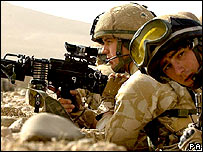
    But don't worry! We support the troops! We've got your back!! Yes Indeed and Jolly Good, Old Chap! ... and Let's Roll! too ... but in the meantime it turns out that Britain originally promised to send more troops to help the troops already there; then didn't send 'em. Guess who got ambushed? Oops!

    Troops die as UK holds back Afghan reinforcements
    BRITAIN agreed to provide an extra 800 troops to allied forces fighting the Taliban in southern Afghanistan but later withdrew the offer, Nato officials disclosed last week.

    Lieutenant General David Richards, the commander of Nato forces in Afghanistan, planned to use the 800-man force as troubleshooters, sending them into any area where fighting broke out.

    However, John Reid, then the defence secretary, was so angry at the reluctance of other Nato countries to supply troops that the offer was retracted.

    Reid, who famously said that he hoped British troops would leave Afghanistan without firing a single shot, indicated that the UK would send no more troops other than the 3,300 men to be based in Helmand province.

    Last week the US general in charge of Nato made the obvious link between the shortage of troops and the casualties faced by the allied forces in southern Afghanistan.

    Appealing to Nato countries to send more soldiers, General James Jones, Supreme Allied Commander Europe, said: “It will help us to reduce casualties and bring this to a successful conclusion in a short period of time.”
    Well, that's what they say. That's what they always say ...

    But would sending 'em have been an even bigger mistake?

    We may find out soon because NATO wants more ...

    NATO Officials Want More Troops for Afghanistan
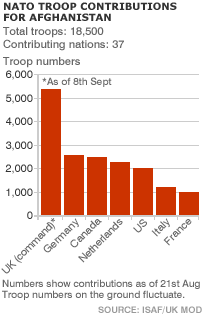
    Senior military officials from NATO’s 26 nations agreed Saturday that they needed more troops and fewer limitations on the use of their forces to step up the fight against insurgents in the violent south of Afghanistan.

    NATO planners have said they want 2,000 to 2,500 extra troops, plus helicopters and transport aircraft, to fuel the offensive in the south.

    “Our collective assessment is that we are satisfied with military-related progress to date, particularly in the north and in the west but less so in the south,” Gen. Ray Henault, a Canadian who was chairman of the talks, said at a news conference.
    ...
    “Raising the number of troops will be a political decision,” he added.
    Hmmmm ... a political decision? Hmmmm ... hadn't thought of that before!

    What to do? What to do?

    Well, what are our frozen friends thinking?

    Funny you should ask. There's a loud and growing chorus of "get us outta there" being sung in The Great White North:
    NDP delegates vote for Afghan troop pullout
    The New Democratic Party has made it official party policy to oppose the current mission in Afghanistan and to call for the immediate withdrawal of Canadian troops from there.

    On Saturday, NDP delegates at a party convention in Quebec voted overwhelmingly in favour of leader Jack Layton's call for a pullout.

    About 90 per cent of more than 1,500 delegates voted for a "safe and immediate" withdrawal from the region, which has seen a spike in Canadian casualties recently.

    Sustained applause swept over the convention floor after officials announced the vote results.

    "We have a really strong show of support from our members here today," Layton told reporters following the vote.

    "Now we're calling on Canadians to join with us in calling on the Harper government to change the track he's currently on with (U.S. President) George Bush."
    Oooh, a great many Canadians are very unhappy with their new pro-US minority government ... and for a variety of reasons:

    NDP slams Harper Tories
    NDP Leader Jack Layton saved his toughest words for Harper's foreign policy, which he said is moving in lockstep with U.S. President George W. Bush, while avoiding the world's most significant issues.

    "When it comes to those issues affecting human security on this planet, our government is dramatically and significantly failing to take action," Layton told reporters.

    "All of the focus has been on the issues and the world view as identified by George Bush and what he regards to be the greatest threat," Layton said.

    Thus, he said, the Conservatives are ignoring crises such as the AIDS pandemic, global poverty and climate change.

    "The toll is taken in lives. This isn't political rhetoric," he said.
    ...
    Speaking at the convention was an Afghan parliamentarian who says Canadian soldiers are fighting to sustain a government that includes murderers, rapists, drug-dealers and warlords.

    Malalai Joya says the new government is just as repressive as the Taliban and is even more dangerous because it has powerful international support.

    "They are like brothers of the Taliban and this is the main reason why the security situation in Afghanistan is getting worse and worse," Joya told Canadian Press.
    ... so the battles continue, have continued, will continue, have always continued, will always continue ...

    Nato forces battle Taliban in southern Afghanistan
    Nato forces battled Taliban holdouts in the deserts of southern Afghanistan today amid a security crackdown in the capital after at least 16 people were killed by a suicide bomber.

    Ali Shah Paktiwal, head of the police crime bureau, said officers were checking every main intersection in Kabul after Friday's blast near the US embassy, which killed at least two American soldiers.
    ...
    A resurgent Taliban have mounted daily attacks during the summer, primarily against foreign forces in the south where Nato took over security from the United States at the end of July.
    ...
    Many military officials and analysts say the fighting in Afghanistan is now heavier and worse than Iraq.
    ...
    More than 2,300 people have died his year in the Taliban resurgence that has led to the heaviest fighting since US-led troops toppled the hard-line Islamists.
    ...
    The guerrillas have moved beyond small-scale hit-and-run operations to pitched battles and larger strikes, sheltering and training in Pakistan despite efforts by Islamabad to stop them.
    What to do? What to do?

    The mixed messages don't really help much, truth be told.

    Taliban `surrounded' in stronghold -- But general wants 2,000 more troops
    PANJWAII, Afghanistan—Canadian commanders said yesterday a NATO assault in southern Afghanistan has Taliban forces "surrounded" and on the verge of collapse.

    But a different assessment seemed to come from Warsaw, where a Canadian general said at least 2,000 more North Atlantic Treaty Organization troops are needed to battle the region's unexpectedly strong insurgency.
    ...
    "There's good indication that they are on the brink of collapse in a number of different areas," said Lavoie, commander of Canadian troops on the ground in Afghanistan. He gave few details as to how he reached the conclusion.

    "Like most insurgents, they don't have the sustainment ability to have long, protracted engagements. What we see is mostly hit-and-run tactics."
    Mostly Hit-And-Run Tactics? This is worth mentioning? This is surprising?

    Sniff Sniff Sniff. Fishy Fishy Fishy. They're using hit-and-run tactics! Who could have guessed??

    What to do? What to do?

    Nato Afghan troops talks continue
    A number of Nato soldiers, most of them British or Canadian, have been killed in recent weeks.

    Gen Henault urged member states to send "all the people and the capability" that had been signed up to.

    "We are currently at about 85% of the requirements and want the remainder," he was quoted as saying by AFP news agency.
    ...
    Officials from Turkey, Germany and Italy have expressed reluctance to move their troops from reconstruction work in safer parts of Afghanistan to the troubled south, our correspondent adds.
    Of course, all this is doing the people of Afghanistan an enormous amount of good:

    UK charity warns of Afghan famine

    Millions of people in Afghanistan face starvation after a drought destroyed crops, a UK charity has warned.

    A Christian Aid survey of 66 villages suggests farmers in the worst affected areas have lost all their produce.

    The aid agency is urging the British government and international bodies to give money to prevent people starving in north and west Afghanistan.

    The crop failure comes as fighting continues in the south between the Nato-led troops and the Taleban.

    Most of the water has dried up in the provinces of Herat, Badghis and Ghor, and the wheat harvest is down by 90% to 100% in parts of Faryab province, the study indicates.

    The Afghan government has set up a drought appeal which needs £41m.
    Well, not all the people are starving. In fact some of them are making money by the kilogram!

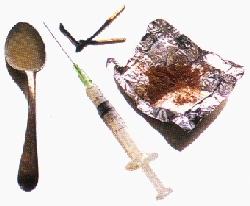
    Afghanistan ready to flood Europe with first-grade heroin
    For the umpteenth time now, Afghanistan is breaking all records in opium production, and is ready to flood Europe with first-grade heroin.

    According to the United Nations Office on Drugs and Crime (UNODC), the area sown to opium poppy has increased this year by 59%, and reached 165,000 hectares against 100,000 hectares last year, while the gross opium harvest will amount to 6,100 tons.

    Afghan experts maintain that this year opium will be exceedingly rich in morphine. A mere seven kilograms of raw opium will produce one kilogram of heroin.

    This ratio is very rare. Usually it takes from 10 to 15 kilograms of opium to make this amount.
    ...
    UNODC Executive Director Antonio Maria Costa has dispelled the illusions about Europe's potential anti-drug action at the international conference on Afghan drugs in Moscow. In his words, pilot ISAF involvement for the destruction of opium fields and chemical labs did not produce the desired effect in 2005, but only generated tension in relations with the locals. Now the efforts will concentrate exclusively on logistics and training of the Afghan personnel.

    Inadvertently, Maria Costa also put an end to the myth about "caravans with drugs" next to the U.S. and ISAF troops. There are caravans indeed, but with precursors rather than drugs both in Afghanistan, and especially around it. Precursor is any chemical reagent, which takes part in the production of a toxic chemical by any method. From two to six tons of acetic acid anhydride is a reagent required to produce heroin from one ton of raw opium.

    Maria Costa said that more than 10,000 tons of this anhydride was brought to Afghanistan last year to produce heroin from the 4,000 tons of raw opium harvested. This was a real caravan of more than 500 twenty-ton trailers.

    The acetic acid anhydride is not made in Afghanistan, and is only available in China, India, and Russia. It is a real mystery how such caravans can remain unnoticed in Afghanistan with its poor road network, or in approaches to it.
    It can't ALL be about money, can it? No, not quite!

    Al Qaeda Finds Its Center of Gravity
    OVER the last year, as Iran, Iraq and Lebanon have dominated headlines, hopes of gaining firmer control of a largely forgotten corner of the war on terrorism — the lawless Pakistan-Afghanistan border region — have quietly evaporated.

    On Tuesday, the Pakistani government signed a “truce” with militants who have resisted Pakistani military efforts to gain control of the region, which is roughly the size of Delaware. The agreement, which lets militants remain in the area as long as they promised to halt attacks, immediately set off concern among American analysts.

    Al Qaeda’s surviving leadership is suspected of using the border areas as a base of operation to support international terrorist attacks, including possibly the July 2005 London subway bombings. Meanwhile, the Taliban leadership is widely believed to be using another border area to direct spiraling attacks in Afghanistan.

    “There’s a link with broader international terrorism,” said Robert Grenier, the former top counterterrorism official for the Central Intelligence Agency. “There’s a link with what is happening in Afghanistan. Al Qaeda, such as it is now, really has its center of gravity in the area.”
    ...
    Analysts say the problem in the border region is an explosive mix of conditions: a lack of government authority, a vast amount of weaponry and the rise of Islamic militancy. Until the 1980’s, the area was ruled by local tribes, whose brute self-government kept the population isolated and impoverished but allowed for a degree of stability.

    In the 1980’s, the American-backed anti-Soviet jihad unfolded in the region and began to wear away longstanding tribal structures. Huge piles of weapons and cash empowered Islamist organizations to open dozens of training camps, hard-line mosques and conservative religious schools along the border. In the 1990’s, the Taliban emerged there.
    Huge piles of weapons and cash from where?

    The Taliban emerged how?

    You can start connecting the dots now ...

    But no matter what sorts of connections you make, always remember: there's
    One friend Britain must stand by
    If the next prime minister is a real leader, and not a mere implementer of the latest public opinion trends, he will take a firm stand against the seductive anti-Americanism that has Britain and much of Europe in its grip.

    He should state, categorically, that whatever our reservations, whatever our irritations, Britain will stand with America. Not because Britain is a weaker power that has little choice, or in the hope of some quid pro quo, but because it is the right thing to do.
    ...
    The post-Blair foreign policy should above all seek to elevate the British public’s vision above the trials and errors of the past five years. It should remind the people that America represents still, as it has for the past 60 years, the last best hope of freedom.
    One would hope for a slightly sharper analysis, at this point, surely. Dismissing all the deliberate and clearly criminal behavior of the Bush administration(s) as "trials and errors"??? Puh-lease!

    But on the other hand, "elevating the British public's vision" might be a good idea -- if their collective vision could somehow be elevated to the point where they could recognize what they -- and we -- are dealing with here!!

    Oops! I nearly forgot: If you're a world leader, it almost never hurts to be away from home during a domestic crisis, especially if you can can spend some of your time impersonating a statesman.

    Blair to meet Palestinian leader
    Tony Blair is to meet the president of the Palestinian Authority on the second day of his visit to the Middle East.

    The prime minister's meeting with Mahmoud Abbas comes a day after he met the Israeli Prime Minister Ehud Olmert.

    Mr Olmert said he was ready to meet the Palestinian leader to advance peace efforts. It follows Mr Abbas's calls for fresh negotiations with Israel.

    Mr Blair will not be meeting the leaders of the Hamas-controlled Palestinian government.
    Well then. I guess that's settled, too.

    What else? Only one question still outstanding, I believe. And the question is: Why?

    Why is Tony Blair such a glib articulate little prick?

    Because that's exactly the type that was needed to play the role he has played -- the role he will allegedly vacate before the end of May, 2007. Supposedly.

    Many Americans do not "get" this. And that's easy to understand, because in America, the type needed to play the corresponding role is almost the opposite: a glib inarticulate cocky little prick.

    And you see, the glib inarticulate cocky little prick we have in America right now is so thoroughly incompetent -- not so much "intellectually challenged" as "comprehensively defeated" -- that I would have bet (Euros to crumpets) on the glib articulate cocky little prick being in office long after the glib inarticulate cocky little prick was dismissed. Or hanged. Or both.

    But apparently I was wrong. This makes twice so far that I've been wrong. Oh well. No wonder I don't make my living at the racetrack! But don't tell anyone, and I'll cover for it by insisting I've never been wrong at all, and if that doesn't work I'll call all my critics "crazy conspiracy theorists" ... and it that fails, I'll do my statesman impression.

    Should keep me going till the spring, anyway ... maybe even longer ...

    Hey, Wait!!! I've got an idea!!

    What if I Launched a Peace Mission???

    Blair Launches Mideast Peace Mission
    Mr. Blair opened his visit in Jerusalem, meeting with Israeli Prime Minister Ehud Olmert. At a joint news conference, the British Prime Minister said they discussed shoring up the fragile cease-fire in Lebanon and reviving the Israeli-Palestinian peace process.

    "The majority of people here, I'm sure, want to see what the majority of people in my country want to see, which is a Middle East that is stable, and democratic, with people living side by side in peace. It is very easy to be pessimistic in the light of everything that has happened recently, but I do believe that with good will and the right leadership it can be done," he said.
    Sure, Tony. But where is "the right leadership" gonna come from? Unless it turns up by next May, you're cooked!

    Ahhh, well, never mind. You're cooked anyway.

    Tuesday, September 5, 2006

    Report: NATO Troops Requested For Pakistan!

    Unrest following killing of 'rebel leader' Nawab Akbar Bugti doesn't want to go away ...

    Online News [Pakistan] September 6, 2006: NATO forces be deployed in Balochistan: BNP [emphasis added, here and below]
    ISLAMABAD: Abdul Rauf Mengal MNA of Balochistan National Party (BNP) has said he will resign from his assembly seat as per party decision today to register protest against killing of Nawab Akbar Bugti (photo).

    He said this while addressing a press conference in cafeteria of parliament here Tuesday. He told BNP had decided to resign from senate , national assembly, provincial assembly and district government.
    ...
    He alleged the incumbent government and the generals are murderers of Nawab Akbar Bugti. Forces be withdrawn from Balochistan and NATO troops be deployed there.
    What? Did we miss something?

    Apparently! Somewhere in between the hunt for the real reason why Rashid Rauf was arrested and the stunning interruption in the Pakistani cricket tour to Britain, we did miss something of importance. I've been meaning to blog about it, but in the midst of everything else it hasn't quite risen to the top of my To-Do List -- until now!

    Quotes and links from relevant stories you may have missed, below the fold:

    BBC News, August 27: Pakistan says key rebel is dead
    Tribal leader Nawab Akbar Bugti has been killed in a battle between tribal militants and government forces in Balochistan province, Pakistan says.

    The battle near his mountain hideout in south-west Pakistan caused heavy casualties, reports say.

    At least five soldiers and at least 30 rebels are thought to have died.

    A 24-hour curfew has been imposed in the city of Quetta where hundreds of students from Balochistan university rioted at news of the death.

    The octogenarian was at the head of a tribal campaign to win political autonomy and a greater share of revenue from Balochistan's gas reserves.
    Press Trust Of India, August 28, 2006: Balochistan in flames after Pak Army kills top leader -- Bugti killed in missile attack: Red alert across Pak, curfew in Quetta after riots; Pak Opposition warns of 1971-like situation
    Prominent tribal leader Nawab Akbar Bugti was killed in a Pakistani Army missile attack in the restive Balochistan province that also left 38 armed rebels and 21 security personnel dead, triggering massive rioting during which a protester was shot dead.

    Pakistan was put on high alert and curfew imposed in the provincial capital Quetta, a day after 80-year-old Bugti was killed after the Army launched air strikes in the mountains of the province where the rebel chieftain was hiding.

    “It is confirmed Nawab Bugti has been killed in an operation,” Information Minister Muhammad Ali Durrani said here. The Baloch leader’s son-in-law, Senator Agha Bugti, also said Bugti was killed in the military operation. Reports said the hideout of Bugti was discovered through a satellite phone tracking system.

    Besides the British-educated tribal leader, 38 armed rebels, including Bugti’s two grandsons, were killed in the fighting. Twenty one security personnel also lost their lives, media reports quoted Defence officials as saying.

    As news of Bugti’s death spread, parts of Balochistan, including Quetta, experienced heavy violence and rioting. Angry mobs ransacked and torched banks, petrol pumps and government offices and vehicles. People also fired on police, said Quetta’s top police official Syed Muhammad.
    Abdul Sattar on the AP wire via the Houston Chronicle, August 27: Riots grow over tribal chief's death -- Some fear his killing by troops will widen conflict, radicalize youths
    QUETTA, PAKISTAN - Mobs burned shops, banks and buses in a second day of rioting over the killing of a top tribal chief by Pakistani troops, raising fears that a decades-old conflict in the country's volatile southwest could widen.

    Former Prime Minister Nawaz Sharif told Pakistani television that Nawab Akbar Bugti's death Saturday was "the darkest chapter in Pakistan's history."

    Police arrested 450 people for rioting, but the violence spread from Baluchistan province into neighboring Sindh province, where ethnic Baluchis burned tires in Pakistan's largest city, Karachi.

    Political leaders and analysts feared the killing of 79-year-old Bugti, a champion of greater rights for ethnic Baluch tribespeople, could influence more young Pakistanis to take up militancy.
    AP's Abdul Sattar again, this time via The State [South Carolina], August 28: More rioting hits southwestern Pakistan
    Opposition ethnic-Baluch lawmakers denounced the government in a rowdy provincial assembly session in Quetta and vowed to avenge Bugti's death.

    "This is a major event in Baluch history. We didn't join this country in 1947 to have our tribal elders, political leaders and children killed," said opposition leader Kachkul Ali Baluch.

    Three opposition lawmakers were briefly taken into custody in Quetta but were freed after questioning about the street violence, said Mayor Mir Maqbool Ahmed Lehri.

    Bugti died when Pakistani troops, backed by helicopters, attacked his cave hide-out in the Kohlu area, about 140 miles east of Quetta, officials said. Authorities say the cave's roof collapsed, killing Bugti and 24 of his fighters.
    and there's a lot more...

    Pakistan Dawn, September 1: It’s target killing: Marri
    KARACHI, Aug 31: Veteran Baloch leader Sardar Khair Baksh Marri has described the killing of Nawab Akbar Bugti as a target killing. In an interview, he said he feared for the life of his own son, Balach Marri, because the government had the ‘mistaken notion’ that Marri was the epicentre of all anti-state and terrorist activities, and Balach Marri was an ‘icon of resistance’.

    He also said that it was an untimely ‘mode of resistance’ and the late Bugti should have adopted it in the early days.

    Sardar Marri said he was not against Punjabis as a whole but detested the fact that Punjab did not practically endorse the rights and autonomy of smaller provinces.

    He accused them of colluding with the ‘establishment’ in usurping the rights of other provinces. About the life and safety of Nawab Bugti’s grandsons, he said that he prayed for their safety and was determined to assist them.

    About the committee which had been formed to held talks with Nawab Bugti, he said it was a camouflage to hide the real intentions of the government.

    He said that a team had approached President Gen Pervez Musharraf with assurances of holding dialogue with Mr Bugti, but the president backed out because the dialogue would have involved only the JWP chief while others would have stayed out of it without making any commitment. —Online
    In between everything else, I'll try to keep you up-to-date on this very interesting -- and potentially volatile -- situation.

    Wednesday, August 30, 2006

    NYT Blocks British Readers from Monday's Article on Alleged Liquid Bombing Plot

    Paper not shipped to UK on Monday; NYT web page blocks British visitors

    Monday's New York Times included a long article about the alleged "liquid bombing plot", which -- as you may recall -- was reportedly broken up by British authorities three weeks ago.

    The article "claims to reveal new information", and would certainly have been of great interest to NYT readers in Great Britain.

    But they couldn't read it!

    From Tuesday's Guardian: UK readers blocked from NY Times terror article
    The New York Times has blocked British readers from accessing an article published in the US about the alleged London bomb plot for fear of breaching the UK's contempt of court laws.

    Published in the US yesterday under the headline "Details emerge in British terror case", the article claims to reveal new information about the alleged terror bomb plot that brought British airports to a standstill earlier this month.

    Online access to the article from the UK has been blocked and the shipment of yesterday's paper to London was stopped. The story was also omitted from the International Herald Tribune, the NYT's European sister paper.
    Today's Guardian has a bit more, including this:
    For all the precautions taken by papers, legal experts agree there is little to stop bloggers and others from quickly disseminating articles around the globe via websites, messageboards and email.

    Mark Stephens, a media lawyer at Finer, Stephens, Innocent, said he did not believe the article was prejudicial and blocking it would increase the likelihood of British readers reading it.

    "Lawyers have a tendency to be overcautious on occasions," he said. "By not publishing it, it is almost inevitable that the information will come into the public domain in the UK. It is already being copied on to blog sites and emailed around the globe.
    Mr. Stephens is certainly right about that!

    The article in question is available at the NYT website, unless you live in Great Britain, in which case you have to look elsewhere: here, for instance.

    Excerpts from the article follow, along with a few comments from one very cold blogger:
    Hours after the police arrested the 21 suspects, police and government officials in both countries said they had intended to carry out the deadliest terrorist attack since Sept. 11.

    Later that day, Paul Stephenson, deputy chief of the Metropolitan Police in London, said the goal of the people suspected of plotting the attack was “mass murder on an unimaginable scale.” On the day of the arrests, some officials estimated that as many as 10 planes were to be blown up, possibly over American cities. Michael Chertoff, the secretary of the Department of Homeland Security, described the suspected plot as “getting really quite close to the execution stage.”
    We now know that these official statements -- from Stephenson, from Chertoff, and from many others as well -- were speculative at best, deliberate lies at worst.
    British officials said the suspects still had a lot of work to do. Two of the suspects did not have passports, but had applied for expedited approval.
    ...
    One official said the people suspected of leading the plot were still recruiting and radicalizing would-be bombers.
    ...
    While investigators found evidence on a computer memory stick indicating that one of the men had looked up airline schedules for flights from London to cities in the United States, the suspects had neither made reservations nor purchased plane tickets, a British official said.
    So they weren't ready to blow up airplanes after all. They weren't ready to do anything!

    So why all the panic? Because it serves a purpose, that's why!

    What purpose? Whose purpose?

    Is it any wonder that these questions are never asked in the mainstream media?

    And here's another important question that is hardly ever asked: Could they have done it?
    Despite the charges, officials said they were still unsure of one critical question: whether any of the suspects was technically capable of assembling and detonating liquid explosives while airborne.
    ...
    A chemist involved in that part of the inquiry, who spoke on the condition of anonymity because he was sworn to confidentiality, said HMTD, which can be prepared by combining hydrogen peroxide with other chemicals, “in theory is dangerous,” but whether the suspects “had the brights to pull it off remains to be seen.”
    Your humble and nearly frozen blogger has done some research into HMTD, and has found that its synthesis is remarkably similar to that of TATP (which we discussed last week). In other words, once the chemicals are mixed, the reaction takes a long time -- several hours at least, maybe several days -- to complete, and produces an explosive compound in the form of crystals which must be filtered out before they can be used.

    Among the HMTD recipes I have found, the one which seems to take the least amount of time includes the following instructions:
    [K]eep stirring for 3 hours and continue to hold the temperature at 0°C [32°F]. Next, remove the beaker from the cooling bath and let it stand at room temperature for 2 hours [...] Finally, pour the solution over a filter to collect the crystals of HMTD, wash them thoroughly with water, and rinse with methyl or ethyl alcohol so they can dry faster at room temperature.
    So ... even though we joined the party in progress, we were still five hours away from being able to blow anything up. Do you think the flight crew would leave us alone in the bathroom for more than five hours?

    Whether anyone on earth has the "brights" to pull it off -- in the bathroom of a moving airplane and without help from the flight crew -- is extremely dubious.

    But let's get back to the New York Times:
    While officials and experts familiar with the case say the investigation points to a serious and determined group of plotters, they add that questions about the immediacy and difficulty of the suspected bombing plot cast doubt on the accuracy of some of the public statements made at the time.

    “In retrospect,” said Michael A. Sheehan, the former deputy commissioner of counterterrorism in the New York Police Department, “there may have been too much hyperventilating going on.”
    Hyperventilating? Possibly. Or maybe -- just maybe -- it was something else.

    As for the timing of the arrests, you may recall that serious questions were asked almost three weeks ago, and none of them found satisfactory answers.
    British officials said many of the questions about the suspected plot remained unanswered because they were forced to make the arrests before Scotland Yard was ready.

    The trigger was the arrest in Pakistan of Rashid Rauf, a 25-year-old British citizen with dual Pakistani citizenship, whom Pakistani investigators have described as a “key figure” in the plot.
    ...
    Several senior British officials said the Pakistanis arrested Rashid Rauf without informing them first. The arrest surprised and frustrated investigators [t]here who had wanted to monitor the suspects longer, primarily to gather more evidence and to determine whether they had identified all the people involved in the suspected plot.
    But they didn't get a chance to do that.
    [W]ithin hours of Mr. Rauf’s arrest on Aug. 9 in Pakistan, British officials heard from intelligence sources that someone connected to him had tried to contact some of the suspects in East London. The message was interpreted by investigators as a possible signal to move forward with the plot, officials said.
    ...
    A senior British official said the message from Pakistan was not that explicit. But, nonetheless, investigators [...] had to change their strategy quickly.

    “The aim was to keep this operation going for much longer,” said a senior British security official who requested anonymity because of confidentiality rules. “It ended much sooner than we had hoped.”
    ...
    British investigators worried that word of Mr. Rauf’s arrest could push the London suspects to destroy evidence and to disperse, raising the possibility they would not be able to arrest them all.
    And here we are left with more questions, among the most interesting of which is: Why was Rashid Rauf arrested?

    A few days after the arrests were announced, NBC ran a report which said:
    One senior British official said the Americans also argued over the timing of the arrest of suspected ringleader Rashid Rauf in Pakistan, warning that if he was not taken into custody immediately, the United States would "render" him or pressure the Pakistani government to arrest him.
    Is this what happened?

    Did the Pakistanis arrest Rashid Rauf to keep him out of the hands of Americans?

    We may never know.

    But surely it's becoming more and more obvious that this so-called "plot" was not what we were told it was at the time.

    Therefore, it makes good sense to ask: What was it?

    Stay tuned, my friends; there's more to come.

    ===

    seventh in a series