Showing posts with label John Kerry. Show all posts

Friday, October 17, 2008

Hypothetically Speaking ...

IF an "election" takes place next month as planned, and IF Barack Obama leads in the polls before the "election", and IF huge numbers of Democratic-leaning voters are illegally barred from voting, and IF exit polls show Obama winning anyway, and IF John McCain then gets "elected" "president" ...

THEN what do you think Obama will do about it?

A) The same thing as Al Gore?, or
B) The same thing as John Kerry?

To comment on this post, please click here and join the Winter Patriot community.

Thursday, March 13, 2008

The Return Of Winter Soldier

This weekend, marking the fifth anniversary of "Shock and Awe", Iraq Veterans Against the War are holding an educational event which they call "Winter Soldier" (see their press release here).

The phrase comes from a passage by Thomas Paine [shown in the portrait at right], the most famous pamphleteer of the first American Revolution -- a passage you can read at the top of my sidebar. As you can see, Paine didn't speak of "winter soldiers" directly, but instead referred to their "opposites": the summer soldier and the sunshine patriot.

Some of the men who fought in the (revolutionary) Continental Army did so on a seasonal basis; they joined in the spring or summer, and left in the fall (to harvest their crops) or in the winter (when the weather turned cold). Many of them re-joined when the weather warmed up again (or after their crops had been planted). For obvious reasons, these men were called "summer soldiers".

Meanwhile, some of the civilians who supported the revolution did so only when it was going well; otherwise they supported the King. These "fair-weather friends" of the revolutionaries were called "sunshine patriots".

So the name "Winter Soldier", like my own nom-de-plume, "Winter Patriot", signifies a deeper commitment than that made by the summer soldiers and the sunshine patriots of Thomas Paine's time.

In 1971, a group of Vietnam veterans, including future Senator and presidential candidate John Kerry, convened in Detroit to describe what they had seen and done that led them to believe their country had committed war crimes in Vietnam. They called their exposition "the Winter Soldier Investigation". It was mostly ignored in the media of the day; a documentary film was made and that was mostly ignored, too. In fact the only aggressive publicity it ever received came in 2004, when its memory was roused to smear Kerry as "unfit for command" while he was "running against" George W. Bush.

Notwithstanding the media suppression of this important historical event; notwithstanding the way in which the anti-war vets were smeared for their efforts; notwithstanding the nauseating sight of John Kerry himself trying to outflank the warmonger on the side of more: more troops and more allies for more War on Terror; the men who came home and told the truth of what they saw and did in Vietnam went above and beyond the call of duty. They served their country in a way which it did not appreciate, and still doesn't. And they are still being smeared.

This weekend, in Silver Spring, MD, veterans of the wars in Iraq and Afghanistan will testify concerning a new generation of war crimes and crimes against humanity.

It goes without saying that they will be vilified, and in fact the attack dogs are already out in force. But to those who want the truth, they're putting it within reach.

You can watch them on satellite TV or via streaming video on the net. And all the proceedings will be archived for viewing at your convenience.

The event begins at 7PM EDT tonight (Thursday); to get an idea of what to expect, you can watch the following videos:


The IVAW site is busy but that's no surprise; it's the place to be at the moment.

Wednesday, January 24, 2007

Kerry Goes Out In A Blaze Of Glory

For the very first -- and surely the only -- time since his sudden, and thoroughly unwarranted appearance at the forefront of the 2004 donkey "campaign", John F. Kerry has done something that made me very happy.

Good luck and good riddance to the world's tallest living spineless skunk, ever to be remembered as the faux-opposition's pseudo-candidate in the ersatz election of 2004.

And that's nothing to be sneered at; he'll be prominently mentioned in the most important footnote of the still-to-be-written classic, "History of Post-Democratic America".

Sunday, January 7, 2007

"Gross Incompetence", "Political Malpractice" : Terry McAuliffe on the Kerry Campaign

Terry McAuliffe, former chairman of the Democratic National Committee, has a new book coming out, in which he says, among other things: "I thought the decision of the Kerry campaign to back off any real criticism of Bush was one of the biggest acts of political malpractice in the history of American politics."

Further details from Nedra Pickler of the AP via the Boston Globe and the Miami Herald:
The book, "What a Party! My Life Among Democrats: Presidents, Candidates, Donors, Activists, Alligators and Other Wild Animals," goes on sale Jan. 23, but copies have already shown up in some bookstores.
...
McAuliffe calls the Kerry campaign gun-shy, incompetent and distracted from the mission of defeating a more organized Bush campaign.

McAuliffe said the Massachusetts senator's presidential campaign was so afraid of offending swing voters that it didn't defend his record and backed away from criticizing Bush at critical turns.
...
McAuliffe served as chairman of the Democratic National Committee from 2001 to 2005, although he says Kerry's aides wanted to oust him once the Massachusetts senator secured the nomination. He said he was never invited to a single meeting at Kerry headquarters.
...
McAuliffe said he was muzzled by Kerry's aides from assailing Bush's military record. He said the campaign also ordered speeches at the Democratic National Convention to be scrubbed of any mention of Bush's name or his record...
...
McAuliffe said he was "flabbergasted" to learn after the election that Kerry had $15 million left that he could have spent in the final push. "It was gross incompetence," McAuliffe said, "to hoard that money when the race was bound to be so close."
Can you remember all the way back to the summer and fall of 2004? I thought it looked like Kerry was trying to lose. Maybe he wasn't, but he sure wasn't trying very hard to win. That much was clear even to this outsider.

And it's amusing to see a donkey insider coming along more than two years later attributing the campaign to incompetence. Or at least it's partly amusing. It would be amusing if it weren't so pathetic? Something like that, anyway.

Wednesday, November 22, 2006

Tony Blair Makes a Donation -- to a Government including an International Terrorist

Tony Blair went to Pakistan last weekend with a quarter of a billion pounds in his back pocket and high hopes of making a trade, but from the look of things he only made a donation.

'Tis the spirit, one month early, perhaps?

Blair's meeting with ex-General (now-President) Pervez Musharraf was a great success for Musharraf, but not for Blair.

Blair's visit to Pakistan was apparently part of a concerted effort to break a deadlocked struggle for an extradition treaty.

The money -- a 250-million-pound increase for "moderate Islamic madrassas" (schools which teach Islam without violence!), raising Britain's contribution from 230 to 480 million pounds (almost a billion dollars) over the next three years, must have seemed to Blair a reasonable quid-pro-quo.

To shorten a long story somewhat, the moderate madrassas of Pakistan got the money, or at least the Pakistani government did, but Tony Blair didn't get the treaty.

Merry Christmas to the moderate madrassas of Pakistan.

Pakistan and the UK have been haggling over an extradition treaty for years, especially in the three months since August 10th, when the so-called "liquid bombers" were arrested (and their alleged plot to mix so-called explosives out of common household liquids aboard a moving airplane was reportedly foiled).

The arrests were said to have been triggered by the capture in Pakistan of one Rashid Rauf, alleged ringleader and/or messenger and/or explosives expert and most certainly the suspects' al-Q'aeda connection.

According to reports from Pakistan, after (or perhaps during) (or maybe even before) his arrest, Rashid Rauf (or possibly an associate of Rashid Rauf) supposedly sent out a text message allegedly giving the so-called plotters a "green signal".

Never mind that only one of the alleged plotters had bought an airline ticket.

Never mind that some of the alleged plotters still didn't even have passports.

Green! Green Green! Go! Go! Go!

Hop aboard transatlantic flights from Heathrow to The Great Satan, mix your liquid bombs along the way, and blow those planes out of the sky in the name of Allah!


So the alleged plotters either started getting this message and the British police feared they would start the attack rolling, or else British police feared they would get the message and start running away, but in any case the alleged plotters were arrested on the night of August 9th and the following day.

And all the airports (especially Heathrow) went on red-hot-alert, vigilant against liquids and pastes and suspicious murky substances in all carry-on luggage, despite some rather awkward circumstances.

For instance,the so-called conspirators had allegedly been caught, so what were we supposedly worried about?

And then: it takes several hours -- or maybe several days -- working in carefully controlled conditions, to make explosives out of common household liquids, and the process yields crystals which must be filtered and dried before they can be used.

No "terrorists" could possibly make a bomb aboard a plane without considerable assistance from the flight crew. And we know that's never going to happen. So what's the plot?

It has been suggested that the arrests were timed with politics in mind, and it would be tough to disagree, especially given the track record of our so-called governments with such events.

Despite this alleged plot having supposedly triggered so many changes in both North America and Europe, there has been very little discussion of the workings of the alleged plot itself.

One British official was especially helpful on this point when he declared that the police were certain they were investigating "an alleged plot".

This was a considerable point in his efforts to assure all the reporters that the authorites were actually responding to an actual "alleged plot", rather than something less or more sinister.

As for the alleged plot itself, the most recent detailed status report was published by the New York Times, which then decided not to ship any papers to Britain that day, and set up special software on their server to block British visitors from reading it online, unless they looked elsewhere.

Since that report, we've almost lost sight of the plot, winding up instead with half a dozen sub-plots, one of which involves Britain's suddenly-enhanced desire to negotiate an extradition treaty with Pakistan so that Blair and associates can get their hands on Rashid Rauf.
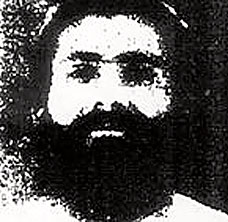
The Pakistanis seem to be doing the best they can to shield Rashid Rauf, short of simply saying, "You can't have him." Pakistani officials didn't even admit they were holding him on charges pertaining to the alleged liquid bombing plot until late in October.

Before that, they said he was being held on two charges, one related to altered travel documents and the other not related to terrorism! They've refused (or simply ignored) a request from Rashid Rauf's family to bring him to court, and they still haven't announced the specific charges under which he is being held.

And maybe they have a good reason for not doing so.

As Nafeez Mosaddeq Ahmed has pointed out, there's been precious little serious discussion of any of this in the British press during the past few months, and none of course on the American side, while airports all over the so-called free world now limit each passenger to a one-liter (1 qt) clear ziplocked plastic bag containing bottles and/or jars of no more than 100ml (3 oz) each.

It may seem extreme but it's better (for the passengers) than the red-hot-alert constraints, where passengers couldn't carry-on any liquid, cream or gel except for mother's milk, and then only if they had a baby with them and then only if the mother tasted the milk before boarding (to show the security guards it was really milk and not acetone or hydrogen peroxide or sulfuric acid!)

In one telling episode, William Blum wrote about a friend who had been prevented from carrying ice cream onto a plane, on the grounds that the ice cream might melt and become a liquid!

And even though Rashid Rauf's name hasn't appeared much in the western press, the Pakistani press has been mentioning him once a week or so, and with more or less the same story-line almost every week, buried amongst other news of the day:

A Pakistani official, asked about the status of extradition treaty negotiations and the prospects of Rashid Rauf being extradited, gives a more-or-less standard non-commital answer which somehow seems to imply that even though there's no extradition treaty, Rashid Rauf may soon be extradited.

And sometimes we see hints that a treaty is in the works or that his extradition is being considered. But so far nothing of the sort has happened.

Perhaps it's because of a lack of evidence?

Meanwhile, it's not just airport security that has changed. Authorities on both sides of the ocean have used the so-called plot to generate tremendous fear and to support a whole new wave of terror alerts, all of which have proved to be bogus or premature or overblown or all of the above.

And in the meantime, habeas corpus has been shredded in the US (not just for foreign terrorists but potentially for any law-abiding American), and Europe has been "harmonising security arrangements", slip-slidin' away to a place marked "continental police state".

So, for instance, there have been long lines and big delays at the airport in Cyprus because each passenger there is entitled to carry-on only a single one-liter clear ziplocked plastic bag containing an unlimited number of bottles and/or jars, each of no more than 100ml.

These restrictions, I must say, make it very difficult for "terrorists" to mix a bomb out of liquid explosives aboard a plane.

By my calculations, if you had...

  • a litre of the right liquids, in the right proportions, and sufficient ice (for the reactants must be kept cold),

  • enough glassware (lab-quality, unless you wish to blow yourself up prematurely without hurting anyone else),

  • enough time (at least six to eight hours, more likely three to four days),

  • proper ventilation (these are strong acids you're working with, and the smell of acetone is not exactly subtle),

  • and a proper filtering system (although an aircraft-quality serviette might do in a pinch -- at any rate this is the least of your technical problems),

  • ...you could possibly create (now pay attention, because this is important!) up to eight grams (a quarter of an ounce) of explosive crystals!

    (You'll excuse me, I hope, if I don't link to the bomb recipe from which I'm borrowing these numbers; I don't want to encourage anyone. I found a page whose owner was ecstatic over getting 8.3 grams of explosive crystals from a batch made in a one-litre flask, and since that was the largest yield I ever saw reported anywhere, 8 grams of crystals per batch seems like a generous estimate.)

    According to experts in the field, if you had a shaped charge, properly packed, and properly placed, you could conceivably knock a hole in the fuselage of a commercial aircraft using only 250 grams (half a pound) of explosive crystals.

    This means it could take as few as 32 passengers, all on the same flight, each carrying-on a litre of the right liquids, in the right proportions, each willing and able to find a separate private area in which to work undisturbed for at least six to eight hours, possibly three or four days.
    They couldn't all work together, of course, because if they pooled their resources and mixed all their liquids together, somebody would probably notice -- and it would smack of conspiracy!

    But if 32 passengers, acting independently, somehow fashioned a shaped charge containing roughly 250 grams of explosive crystals, without actually working together, it wouldn't really be a conspiracy, would it?

    So they might -- just might! -- be able to pull it off. Be very afraid.

    They would probably need only another 50 or 60 passengers in support, carrying-on the required glassware and ice (hopefully in insulated carry-on coolers).

    In other words, it would only take about 80 or 90 terrorists, working together but separately for six or eight hours, or maybe three or four days, to bring down a commercial aircraft using a bomb made from explosive liquids.

    As all can plainly see, the danger is certainly clear and present, the threat will obviously last at least a generation, and this is clearly a good enough reason to shred some fundamental legal rights, such as habeas corpus; we might as well legislate some immunity for war crimes already committed, while we're at it.

    So ... that's the reason for the plastic bags, and all the little bottles and jars, and the warnings about how al-Q'aeda terrorists might revive the liquid bombing plan in order to wreak havoc on unsuspecting intercontinental travelers this holiday season.

    And that's also why Tony Blair wants Rashid Rauf, but of course there's no extradition treaty between Pakistan and the UK, and that's why Tony Blair has just been visiting Pakistan looking for one. He hasn't been successful, not yet anyway.

    But he may not need it right away, as British authorities have announced the trial of the alleged liquid bombers will not begin until 2008 -- probably not until after Easter. So Blair still has time to work on a deal before the "speedy" trial begins. It might cost him another billion, and then again he still might not get it; we can only wait and see.

    If Tony Blair is wondering why he's been having so much trouble with Pakistan, supposedly a key ally in the war against terror, he might pause to consider what may have happened had he arrived in Pakistan three days earlier than he did.
    Had he landed on Tuesday rather than Friday, he could have enjoyed reading about Tanvir Hussain, the retired Pakistani army major, now a member of the Pakistani parliament and in fact the parliamentary Secretary of Defense, who declared on that day in a parliamentary debate that he had been a member of the banned terrorist group, Lashkar-e-Taiba (aka LeT) (aka LT).

    LeT is "the military wing of the Markaz-ud-Dawa-wal-Irshad (MDI), an Islamic fundamentalist organisation which advocates a fully Islamic India, and whose military wing has been involved in bombing attacks against India since 1990", according to Wikipedia.

    India and Pakistan have been at odds for a lifetime, having fought three wars against each other in the past sixty years. And they've just recently begun talking again after a horrific July 11 bombing attack against passenger trains in Mumbai.

    LeT are suspected of involvement in those bombings, as well as many other large and extremely violent attacks, including the Delhi train bombings of October 29, 2005, and the London train bombings of July 7, 2005.

    So this was probably a bad time for a Pakistani MP to say he had been a member of LeT.

    Initially I got the impression he was saying he was a former member. But is that really what he meant when he said "I have been a member of LeT"? Is he a "former member"? Well, not quite.

    According to more detailed accounts, published in India and Australia but not in Pakistan, Tanvir Hussain went on to explain that he is still associated with LeT, he goes to their conventions, he makes speeches for them there, and he gives them additional help when they ask for it.

    He claims he's a jihadi, not a terrorist, and I don't think anyone can argue with him on this point, since everyone knows one man's terrorist is another man's jihadi.

    Anyway, a Pakistani spokesman reportedly said we shouldn't worry about it, that we should focus "on what governments do and not on what individuals say". I'd find his advice easier to take if the individual in question were not part of the government, but nonetheless...

    Plus c'est la meme chose, plus c'est la meme chose.

    In other words, the status is still quo, for the most part. Tanvir Hussain is still an MP and the parliamentary secretary of defense. Nobody in Pakistan is screaming for his resignation, or even for a retraction. They probably just want him to stop talking.

    In the global game of foot-in-mouth, John Kerry's got nothin' on Tanvir Hussain.

    Meanwhile, Tony Blair still doesn't have an extradition treaty, and Rashid Rauf is still in Pakistan, looking more and more unlikely to face extradition. The only substantial difference is the money.

    Tony Blair just gave Pervez Musharraf an additional 250 million pounds for what appears to be three more years of more of the same.

    We're told we're at war against a network, not a country. We're told it's the elusive nature of the terrorist organizations -- networks of small and mostly independent "cells", with operational knowledge shared on a need-to-know basis -- that makes them so difficult to counter.

    Without hinting at how closely this form of organization follows standard CIA tradecraft, I can't avoid mentioning that the way to trace connections in such a network is to "follow the money".

    In this case the money -- an additional 250 million pounds sterling, nearly half a billion more dollars -- went from the government of a country which is said to be fighting terrorism, to the government of another country which is also said to be fighting terrorism, but whose parliamentary secretary of defense is closely affiliated with a notoriously violent terrorist -- oops! notoriously violent jihadi -- organization.

    Does this implicate Tony Blair in international terrorism? Is the UK money-laundering hundreds of millions through Pakistan to known terrorists? Was it simply a misguidedly hoped-for deal that didn't quite work out? Or does Blair sincerely believe that giving millions of pounds to Pakistan to promote non-violent schooling will give him the edge in the phony war on phony terror?

    Who can say? Tony Blair says we're finally fighting terrorism properly, so I guess we're bound to win sooner or later. Whatever that means.

    ===

    eighth in a series

    Wednesday, November 1, 2006

    Kerry's October Surprise -- It's No Surprise! They're All Liars!

    In the current brouhaha over John Kerry's supposedly troop-bashing remarks, two points stand out clearly. First, the political climate has become so toxic that nobody dares to tell the truth. And second, the truth is so toxic that hardly anybody dares to think it, much less express it.

    Here's a short video clip of Kerry making the comment that has caused the stir:

    ... in which he says: "... education. If you make the most of it, study hard, do your homework, make an effort to be smart, you can do well; if you don't, you'll get stuck in Iraq."

    Speaking of "stuck", we are now stuck in a "firestorm" which seems to have been deliberately set. Was Kerry's remark Karl Rove's October Surprise? I am not the first person to ask this question, nor the second.

    As usual, in the midst of storms such as this, we are seeing and hearing all sorts of rhetoric but very little reality.

    Spokesmen for the White House and Republicans everywhere else are falling over themselves in their hurry to proclaim the troops in Iraq "heroes" and "patriots".

    For instance, former "hero" John McCain, who endured torture at the hands of the North Vietnamese but returned to his country, where he now commits acts of treason on a regular basis, said
    Kerry "owes an apology to the many thousands of Americans serving in Iraq, who answered their country's call because they are patriots and not because of any deficiencies in their education."
    Kerry himself refused to apologize (at first), saying
    he had been criticizing Bush, not the "heroes serving in Iraq."
    For the benefit of Senator Treason, Sentaor Foot-In-Mouth, and anyone else who cares, let's look at some of the hard truths which nobody -- except a few brave and educated patriots -- dares to mention in these poisoned times.

  • The more education you have, the more options you will find open in life. Joining the military is -- for normal people -- at the very bottom of the list. Therefore the longer the list, the less chance you have of winding up stuck in Iraq.

  • The US military has repeatedly lowered its standards to allow people to join the Army who would otherwise have been rejected for lack of qualifications.

  • The American invasion, destruction and occupation of Iraq has killed more than six hundred thousand people who posed no threat to us. Six hundred thousand innocent souls dead. Is this what heroes do? Since when?

  • Anyone who joins the Army without knowing what it does to its victims and what it will do to him is a fool, no matter how much education or intelligence he or she supposedly has.

  • Anyone who joins the Army in full knowledge of what it does is much worse than a fool.

  • John Kerry has done more for the Bush presidency than any other so-called Democrat with the possible exception of Joe Lieberman.


  • Nobody wants to say any of these things out loud, but as far as I can tell they are all true.

    So there, I've said it. Now ... what's next?

    How about a new video featuring Tim Osman -- oops! I mean Osama bin Laden -- talking about the CIA's -- oops! I mean al-Q'aeda's plans to make mincemeat out of us all?

    Yeah, that would be a good November Surprise...

    ... if it hadn't been done so many times before.

    Haven't had enough? Kurt Nimmo has some more interesting reflections on this very sad scene.

    Thursday, August 17, 2006

    Judge Calls NSA's Covert Spying Program Unconstitutional, Orders It Stopped Immediately (updated thrice!)

    Administration Gets Stay Of Execution, Pending Appeal; Meanwhile They're Trying To Pass A New Law To Make It Legal: But The Tricky Little Question Never Mentioned In Today's News Has Not Escaped This Nearly Frozen Blogger

    Today (Thursday), in Detroit, a federal judge ruled that the illegal covert spying program put in place by the Bush administration is unconstitutional and ordered the administration to stop it immediately. But the administration has given every possible indication of its unwillingness to comply.

    According to an article by Tom Brune, in Newsday this evening:
    U.S. District Judge Anna Diggs Taylor ruled that the controversial program violates privacy and free speech rights, the separation of powers, and the law passed to govern domestic surveillance.
    Brune also reports:
    White House spokesman Tony Snow said, "We couldn't disagree more with this ruling."
    If you remember pre-totalitarian America, you'll recall that court rulings were once considered the law of the land, regardless of whether or not the White House agreed. But things are very different now. So different, in fact, that Attorney General Alberto Gonzales, who is theoretically in charge of seeing that justice is done in this country, heaped contempt on Judge Taylor's ruling, saying:
    "We will continue to utilize the program to ensure that America is safer."
    Safer from what? Our Constitutionally-protected freedoms?

    According to the decision rendered by Judge Anna Diggs Taylor,
    "The public interest is clear, in this matter ... It is the upholding of our Constitution."
    Further,
    "There are no hereditary Kings in America and no powers not created by the Constitution. So all 'inherent powers' must derive from that Constitution," she wrote.

    "It was never the intent of the Framers to give the president such unfettered control, particularly where his actions blatantly disregard the parameters clearly enumerated in the Bill of Rights."
    Ahhh, the Bill of Rights. How quaint. Right, Alberto?

    Brune points out that the administration may be able to wiggle out of the ruling by using a very shifty strategy for their appeal.
    [S]ome constitutional experts questioned whether Taylor's ruling will survive the government's appeal to the 6th Circuit in Cincinnati, Ohio, and possibly to the Supreme Court.

    Those courts could simply reject the case by saying the plaintiffs lack standing to bring the lawsuit, since they cannot prove the government eavesdropped on them because it is a state secret, the experts said.
    If they can't get the case dismissed on that technicality, they will most likely be forced to fall back on their favorite time-tested techniques: denial and obfuscation.

    According to David Stout in the New York Times,
    Mr. Gonzales said he remained confident that the program was constitutional, and that Congress had given the president all the authority he needed when it authorized the use of military force after the Sept. 11 attacks.
    Thus covert spying is conflated with the use of military force, allegedly to protect the country.

    The dirty little secret in all this has been protected by the mainstream media, but as Abraham Lincoln so correctly said, "You can't fool all the people all the time."

    Tom Brune:
    The New York Times revealed in December that after the Sept. 11 attacks President George W. Bush had authorized the National Security Agency to intercept the international calls and e-mails of suspected terrorists between contacts here and abroad.
    David Stout:
    The judge’s ruling is the latest chapter in the continuing debate over the proper balance between national security and personal liberty since the attacks of Sept. 11, 2001, which inspired the eavesdropping program and other surveillance measures that the administration says are necessary and constitutional and its critics say are intrusive.
    I've read many other accounts telling essentially the same tale: that the administration initiated this covert illegal spying program after September 11, 2001; that the program is essential to preventing "another 9/11"; and that we might have been able to avoid 9/11 altogether if the program had been in place before then.

    But can we be so sure?

    Spy Agency Sought U.S. Call Records Before 9/11, Lawyers Say
    The U.S. National Security Agency asked AT&T Inc. to help it set up a domestic call monitoring site seven months before the Sept. 11, 2001 attacks, lawyers claimed June 23 in court papers filed in New York federal court.

    The allegation is part of a court filing adding AT&T, the nation's largest telephone company, as a defendant in a breach of privacy case filed earlier this month on behalf of Verizon Communications Inc. and BellSouth Corp. customers. The suit alleges that the three carriers, the NSA and President George W. Bush violated the Telecommunications Act of 1934 and the U.S. Constitution, and seeks money damages.

    "The Bush Administration asserted this became necessary after 9/11,"' plaintiff's lawyer Carl Mayer said in a telephone interview. "This undermines that assertion."'
    Consider the implications: If the secret illegal spying program was in place before 9/11, then it could not have been instituted in response to the attacks of that day. And therefore it can't properly be called part of the War on Terror.

    What, then, could be its purpose?

    If it's not part of the so-called War on so-called Terror, then what is it part of?

    The undeclared War on Political Dissent in America?

    I'm just asking!

    NOTES: Both Tom Brune's piece in Newsday and David Stout's report in the New York Times have been changed since I first read them.

    Unlike what happened to the New York Times article which I quoted in a piece yesterday, these changes are superficial and do not significantly change the meaning of the report. Or do they?

    Newsday has changed its headline from "Judge orders halt to Bush's domestic spying" to "Domestic spying declared unconstitutional", and clarified a few phrases. You can find the text of the previous version here.

    The NYT piece has the same headline as before, but four paragraphs have been added at the end. Maybe it's an insignificant thing, but the previous version left the last word with Judge Taylor:
    “Implicit in the term ‘national defense’ is the notion of defending those values and ideas which set this nation apart.”
    And the newer version ends on a much different note, from Republican Senator Bill Frist:
    “We need to strengthen, not weaken, our ability to foil terrorist plots before they can do us harm,” he said. “I encourage swift appeal by the government and quick reversal of this unfortunate decision."
    You can find the original text of that article here.

    UPDATE 1: In the interests of full disclosure: This is not the original version of this article. I have removed one passage and changed the wording of another, upon being advised that a source I had quoted was unreliable. I apologize to anyone who read the previous version.

    I admire the writers and editors who update their writing in the interests of clarity and/or truth. I think that's what happened to the Newsday article. I know that's what happened to this one.

    UPDATE 2: Let's look at the NYT piece again. After their first posting, they added two paragraphs of comments from each side, and they just happened to quote the Republicans last.
    Democrats said Judge Taylor saw things the right way. “Today’s district court ruling is a strong rebuke of this administration’s illegal wiretapping program,” said Senator Russell D. Feingold of Wisconsin. “The president must return to the Constitution and follow the statutes passed by Congress. We all want our government to monitor suspected terrorists, but there is no reason for it to break the law to do so.”

    Representative Ed Markey of Massachusetts, a senior Democrat on the House Homeland Security Committee, said the administration should stop “poking holes in the Constitution” and concentrate on “plugging holes in homeland security.”

    But Republicans lined up behind the administration. "America cannot stop terrorists while wearing blinders,” said House Speaker J. Dennis Hastert. “We stop terrorists by watching them, following them, listening in on their plans, and then arresting them before they can strike. Our terrorist surveillance programs are critical to fighting the war on terror and saved the day by foiling the London terror plot.”

    Senator Bill Frist of Tennessee, the majority leader, agreed. “We need to strengthen, not weaken, our ability to foil terrorist plots before they can do us harm,” he said. “I encourage swift appeal by the government and quick reversal of this unfortunate decision."
    Two Democrats, then two Republicans.

    Does that matter?

    The Newsday piece only has one paragraph of comments from each side, but it also quotes the Republican last.
    The ruling also touched off partisan political sniping. Sen. Harry Reid (D-Nev.), the Senate Democratic leader, charged, "The administration's decision to ignore the Constitution and the Congress has come at the expense of the security of the American people."

    Republican National Committee Chairman Ken Mehlman responded in a statement attacking Democrats and the 73-year-old judge, who was appointed by President Jimmy Carter: "Liberal judge backs Dem agenda to weaken national security."
    What do you think? Do you think that matters?

    I can remember reports from the fall of 2004 about "John Kerry for President" rallies where the last paragraph consisted of quotes from Karl Rove.

    Does that matter?

    When I was debating I always wanted the last word.

    Was that stupid?

    UPDATE 3: Now that I've been thinking about balance and fairness and so on, I've decided to leave you with two more links -- editorials from USA TODAY:

    James S. Robbins, NSA program is vital tool; and

    USA TODAY Editors, Wiretap ruling affirms that presidents aren't monarchs.

    Sunday, July 10, 2005

    Reading Robert Parry

    The following links lead to excellent columns by Robert Parry. They used to reside on the sidebar but now they have a post of their own...

    Thursday, May 26, 2005

    Another Crack In The Wall

    The Australian blogger "Gandhi", writing on his blog, Bush Out (by Gandhi), has lately been reporting on [and may have helped to cause] another crack in the propaganda wall.

    Here, excerpts from [and links to] a few posts which seem especially significant:

    Background from a Jan 24 post: Iraq The Model: The Full Story
    It's no secret that the Iraqi blog "Iraq The Model" - run by brothers Omar, Mohammed and (till recently) Ali Fadhil - provides US neo-conservatives with a magnificent piece of public relations. The Fadhil brothers say they want to tell the world about all the good things that have been happening in Iraq since the US invasion, and they do so even while ignoring the endless violence, the growing anarchy and the horrific scandals which grab the attention of most other Iraqi bloggers. While the world was being shocked by photos from the Abu Ghraib torture scandal, for example, the Fadhil brothers were earnestly discussing the merits of the new Iraqi flag. Arch neocon Paul Wolfowitz has frequently cited the blog while urging the global media to take a more positive line on events in Iraq. In the lead-up to the 2004 US elections, two of the Fadhil brothers even met with Wolfowitz and George W. Bush in the Oval Office.

    Rampantly pro-war websites regularly link to the blog as proof that ordinary Iraqis love what America is doing in Iraq, despite any number of polls showing that the Fadhil brother's views are totally out of touch with popular Iraqi thought. "Iraq The Model" is not quite the PR equivalent of the rose-petal-strewn streets that neocons once predicted would greet US troops, but it's about as good as it gets for these militant ideologues. Even the name fits snuggly with the neocon mantra that Iraq will soon become a model for other countries in the region.

    ...

    "Iraq The Model" provides an online oasis for people who would rather ignore the harsh facts of daily life in Iraq under US occupation. It's the perfect information cocoon for those who - like neocon leader Douglas Feith - would rather dwell outside the "reality-based community". And it goes a long way to explaining how George W. Bush achieved four more years in office.

    ...

    I can accept that many Iraqis, keen to be rid of Saddam Husseins' brutal tyranny, welcomed the US invasion with open arms. And I can understand that people overwhelmed with bad news might want to set up a blog for good news stories, if only to cheer themselves up. But the Fadhil brothers' unquestioning support of all things US, coupled with their seeming disinterest in the suffering of their fellow Iraqis, was more that a little strange.

    If these guys really are Iraqi dentists, I thought, why aren't they talking about the decaying state of Iraq's hospitals, or the appalling lack of medical supplies? And why do they tolerate the outrageously militant, rude, racist and otherwise abusive comments by some visitors to their blog, while banning pacifists like me who seek to engage in honest debate?

    In my opinion, there was only one rational explanation. The "Iraq The Model" blog exists not for the sake of its authors or their fellow Iraqis, but for the sake of its many pro-war US visitors, who have already donated over US$10,000 to the Fadhil brothers, plus another US$14,000 for the brothers’ off-shoot political party, the Iraqi Pro-Democracy Party.

    So are the Fadhil brothers just a bunch of opportunistic Iraqis making money from dumb Americans, I wondered, or are more sinister forces at work? I started digging through the links at Iraq The Model to find out what was really going on.
    Click here and read the rest of the article to see the results of the early digging. Lots of connections, lots of money, very interesting stuff. And this issue has been simmering on the back burner at Bush Out (by Gandhi) ever since.

    Just recently, there's been a a break in the story, as Gandhi reported on May 21: Ali Fadhil Exposes Spirit Of America Lies
    Well, about time. Ali Fadhil has finally explained what really happened between him, his brothers and Jim Hake's Spirit of America "charity". I congratulate Ali for speaking up:
    I'm disappointed because they lied to us, both Iraqis and Americans. They used my brothers (and still are using them) to get to their goals which have nothing to do with the interests of Iraq or America. They are reassuring Americans that a great job is being done in Iraq through their donations, where in fact the good things that were accomplished are so small and so lacking that they should be ashamed of mentioning them. Not to mention that there are harmful things done without them caring to do anything about it.

    I'm not sure what SoA's real agenda is but it seems to me that Jim has some personal political ambitions that he wants to achieve through SoA. This has become more obvious to me before and during that trip to America. But let me offer some details about my personal encounter with SoA's team (which I tried to avoid mentioning) and why I grew suspicious about them...
    Ali looks closely at SoA's stated goals in Iraq and reveals how little of substance has really been achieved.
    There were 7 objectives included in SoA "Friends of Democracy" project. What happened to these projects that were receiving donations for months now and that are still featuring on their website? I'll tell you what I know...
    Ali also reveals some "strange behavior" from original SoA bigwig (now sacked) Kerry Dupont.
    Besides her unacceptable behavior, Kerry Dupont told us lies after lies. One of which and the easier to mention here is that she told us that if Jim did not approve of the budget then she has 300 000$ that we could use to do what we want, but we told her that we prefer to deal with SoA...
    Now where would Kerry Dupont have got $300,000, unless she had a very big piggy bank, or some very close ties to the people handing out cash in Paul Bremer's Iraq?

    Ali says SoA CEO Jim Hake was shocked to hear about Dupont's offer, but more concerned that the scandal would mess up his planned meeting with the Fadhils, Bush and Wolfowitz in the White House. Here's Ali's analysis:
    That should tell us something about the man's priorities and how important that trip was for him. He wasn't concerned about the "great job" we were about to do or the great relationship that was ruined; no he was only concerned about the trip.

    Jim wanted to meet Bush SO bad and he knew he would never get that chance without our help, which is what he admitted to Mohammed later. But he didn't even ask for our help. He used us to get to what he wanted while telling us lies and giving us a vague schedule for the trip. I told my brothers more than a month before the trip, "these people want us to meet Bush" they didn't believe me at that time....

    The "deal" about the meeting was also that Bush would mention SoA in one of his speeches, and don't ask me who set up this deal because I really am not sure who's the other part and what were they benefiting, but it is what I heard from Mohammed who heard it from Jim himself.

    Anyway, it seems that Bush was not very impressed with SoA's work and did not mention them as far as I know, yet Jim got a huge propaganda after this meeting that helped him promote his organization and expand its activities.

    ...

    Ali concludes:
    Does this look like an honest NGO to anybody? Does it look to anyone that these people are really concerned about Iraq or America? And what about their un-done, hugely publicized projects? If anything happened that prevented them from following their original objects, shouldn't they inform their donors about it? Should I have just ignored all this mess and "grabbed" what ever I could for myself or even to help my country? What about the Americans who are giving all this hard earned money with a real love for Iraq and their country? Shouldn't that matter to me? Maybe money grows on trees in America... but even that wouldn't be an excuse to accept all this deception and abuse.

    Some people seem to think that we probably shouldn't judge charitable organizations that harshly when they follow their own agenda. Ok, what about the blood that is being spilled on a daily basis in Iraq; American and Iraqi blood, and the huge amounts of money America is pouring to Iraq? Should we be gentle with people whom all that they could see in this horrible bitter war is a chance for a political promotion??

    ...

    Following the recent exposure of Arthur "Good News" Chrenkoff as a liar and an employee of an Australian Senator in John Howard's "war party", these new allegations also makes it look like the whole tight-knit mob of rightwing "warbloggers" may soon have some explaining to do.
    There's more -- a lot more -- but it's well-written and in my opinion worth a read. But that's just the beginning. He's still digging -- maybe more determined than ever now -- and he's posted two updates since then.

    May 23: A Good Look At "Spirit Of America"
    It seems the only people on the right who are taking Ali Fadhil's accusations seriously are the people he has accused of incompetence and lies - Jim Hake's supposed charity, "Spirit of America". Today yet another page appears on their website trying to convince donors to keep sending money.

    ...

    Ali accuses Hake's team of massive dishonesty, corruption and incompetence. He says that SoA's accomplishments are "so small and so lacking that they should be ashamed of mentioning them" - Hake, of course, takes care to mention every one of them in detail. And yet a good look at SoA's projects indicates that Ali's allegations are totally true: donors' money has been used for US war propaganda purposes and little else.
    There's much more, of course, if you're interested.

    Now the second update: May 25: "Spirit of America": Where Does The Money Go?
    We could ask Jim to explain where this money went. But what the heck, eh? I mean, in the current environment of anarchy and chaos surrounding Iraq and Afghanistan, it would be the easiest thing in the world to fake some receipts, bribe some officials, launder some cash... whatever! In this case, I think the testimony of a (previously) loyal person like Ali is a lot more indicative of what's really going on.

    I also think they key thing here is to realise that Jim Hake is not on a money-making mission so much as a mission to glorify the neocon vision of a benign US global empire (benign as long as you play their game, of course). What's interesting is that the website strongly features all the minor programs, for which relatively small funding has been allocated, yet it doesn't explain where the big money is going. And when the money does get handed out, it seems that it gets handed out not by SoA staff but by US Marines and other uniformed US troops. In other words, as Ali complained, the propaganda element is always the key.

    Or, as George W. Bush once said:
    See, in my line of work you got to keep repeating things over and over and over again for the truth to sink in, to kind of catapult the propaganda.


    Catapult the propaganda? Kind of!
    Over and over again, for the truth to sink in.
    How much does that cost?

    Bush admitting he's feeding the catapult?
    Priceless!

    There's a lot more here, too, of course.

    Another Crack In The Wall? Well I don't mind a bit. The more the better!


    You thought I was going to quote some Pink Floyd now, didn't you?

    Well, all right. This one may be more relevant to my previous post than to this one, but in my opinion it's Roger Waters at his best.

    Time

    Ticking away the moments that make up a dull day
    You fritter and waste the hours in an offhand way
    Kicking around on a piece of ground in your home town
    Waiting for someone or something to show you the way

    Tired of lying in the sunshine staying home to watch the rain
    You are young and life is long and there is time to kill today
    And then one day you find ten years have got behind you
    No one told you when to run, you missed the starting gun

    And you run and you run to catch up with the sun, but it's sinking
    And racing around to come up behind you again
    The sun is the same in a relative way, but you're older
    And shorter of breath, and one day closer to death

    Every year is getting shorter, never seem to find the time
    Plans that either come to naught or half a page of scribbled lines
    Hanging on in quiet desperation is the English way
    The time is gone, the song is over, thought I'd something more to say

    Sunday, May 8, 2005

    Ron Suskind's 'Without a Doubt'

    For future reference ... from the New York Times: Without a Doubt

    By RON SUSKIND | IN THE MAGAZINE | October 17, 2004

    Bruce Bartlett, a domestic policy adviser to Ronald Reagan and a treasury official for the first President Bush, told me recently that "if Bush wins, there will be a civil war in the Republican Party starting on Nov. 3." The nature of that conflict, as Bartlett sees it? Essentially, the same as the one raging across much of the world: a battle between modernists and fundamentalists, pragmatists and true believers, reason and religion.

    "Just in the past few months," Bartlett said, "I think a light has gone off for people who've spent time up close to Bush: that this instinct he's always talking about is this sort of weird, Messianic idea of what he thinks God has told him to do." Bartlett, a 53-year-old columnist and self-described libertarian Republican who has lately been a champion for traditional Republicans concerned about Bush's governance, went on to say: "This is why George W. Bush is so clear-eyed about Al Qaeda and the Islamic fundamentalist enemy. He believes you have to kill them all. They can't be persuaded, that they're extremists, driven by a dark vision. He understands them, because he's just like them. . . .

    "This is why he dispenses with people who confront him with inconvenient facts," Bartlett went on to say. "He truly believes he's on a mission from God. Absolute faith like that overwhelms a need for analysis. The whole thing about faith is to believe things for which there is no empirical evidence." Bartlett paused, then said, "But you can't run the world on faith."


    Forty democratic senators were gathered for a lunch in March just off the Senate floor. I was there as a guest speaker. Joe Biden was telling a story, a story about the president. "I was in the Oval Office a few months after we swept into Baghdad," he began, "and I was telling the president of my many concerns" -- concerns about growing problems winning the peace, the explosive mix of Shiite and Sunni, the disbanding of the Iraqi Army and problems securing the oil fields. Bush, Biden recalled, just looked at him, unflappably sure that the United States was on the right course and that all was well. "'Mr. President,' I finally said, 'How can you be so sure when you know you don't know the facts?"'

    Biden said that Bush stood up and put his hand on the senator's shoulder. "My instincts," he said. "My instincts."

    Biden paused and shook his head, recalling it all as the room grew quiet. "I said, 'Mr. President, your instincts aren't good enough!"'


    The democrat Biden and the Republican Bartlett are trying to make sense of the same thing -- a president who has been an extraordinary blend of forcefulness and inscrutability, opacity and action.

    But lately, words and deeds are beginning to connect.

    The Delaware senator was, in fact, hearing what Bush's top deputies -- from cabinet members like Paul O'Neill, Christine Todd Whitman and Colin Powell to generals fighting in Iraq -- have been told for years when they requested explanations for many of the president's decisions, policies that often seemed to collide with accepted facts. The president would say that he relied on his "gut" or his "instinct" to guide the ship of state, and then he "prayed over it." The old pro Bartlett, a deliberative, fact-based wonk, is finally hearing a tune that has been hummed quietly by evangelicals (so as not to trouble the secular) for years as they gazed upon President George W. Bush. This evangelical group -- the core of the energetic "base" that may well usher Bush to victory -- believes that their leader is a messenger from God. And in the first presidential debate, many Americans heard the discursive John Kerry succinctly raise, for the first time, the issue of Bush's certainty -- the issue being, as Kerry put it, that "you can be certain and be wrong."

    What underlies Bush's certainty? And can it be assessed in the temporal realm of informed consent?

    All of this -- the "gut" and "instincts," the certainty and religiosity -connects to a single word, "faith," and faith asserts its hold ever more on debates in this country and abroad. That a deep Christian faith illuminated the personal journey of George W. Bush is common knowledge. But faith has also shaped his presidency in profound, nonreligious ways. The president has demanded unquestioning faith from his followers, his staff, his senior aides and his kindred in the Republican Party. Once he makes a decision -- often swiftly, based on a creed or moral position -- he expects complete faith in its rightness.

    The disdainful smirks and grimaces that many viewers were surprised to see in the first presidential debate are familiar expressions to those in the administration or in Congress who have simply asked the president to explain his positions. Since 9/11, those requests have grown scarce; Bush's intolerance of doubters has, if anything, increased, and few dare to question him now. A writ of infallibility -- a premise beneath the powerful Bushian certainty that has, in many ways, moved mountains -- is not just for public consumption: it has guided the inner life of the White House. As Whitman told me on the day in May 2003 that she announced her resignation as administrator of the Environmental Protection Agency: "In meetings, I'd ask if there were any facts to support our case. And for that, I was accused of disloyalty!" (Whitman, whose faith in Bush has since been renewed, denies making these remarks and is now a leader of the president's re-election effort in New Jersey.)

    he nation's founders, smarting still from the punitive pieties of Europe's state religions, were adamant about erecting a wall between organized religion and political authority. But suddenly, that seems like a long time ago. George W. Bush -- both captive and creator of this moment -- has steadily, inexorably, changed the office itself. He has created the faith-based presidency.

    The faith-based presidency is a with-us-or-against-us model that has been enormously effective at, among other things, keeping the workings and temperament of the Bush White House a kind of state secret. The dome of silence cracked a bit in the late winter and spring, with revelations from the former counterterrorism czar Richard Clarke and also, in my book, from the former Bush treasury secretary Paul O'Neill. When I quoted O'Neill saying that Bush was like "a blind man in a room full of deaf people," this did not endear me to the White House. But my phone did begin to ring, with Democrats and Republicans calling with similar impressions and anecdotes about Bush's faith and certainty. These are among the sources I relied upon for this article. Few were willing to talk on the record. Some were willing to talk because they said they thought George W. Bush might lose; others, out of fear of what might transpire if he wins. In either case, there seems to be a growing silence fatigue -- public servants, some with vast experience, who feel they have spent years being treated like Victorian-era children, seen but not heard, and are tired of it. But silence still reigns in the highest reaches of the White House. After many requests, Dan Bartlett, the White House communications director, said in a letter that the president and those around him would not be cooperating with this article in any way.

    Some officials, elected or otherwise, with whom I have spoken with left meetings in the Oval Office concerned that the president was struggling with the demands of the job. Others focused on Bush's substantial interpersonal gifts as a compensation for his perceived lack of broader capabilities. Still others, like Senator Carl Levin of Michigan, a Democrat, are worried about something other than his native intelligence. "He's plenty smart enough to do the job," Levin said. "It's his lack of curiosity about complex issues which troubles me." But more than anything else, I heard expressions of awe at the president's preternatural certainty and wonderment about its source.

    There is one story about Bush's particular brand of certainty I am able to piece together and tell for the record.

    In the Oval Office in December 2002, the president met with a few ranking senators and members of the House, both Republicans and Democrats. In those days, there were high hopes that the United States-sponsored "road map" for the Israelis and Palestinians would be a pathway to peace, and the discussion that wintry day was, in part, about countries providing peacekeeping forces in the region. The problem, everyone agreed, was that a number of European countries, like France and Germany, had armies that were not trusted by either the Israelis or Palestinians. One congressman -- the Hungarian-born Tom Lantos, a Democrat from California and the only Holocaust survivor in Congress -- mentioned that the Scandinavian countries were viewed more positively. Lantos went on to describe for the president how the Swedish Army might be an ideal candidate to anchor a small peacekeeping force on the West Bank and the Gaza Strip. Sweden has a well-trained force of about 25,000. The president looked at him appraisingly, several people in the room recall.

    "I don't know why you're talking about Sweden," Bush said. "They're the neutral one. They don't have an army."

    Lantos paused, a little shocked, and offered a gentlemanly reply: "Mr. President, you may have thought that I said Switzerland. They're the ones that are historically neutral, without an army." Then Lantos mentioned, in a gracious aside, that the Swiss do have a tough national guard to protect the country in the event of invasion.

    Bush held to his view. "No, no, it's Sweden that has no army."

    The room went silent, until someone changed the subject.

    A few weeks later, members of Congress and their spouses gathered with administration officials and other dignitaries for the White House Christmas party. The president saw Lantos and grabbed him by the shoulder. "You were right," he said, with bonhomie. "Sweden does have an army."

    This story was told to me by one of the senators in the Oval Office that December day, Joe Biden. Lantos, a liberal Democrat, would not comment about it. In general, people who meet with Bush will not discuss their encounters. (Lantos, through a spokesman, says it is a longstanding policy of his not to discuss Oval Office meetings.)

    This is one key feature of the faith-based presidency: open dialogue, based on facts, is not seen as something of inherent value. It may, in fact, create doubt, which undercuts faith. It could result in a loss of confidence in the decision-maker and, just as important, by the decision-maker. Nothing could be more vital, whether staying on message with the voters or the terrorists or a California congressman in a meeting about one of the world's most nagging problems. As Bush himself has said any number of times on the campaign trail, "By remaining resolute and firm and strong, this world will be peaceful."


    He didn't always talk this way. A precious glimpse of Bush, just as he was ascending to the presidency, comes from Jim Wallis, a man with the added advantage of having deep acuity about the struggles between fact and faith. Wallis, an evangelical pastor who for 30 years has run the Sojourners -- a progressive organization of advocates for social justice -- was asked during the transition to help pull together a diverse group of members of the clergy to talk about faith and poverty with the new president-elect.

    In December 2000, Bush sat in the classroom of a Baptist church in Austin, Tex., with 30 or so clergy members and asked, "How do I speak to the soul of the nation?" He listened as each guest articulated a vision of what might be. The afternoon hours passed. No one wanted to leave. People rose from their chairs and wandered the room, huddling in groups, conversing passionately. In one cluster, Bush and Wallis talked of their journeys.

    "I've never lived around poor people," Wallis remembers Bush saying. "I don't know what they think. I really don't know what they think. I'm a white Republican guy who doesn't get it. How do I get it?"

    Wallis recalls replying, "You need to listen to the poor and those who live and work with poor people."

    Bush called over his speechwriter, Michael Gerson, and said, "I want you to hear this." A month later, an almost identical line -- "many in our country do not know the pain of poverty, but we can listen to those who do" -- ended up in the inaugural address.

    That was an earlier Bush, one rather more open and conversant, matching his impulsiveness with a can-do attitude and seemingly unafraid of engaging with a diverse group. The president has an array of interpersonal gifts that fit well with this fearlessness -- a headlong, unalloyed quality, best suited to ranging among different types of people, searching for the outlines of what will take shape as principles.

    Yet this strong suit, an improvisational gift, has long been forced to wrestle with its "left brain" opposite -- a struggle, across 30 years, with the critical and analytical skills so prized in America's professional class. In terms of intellectual faculties, that has been the ongoing battle for this talented man, first visible during the lackluster years at Yale and five years of drift through his 20's -- a time when peers were busy building credentials in law, business or medicine.

    Biden, who early on became disenchanted with Bush's grasp of foreign-policy issues and is among John Kerry's closest Senate friends, has spent a lot of time trying to size up the president. "Most successful people are good at identifying, very early, their strengths and weaknesses, at knowing themselves," he told me not long ago. "For most of us average Joes, that meant we've relied on strengths but had to work on our weakness -- to lift them to adequacy -- otherwise they might bring us down. I don't think the president really had to do that, because he always had someone there -- his family or friends -- to bail him out. I don't think, on balance, that has served him well for the moment he's in now as president. He never seems to have worked on his weaknesses."

    Bush has been called the C.E.O. president, but that's just a catch phrase -- he never ran anything of consequence in the private sector. The M.B.A. president would be more accurate: he did, after all, graduate from Harvard Business School. And some who have worked under him in the White House and know about business have spotted a strange business-school time warp. It's as if a 1975 graduate from H.B.S. -- one who had little chance to season theory with practice during the past few decades of change in corporate America -- has simply been dropped into the most challenging management job in the world.

    One aspect of the H.B.S. method, with its emphasis on problems of actual corporations, is sometimes referred to as the "case cracker" problem. The case studies are static, generally a snapshot of a troubled company, frozen in time; the various "solutions" students proffer, and then defend in class against tough questioning, tend to have very short shelf lives. They promote rigidity, inappropriate surety. This is something H.B.S. graduates, most of whom land at large or midsize firms, learn in their first few years in business. They discover, often to their surprise, that the world is dynamic, it flows and changes, often for no good reason. The key is flexibility, rather than sticking to your guns in a debate, and constant reassessment of shifting realities. In short, thoughtful second-guessing.

    George W. Bush, who went off to Texas to be an oil wildcatter, never had a chance to learn these lessons about the power of nuanced, fact-based analysis. The small oil companies he ran tended to lose money; much of their value was as tax shelters. (The investors were often friends of his father's.) Later, with the Texas Rangers baseball team, he would act as an able front man but never really as a boss.

    Instead of learning the limitations of his Harvard training, what George W. Bush learned instead during these fitful years were lessons about faith and its particular efficacy. It was in 1985, around the time of his 39th birthday, George W. Bush says, that his life took a sharp turn toward salvation. At that point he was drinking, his marriage was on the rocks, his career was listless. Several accounts have emerged from those close to Bush about a faith "intervention" of sorts at the Kennebunkport family compound that year. Details vary, but here's the gist of what I understand took place. George W., drunk at a party, crudely insulted a friend of his mother's. George senior and Barbara blew up. Words were exchanged along the lines of something having to be done. George senior, then the vice president, dialed up his friend, Billy Graham, who came to the compound and spent several days with George W. in probing exchanges and walks on the beach. George W. was soon born again. He stopped drinking, attended Bible study and wrestled with issues of fervent faith. A man who was lost was saved.

    His marriage may have been repaired by the power of faith, but faith was clearly having little impact on his broken career. Faith heals the heart and the spirit, but it doesn't do much for analytical skills. In 1990, a few years after receiving salvation, Bush was still bumping along. Much is apparent from one of the few instances of disinterested testimony to come from this period. It is the voice of David Rubenstein, managing director and cofounder of the Carlyle Group, the Washington-based investment firm that is one of the town's most powerful institutions and a longtime business home for the president's father. In 1989, the catering division of Marriott was taken private and established as Caterair by a group of Carlyle investors. Several old-guard Republicans, including the former Nixon aide Fred Malek, were involved.

    Rubenstein described that time to a convention of pension managers in Los Angeles last year, recalling that Malek approached him and said: "There is a guy who would like to be on the board. He's kind of down on his luck a bit. Needs a job. . . . Needs some board positions." Though Rubenstein didn't think George W. Bush, then in his mid-40's, "added much value," he put him on the Caterair board. "Came to all the meetings," Rubenstein told the conventioneers. "Told a lot of jokes. Not that many clean ones. And after a while I kind of said to him, after about three years: 'You know, I'm not sure this is really for you. Maybe you should do something else. Because I don't think you're adding that much value to the board. You don't know that much about the company.' He said: 'Well, I think I'm getting out of this business anyway. And I don't really like it that much. So I'm probably going to resign from the board.' And I said thanks. Didn't think I'd ever see him again." [To read more of Rubenstein's speech, go here: http://prorev.com/bushcarlyle.htm.]

    Bush would soon officially resign from Caterair's board. Around this time, Karl Rove set up meetings to discuss Bush's possible candidacy for the governorship of Texas. Six years after that, he was elected leader of the free world and began "case cracking" on a dizzying array of subjects, proffering his various solutions, in both foreign and domestic affairs. But the pointed "defend your position" queries -- so central to the H.B.S. method and rigorous analysis of all kinds -- were infrequent. Questioning a regional supervisor or V.P. for planning is one thing. Questioning the president of the United States is another.

    Still, some couldn't resist. As I reported in "The Price of Loyalty," at the Bush administration's first National Security Council meeting, Bush asked if anyone had ever met Ariel Sharon. Some were uncertain if it was a joke. It wasn't: Bush launched into a riff about briefly meeting Sharon two years before, how he wouldn't "go by past reputations when it comes to Sharon. . . . I'm going to take him at face value," and how the United States should pull out of the Arab-Israeli conflict because "I don't see much we can do over there at this point." Colin Powell, for one, seemed startled. This would reverse 30 years of policy -- since the Nixon administration -- of American engagement. Such a move would unleash Sharon, Powell countered, and tear the delicate fabric of the Mideast in ways that might be irreparable. Bush brushed aside Powell's concerns impatiently. "Sometimes a show of force by one side can really clarify things."

    Such challenges -- from either Powell or his opposite number as the top official in domestic policy, Paul O'Neill -- were trials that Bush had less and less patience for as the months passed. He made that clear to his top lieutenants. Gradually, Bush lost what Richard Perle, who would later head a largely private-sector group under Bush called the Defense Policy Board Advisory Committee, had described as his open posture during foreign-policy tutorials prior to the 2000 campaign. ("He had the confidence to ask questions that revealed he didn't know very much," Perle said.) By midyear 2001, a stand-and-deliver rhythm was established. Meetings, large and small, started to take on a scripted quality. Even then, the circle around Bush was tightening. Top officials, from cabinet members on down, were often told when they would speak in Bush's presence, for how long and on what topic. The president would listen without betraying any reaction. Sometimes there would be cross-discussions -- Powell and Rumsfeld, for instance, briefly parrying on an issue -- but the president would rarely prod anyone with direct, informed questions.

    Each administration, over the course of a term, is steadily shaped by its president, by his character, personality and priorities. It is a process that unfolds on many levels. There are, of course, a chief executive's policies, which are executed by a staff and attending bureaucracies. But a few months along, officials, top to bottom, will also start to adopt the boss's phraseology, his presumptions, his rhythms. If a president fishes, people buy poles; if he expresses displeasure, aides get busy finding evidence to support the judgment. A staff channels the leader.

    A cluster of particularly vivid qualities was shaping George W. Bush's White House through the summer of 2001: a disdain for contemplation or deliberation, an embrace of decisiveness, a retreat from empiricism, a sometimes bullying impatience with doubters and even friendly questioners. Already Bush was saying, Have faith in me and my decisions, and you'll be rewarded. All through the White House, people were channeling the boss. He didn't second-guess himself; why should they?

    Considering the trials that were soon to arrive, it is easy to overlook what a difficult time this must have been for George W. Bush. For nearly three decades, he had sat in classrooms, and then at mahogany tables in corporate suites, with little to contribute. Then, as governor of Texas, he was graced with a pliable enough bipartisan Legislature, and the Legislature is where the real work in that state's governance gets done. The Texas Legislature's tension of opposites offered the structure of point and counterpoint, which Bush could navigate effectively with his strong, improvisational skills.

    But the mahogany tables were now in the Situation Room and in the large conference room adjacent to the Oval Office. He guided a ruling party. Every issue that entered that rarefied sanctum required a complex decision, demanding focus, thoroughness and analytical potency.

    For the president, as Biden said, to be acutely aware of his weaknesses -- and to have to worry about revealing uncertainty or need or confusion, even to senior officials -- must have presented an untenable bind. By summer's end that first year, Vice President Dick Cheney had stopped talking in meetings he attended with Bush. They would talk privately, or at their weekly lunch. The president was spending a lot of time outside the White House, often at the ranch, in the presence of only the most trustworthy confidants. The circle around Bush is the tightest around any president in the modern era, and "it's both exclusive and exclusionary," Christopher DeMuth, president of the American Enterprise Institute, the neoconservative policy group, told me. "It's a too tightly managed decision-making process. When they make decisions, a very small number of people are in the room, and it has a certain effect of constricting the range of alternatives being offered."


    On Sept. 11, 2001, the country watched intently to see if and how Bush would lead. After a couple of days in which he seemed shaky and uncertain, he emerged, and the moment he began to lead -- standing on the World Trade Center's rubble with a bullhorn -- for much of America, any lingering doubts about his abilities vanished. No one could afford doubt, not then. They wanted action, and George W. Bush was ready, having never felt the reasonable hesitations that slowed more deliberative men, and many presidents, including his father.

    Within a few days of the attacks, Bush decided on the invasion of Afghanistan and was barking orders. His speech to the joint session of Congress on Sept. 20 will most likely be the greatest of his presidency. He prayed for God's help. And many Americans, of all faiths, prayed with him -- or for him. It was simple and nondenominational: a prayer that he'd be up to this moment, so that he -- and, by extension, we as a country -- would triumph in that dark hour.

    This is where the faith-based presidency truly takes shape. Faith, which for months had been coloring the decision-making process and a host of political tactics -- think of his address to the nation on stem-cell research -- now began to guide events. It was the most natural ascension: George W. Bush turning to faith in his darkest moment and discovering a wellspring of power and confidence.

    Of course, the mandates of sound, sober analysis didn't vanish. They never do. Ask any entrepreneur with a blazing idea when, a few years along, the first debt payments start coming due. Or the C.E.O., certain that a high stock price affirms his sweeping vision, until that neglected, flagging division cripples the company. There's a startled look -- how'd that happen? In this case, the challenge of mobilizing the various agencies of the United States government and making certain that agreed-upon goals become demonstrable outcomes grew exponentially.

    Looking back at the months directly following 9/11, virtually every leading military analyst seems to believe that rather than using Afghan proxies, we should have used more American troops, deployed more quickly, to pursue Osama bin Laden in the mountains of Tora Bora. Many have also been critical of the president's handling of Saudi Arabia, home to 15 of the 19 hijackers; despite Bush's setting goals in the so-called "financial war on terror," the Saudis failed to cooperate with American officials in hunting for the financial sources of terror. Still, the nation wanted bold action and was delighted to get it. Bush's approval rating approached 90 percent. Meanwhile, the executive's balance between analysis and resolution, between contemplation and action, was being tipped by the pull of righteous faith.

    It was during a press conference on Sept. 16, in response to a question about homeland security efforts infringing on civil rights, that Bush first used the telltale word "crusade" in public. "This is a new kind of -- a new kind of evil," he said. "And we understand. And the American people are beginning to understand. This crusade, this war on terrorism is going to take a while."

    Muslims around the world were incensed. Two days later, Ari Fleischer tried to perform damage control. "I think what the president was saying was -- had no intended consequences for anybody, Muslim or otherwise, other than to say that this is a broad cause that he is calling on America and the nations around the world to join." As to "any connotations that would upset any of our partners, or anybody else in the world, the president would regret if anything like that was conveyed."

    A few months later, on Feb. 1, 2002, Jim Wallis of the Sojourners stood in the Roosevelt Room for the introduction of Jim Towey as head of the president's faith-based and community initiative. John DiIulio, the original head, had left the job feeling that the initiative was not about "compassionate conservatism," as originally promised, but rather a political giveaway to the Christian right, a way to consolidate and energize that part of the base.

    Moments after the ceremony, Bush saw Wallis. He bounded over and grabbed the cheeks of his face, one in each hand, and squeezed. "Jim, how ya doin', how ya doin'!" he exclaimed. Wallis was taken aback. Bush excitedly said that his massage therapist had given him Wallis's book, "Faith Works." His joy at seeing Wallis, as Wallis and others remember it, was palpable -- a president, wrestling with faith and its role at a time of peril, seeing that rare bird: an independent counselor. Wallis recalls telling Bush he was doing fine, "'but in the State of the Union address a few days before, you said that unless we devote all our energies, our focus, our resources on this war on terrorism, we're going to lose.' I said, 'Mr. President, if we don't devote our energy, our focus and our time on also overcoming global poverty and desperation, we will lose not only the war on poverty, but we'll lose the war on terrorism."'

    Bush replied that that was why America needed the leadership of Wallis and other members of the clergy.

    "No, Mr. President," Wallis says he told Bush, "We need your leadership on this question, and all of us will then commit to support you. Unless we drain the swamp of injustice in which the mosquitoes of terrorism breed, we'll never defeat the threat of terrorism."

    Bush looked quizzically at the minister, Wallis recalls. They never spoke again after that.

    "When I was first with Bush in Austin, what I saw was a self-help Methodist, very open, seeking," Wallis says now. "What I started to see at this point was the man that would emerge over the next year -- a messianic American Calvinist. He doesn't want to hear from anyone who doubts him."

    But with a country crying out for intrepid leadership, does a president have time to entertain doubters? In a speech in Alaska two weeks later, Bush again referred to the war on terror as a "crusade."

    In the summer of 2002, after I had written an article in Esquire that the White House didn't like about Bush's former communications director, Karen Hughes, I had a meeting with a senior adviser to Bush. He expressed the White House's displeasure, and then he told me something that at the time I didn't fully comprehend -- but which I now believe gets to the very heart of the Bush presidency.

    The aide said that guys like me were "in what we call the reality-based community," which he defined as people who "believe that solutions emerge from your judicious study of discernible reality." I nodded and murmured something about enlightenment principles and empiricism. He cut me off. "That's not the way the world really works anymore," he continued. "We're an empire now, and when we act, we create our own reality. And while you're studying that reality -- judiciously, as you will -- we'll act again, creating other new realities, which you can study too, and that's how things will sort out. We're history's actors . . . and you, all of you, will be left to just study what we do."

    Who besides guys like me are part of the reality-based community? Many of the other elected officials in Washington, it would seem. A group of Democratic and Republican members of Congress were called in to discuss Iraq sometime before the October 2002 vote authorizing Bush to move forward. A Republican senator recently told Time Magazine that the president walked in and said: "Look, I want your vote. I'm not going to debate it with you." When one of the senators began to ask a question, Bush snapped, "Look, I'm not going to debate it with you."

    The 9/11 commission did not directly address the question of whether Bush exerted influence over the intelligence community about the existence of weapons of mass destruction. That question will be investigated after the election, but if no tangible evidence of undue pressure is found, few officials or alumni of the administration whom I spoke to are likely to be surprised. "If you operate in a certain way -- by saying this is how I want to justify what I've already decided to do, and I don't care how you pull it off -- you guarantee that you'll get faulty, one-sided information," Paul O'Neill, who was asked to resign his post of treasury secretary in December 2002, said when we had dinner a few weeks ago. "You don't have to issue an edict, or twist arms, or be overt."

    In a way, the president got what he wanted: a National Intelligence Estimate on W.M.D. that creatively marshaled a few thin facts, and then Colin Powell putting his credibility on the line at the United Nations in a show of faith. That was enough for George W. Bush to press forward and invade Iraq. As he told his quasi-memoirist, Bob Woodward, in "Plan of Attack": "Going into this period, I was praying for strength to do the Lord's will. . . . I'm surely not going to justify the war based upon God. Understand that. Nevertheless, in my case, I pray to be as good a messenger of his will as possible."

    Machiavelli's oft-cited line about the adequacy of the perception of power prompts a question. Is the appearance of confidence as important as its possession? Can confidence -- true confidence -- be willed? Or must it be earned?

    George W. Bush, clearly, is one of history's great confidence men. That is not meant in the huckster's sense, though many critics claim that on the war in Iraq, the economy and a few other matters he has engaged in some manner of bait-and-switch. No, I mean it in the sense that he's a believer in the power of confidence. At a time when constituents are uneasy and enemies are probing for weaknesses, he clearly feels that unflinching confidence has an almost mystical power. It can all but create reality.

    Whether you can run the world on faith, it's clear you can run one hell of a campaign on it.

    George W. Bush and his team have constructed a high-performance electoral engine. The soul of this new machine is the support of millions of likely voters, who judge his worth based on intangibles -- character, certainty, fortitude and godliness -- rather than on what he says or does. The deeper the darkness, the brighter this filament of faith glows, a faith in the president and the just God who affirms him.

    The leader of the free world is clearly comfortable with this calculus and artfully encourages it. In the series of televised, carefully choreographed "Ask President Bush" events with supporters around the country, sessions filled with prayers and blessings, one questioner recently summed up the feelings of so many Christian conservatives, the core of the Bush army. "I've voted Republican from the very first time I could vote," said Gary Walby, a retired jeweler from Destin, Fla., as he stood before the president in a crowded college gym. "And I also want to say this is the very first time that I have felt that God was in the White House." Bush simply said "thank you" as a wave of raucous applause rose from the assembled.

    Every few months, a report surfaces of the president using strikingly Messianic language, only to be dismissed by the White House. Three months ago, for instance, in a private meeting with Amish farmers in Lancaster County, Pa., Bush was reported to have said, "I trust God speaks through me." In this ongoing game of winks and nods, a White House spokesman denied the president had specifically spoken those words, but noted that "his faith helps him in his service to people."

    A recent Gallup Poll noted that 42 percent of Americans identify themselves as evangelical or "born again." While this group leans Republican, it includes black urban churches and is far from monolithic. But Bush clearly draws his most ardent supporters and tireless workers from this group, many from a healthy subset of approximately four million evangelicals who didn't vote in 2000 -- potential new arrivals to the voting booth who could tip a close election or push a tight contest toward a rout.

    This signaling system -- forceful, national, varied, yet clean of the president's specific fingerprint -- carries enormous weight. Lincoln Chafee, the moderate Republican senator from Rhode Island, has broken with the president precisely over concerns about the nature of Bush's certainty. "This issue," he says, of Bush's "announcing that 'I carry the word of God' is the key to the election. The president wants to signal to the base with that message, but in the swing states he does not."

    Come to the hustings on Labor Day and meet the base. In 2004, you know a candidate by his base, and the Bush campaign is harnessing the might of churches, with hordes of voters registering through church-sponsored programs. Following the news of Bush on his national tour in the week after the Republican convention, you could sense how a faith-based president campaigns: on a surf of prayer and righteous rage.

    Righteous rage -- that's what Hardy Billington felt when he heard about same-sex marriage possibly being made legal in Massachusetts. "It made me upset and disgusted, things going on in Massachusetts," the 52-year-old from Poplar Bluff, Mo., told me. "I prayed, then I got to work." Billington spent $830 in early July to put up a billboard on the edge of town. It read: "I Support President Bush and the Men and Women Fighting for Our Country. We Invite President Bush to Visit Poplar Bluff." Soon Billington and his friend David Hahn, a fundamentalist preacher, started a petition drive. They gathered 10,000 signatures. That fact eventually reached the White House scheduling office.

    By late afternoon on a cloudy Labor Day, with a crowd of more than 20,000 assembled in a public park, Billington stepped to the podium. "The largest group I ever talked to I think was seven people, and I'm not much of a talker," Billington, a shy man with three kids and a couple of dozen rental properties that he owns, told me several days later. "I've never been so frightened."

    But Billington said he "looked to God" and said what was in his heart. "The United States is the greatest country in the world," he told the rally. "President Bush is the greatest president I have ever known. I love my president. I love my country. And more important, I love Jesus Christ."

    The crowd went wild, and they went wild again when the president finally arrived and gave his stump speech. There were Bush's periodic stumbles and gaffes, but for the followers of the faith-based president, that was just fine. They got it -- and "it" was the faith.

    And for those who don't get it? That was explained to me in late 2002 by Mark McKinnon, a longtime senior media adviser to Bush, who now runs his own consulting firm and helps the president. He started by challenging me. "You think he's an idiot, don't you?" I said, no, I didn't. "No, you do, all of you do, up and down the West Coast, the East Coast, a few blocks in southern Manhattan called Wall Street. Let me clue you in. We don't care. You see, you're outnumbered 2 to 1 by folks in the big, wide middle of America, busy working people who don't read The New York Times or Washington Post or The L.A. Times. And you know what they like? They like the way he walks and the way he points, the way he exudes confidence. They have faith in him. And when you attack him for his malaprops, his jumbled syntax, it's good for us. Because you know what those folks don't like? They don't like you!" In this instance, the final "you," of course, meant the entire reality-based community.

    The bond between Bush and his base is a bond of mutual support. He supports them with his actions, doing his level best to stand firm on wedge issues like abortion and same-sex marriage while he identifies evil in the world, at home and abroad. They respond with fierce faith. The power of this transaction is something that people, especially those who are religious, tend to connect to their own lives. If you have faith in someone, that person is filled like a vessel. Your faith is the wind beneath his or her wings. That person may well rise to the occasion and surprise you: I had faith in you, and my faith was rewarded. Or, I know you've been struggling, and I need to pray harder.

    Bush's speech that day in Poplar Bluff finished with a mythic appeal: "For all Americans, these years in our history will always stand apart," he said. "You know, there are quiet times in the life of a nation when little is expected of its leaders. This isn't one of those times. This is a time that needs -- when we need firm resolve and clear vision and a deep faith in the values that make us a great nation."

    The life of the nation and the life of Bush effortlessly merge -- his fortitude, even in the face of doubters, is that of the nation; his ordinariness, like theirs, is heroic; his resolve, to whatever end, will turn the wheel of history.

    Remember, this is consent, informed by the heart and by the spirit. In the end, Bush doesn't have to say he's ordained by God. After a day of speeches by Hardy Billington and others, it goes without saying.

    "To me, I just believe God controls everything, and God uses the president to keep evil down, to see the darkness and protect this nation," Billington told me, voicing an idea shared by millions of Bush supporters. "Other people will not protect us. God gives people choices to make. God gave us this president to be the man to protect the nation at this time."

    But when the moment came in the V.I.P. tent to shake Bush's hand, Billington remembered being reserved. "'I really thank God that you're the president' was all I told him." Bush, he recalled, said, "Thank you."

    "He knew what I meant," Billington said. "I believe he's an instrument of God, but I have to be careful about what I say, you know, in public."

    Is there anyone in America who feels that John Kerry is an instrument of God?

    "I'm going to be real positive, while I keep my foot on John Kerry's throat," George W. Bush said last month at a confidential luncheon a block away from the White House with a hundred or so of his most ardent, longtime supporters, the so-called R.N.C. Regents. This was a high-rolling crowd -- at one time or another, they had all given large contributions to Bush or the Republican National Committee. Bush had known many of them for years, and a number of them had visited him at the ranch. It was a long way from Poplar Bluff.

    The Bush these supporters heard was a triumphal Bush, actively beginning to plan his second term. It is a second term, should it come to pass, that will alter American life in many ways, if predictions that Bush voiced at the luncheon come true.

    He said emphatically that he expects the Republicans will gain seats to expand their control of the House and the Senate. According to notes provided to me, and according to several guests at the lunch who agreed to speak about what they heard, he said that "Osama bin Laden would like to overthrow the Saudis . . .

    then we're in trouble. Because they have a weapon. They have the oil." He said that there will be an opportunity to appoint a Supreme Court justice shortly after his inauguration, and perhaps three more high-court vacancies during his second term.

    "Won't that be amazing?" said Peter Stent, a rancher and conservationist who attended the luncheon. "Can you imagine? Four appointments!"

    After his remarks, Bush opened it up for questions, and someone asked what he's going to do about energy policy with worldwide oil reserves predicted to peak.

    Bush said: "I'm going to push nuclear energy, drilling in Alaska and clean coal. Some nuclear-fusion technologies are interesting." He mentions energy from "processing corn."

    "I'm going to bring all this up in the debate, and I'm going to push it," he said, and then tried out a line. "Do you realize that ANWR [the Arctic National Wildlife Refuge] is the size of South Carolina, and where we want to drill is the size of the Columbia airport?"

    The questions came from many directions -- respectful, but clearly reality-based. About the deficits, he said he'd "spend whatever it takes to protect our kids in Iraq," that "homeland security cost more than I originally thought."

    In response to a question, he talked about diversity, saying that "hands down," he has the most diverse senior staff in terms of both gender and race. He recalled a meeting with Chancellor Gerhard Schröder of Germany. "You know, I'm sitting there with Schröder one day with Colin and Condi. And I'm thinking: What's Schröder thinking?! He's sitting here with two blacks and one's a woman."

    But as the hour passed, Bush kept coming back to the thing most on his mind: his second term.

    "I'm going to come out strong after my swearing in," Bush said, "with fundamental tax reform, tort reform, privatizing of Social Security." The victories he expects in November, he said, will give us "two years, at least, until the next midterm. We have to move quickly, because after that I'll be quacking like a duck."

    Joseph Gildenhorn, a top contributor who attended the luncheon and has been invited to visit Bush at his ranch, said later: "I've never seen the president so ebullient. He was so confident. He feels so strongly he will win." Yet one part of Bush's 60-odd-minute free-form riff gave Gildenhorn -- a board member of the American Israel Public Affairs Committee and a former ambassador to Switzerland -- a moment's pause. The president, listing priorities for his second term, placed near the top of his agenda the expansion of federal support for faith-based institutions. The president talked at length about giving the initiative the full measure of his devotion and said that questions about separation of church and state were not an issue.

    Talk of the faith-based initiative, Gildenhorn said, makes him "a little uneasy." Many conservative evangelicals "feel they have a direct line from God," he said, and feel Bush is divinely chosen.

    "I think he's religious, I think he's a born-again, I don't think, though, that he feels that he's been ordained by God to serve the country." Gildenhorn paused, then said, "But you know, I really haven't discussed it with him."

    A regent I spoke to later and who asked not to be identified told me: "I'm happy he's certain of victory and that he's ready to burst forth into his second term, but it all makes me a little nervous. There are a lot of big things that he's planning to do domestically, and who knows what countries we might invade or what might happen in Iraq. But when it gets complex, he seems to turn to prayer or God rather than digging in and thinking things through. What's that line? -- the devil's in the details. If you don't go after that devil, he'll come after you."

    Bush grew into one of history's most forceful leaders, his admirers will attest, by replacing hesitation and reasonable doubt with faith and clarity. Many more will surely tap this high-voltage connection of fervent faith and bold action. In politics, the saying goes, anything that works must be repeated until it is replaced by something better. The horizon seems clear of competitors.

    Can the unfinished American experiment in self-governance -- sputtering on the watery fuel of illusion and assertion -- deal with something as nuanced as the subtleties of one man's faith? What, after all, is the nature of the particular conversation the president feels he has with God -- a colloquy upon which the world now precariously turns?

    That very issue is what Jim Wallis wishes he could sit and talk about with George W. Bush. That's impossible now, he says. He is no longer invited to the White House.

    "Faith can cut in so many ways," he said. "If you're penitent and not triumphal, it can move us to repentance and accountability and help us reach for something higher than ourselves. That can be a powerful thing, a thing that moves us beyond politics as usual, like Martin Luther King did. But when it's designed to certify our righteousness -- that can be a dangerous thing. Then it pushes self-criticism aside. There's no reflection.

    "Where people often get lost is on this very point," he said after a moment of thought. "Real faith, you see, leads us to deeper reflection and not -- not ever -- to the thing we as humans so very much want."

    And what is that?

    "Easy certainty."

    Ron Suskind was the senior national-affairs reporter for The Wall Street Journal from 1993 to 2000. He is the author most recently of "The Price of Loyalty: George W. Bush, the White House and the Education of Paul O'Neill."

    Correction: Nov. 14, 2004, Sunday

    An article on Oct. 17 about the role of religious faith in George W. Bush's presidency omitted a source for a quotation from a speech by David Rubenstein, co-founder of the Carlyle Group, an investment firm based in Washington, who placed Bush on the board of a company established by Carlyle investors in the late 1980's. It was from an article by Suzan Mazur in Progressive Review.