Showing posts with label India. Show all posts

Saturday, June 28, 2008

The Future Of Personal Transportation In America

Here's a glimpse of the future, from Emily Wax and Ria Sen in the Washington Post. I've added some photos and a few comments.

"Fuel Prices Boost Cause of S. Asia's Maligned Rickshaw".
The bicycle rickshaws that weave through New Delhi's narrow lanes have long been scorned by authorities here for congesting the city's already fierce traffic. The creaking carriages crawl alongside luxury sedans, book hawkers, horse-drawn carts, hulking buses and cows.

In this city and the other quickly modernizing capitals of South Asia, governments have called the rickshaws backward, embarrassing symbols of the Third World.

Now, however, in a time of $7-a-gallon fuel in New Delhi and growing concerns about pollution, environmental activists and transportation experts are pushing back against rickshaw critics. And rickshaw cyclists are seizing the moment to tout the virtues of their trade.

"My rickshaw is my life. It's very cheap for my passengers," said Saurabh Ganguly, a 27-year-old rickshaw cyclist whose shirt was sticky with dirt and grime. He proudly observed a knot of traffic where about 50 rickshaw cyclists were jangling their bells, pressing their horns and zigzagging past lumbering buses belching plumes of black soot. "We don't even pollute," Ganguly said. "We should be allowed to survive."

Survival has been tenuous for bicycle rickshaws here. Last year, New Delhi banned them in the old walled neighborhood known as Chandni Chowk, one of the capital's most ancient and crowded shopping bazaars, as well as on main roads. While the ban has not been aggressively enforced, rickshaw cyclists say they often pay bribes to keep working.
The rich get richer and the poor pay bribes to keep working.
An international nonprofit group, the Initiative for Transportation and Development Policy, challenged the ban in India's Supreme Court this month, saying current economic and environmental conditions have made rickshaws more necessary than ever.

"We must save the cycle rickshaw drivers. Look at the soaring fuel price hikes," said Nalin Sinha, program director for the group's New Delhi office.

"These bikes are wonderful alternatives. They provide an affordable, smog-free choice," Sinha said. "But unfortunately, when the whole world is talking about the environment, we in South Asia are talking about 'development.' We somehow think we are better if we have hordes of swanky cars."
We're even worse: we think we're better if we have hordes of junk!
There is anecdotal evidence that ridership has increased in some South Asian cities as customers look to save on transportation costs. Sinha said his group is studying the issue.

New Delhi's Center for Science and Environment is also pushing for the court to overturn the ban in Chandni Chowk. The group has pointed to increases in the city's pollution and in the number of children with asthma, blaming the growing number of motor vehicles. India's economic boom is adding nearly 1,000 cars a day to the capital's streets.

"We should be building bike lanes to provide the cycle rickshaws a humane driving area for many reasons. Let's face it, fuel prices are only getting higher, and here we have an alternative right in front of us," said Vivek Chattopadhyaya, the center's pollution researcher. "If we keep banning them, we will regret this in future generations."

Some activists in India cite the increasing number of bicycle rickshaws being used in cities such as London, Paris, New York and Washington, often in neighborhoods with high congestion and heavy foot traffic. Local governments have welcomed the rickshaws as environmentally friendly alternatives.
Here's a situation where it makes perfect sense to "think global, act local". Want to do something for the environment? Sell your SUV, buy a rickshaw, and get an honest job for a change!!
There are an estimated 600,000 bicycle rickshaws in New Delhi serving an estimated 4 million customers. Trips range from one to six miles. The rickshaws -- many festooned with flowers and tricked out with paintings of cartoonish Bollywood starlets and cricket stars -- usually charge less than 50 cents a trip. On a recent monsoon-drenched afternoon, two female college students shopping for jeans said they were taking a bicycle rickshaw as an alternative to increasingly pricey taxis and auto-rickshaws, also powered by gas.

Indian women and children tend to take bicycle rickshaws more often than men because the rickshaws are seen as safe compared with overstuffed buses and unknown taxi drivers.

"We love the peaceful and private ride and the breeze," said Shweta Goyal, 19, an English literature major, as she settled in for a ride. "I like that the price is never impacted by fuel hikes. To me, it's a lovely way to do some shopping as a woman."

In Bangladesh's traffic-clogged capital of Dhaka, where there have been widespread protests over the rising prices of rice and fuel, rickshaw cyclist Shamsul Haque said business has never been better.
We could use some widespread protests ourselves. And some widespread rickshaws.
"There's been a turning point suddenly," said Haque, 25, a father of two who moved from a rural area to get a job as a rickshaw cyclist. "Our customers know we are cheap and very friendly."
Cheap and very friendly? Not me; I'm just cheap.
Some government officials have a different view.

"The rickshaws are popular in the walled old city like Chandni Chowk, but they can lead to large amounts of congestion," said Pawan Khera, secretary to the chief minister of New Delhi. "It's also not so easy for them since there are so many different kinds of motorized traffic on the roads."
It's not so easy for them because of the polluting traffic that's stopped in their way. So let's ban them. That'll make it easier for them!!
Khera said cycle rickshaws will always have a place around the city, but perhaps only in certain areas. New Delhi, meanwhile, is working to curb pollution by expanding the metro rail system and requiring new buses to run on compressed natural gas.

On a recent day in Chandni Chowk, rickshaw cyclists could be seen sweating and straining as they conveyed passengers through the city. Amid the chaotic lanes lined with sellers of Rajasthani slippers, fresh lime soda and incense, a few sari shoppers loaded stacks of wedding clothes onto one rusty old rickshaw. Their fare would be a quarter of what it would cost to drive or take a taxi.

"We do a proper job for everyone," lamented Mohammed Avip, 35, a rickshaw cyclist nearby. "Why does the police and government harass us so?"
Maybe they just need somebody to harass, somebody from whom to extract bribes.

Did Mohammed Avip ever think of that? Did you?

When our mechanized civilization is all over except the crying, before the radiation poisoning has killed absolutely everybody, wheels will still roll and people will still roll them.

Prepare yourself or not; it's your choice.

But don't say I didn't warn you.

Sunday, August 5, 2007

South Asian Floods Uproot 20 Million

In South Asia, hundreds (or thousands) of people are dead and at least 20 million have been "affected" by floods which have washed away homes, crops and animals.

The rains have been especially heavy this year in India, Pakistan, Nepal and Bangladesh, where rivers have burst their banks far from the ocean, flooding enormous low-lying areas, especially in the delta nation of Bangladesh, where all this water makes its way to the Bay of Bengal.

The New York Times reported:
Freak rains, which scientists describe as a hallmark of climate change, seemed to be responsible. The devastation was all the more severe because flimsy dams and embankments collapsed under the weight of floodwaters. The mud houses of the poor were the first to wash away.

Weather scientists have said South Asia is likely to get much more unpredictable rain in the coming decades, bringing greater challenges for its governments to prepare and cope with nature’s fury.

In Bangladesh, perennially inundated because so much of it is low-lying delta, more than half of the districts were under water. [...]

In Nepal, unremitting rains for the last two weeks flooded swaths of the heavily populated southern plains, known as the Terai Region, on the border with India. The United Nations Office for the Coordination of Humanitarian Affairs estimated that up to 300,000 people were in need of water, food and other basic supplies. [...]

Nepal, too, is accustomed to floods each year. But the unusually heavy rains this year seem to have affected more of the country, and with rainwater pooling up and refusing to recede, fragile mud buildings are threatened, and the likelihood of an outbreak of water-borne diseases like diarrhea also increases. [...]

In India, the monsoon’s trail of destruction traveled to the north and northeast last week. [...] The military was deployed to the worst affected states, including Assam, Bihar and Uttar Pradesh, where more than 12 million people have been affected by flooding over the last week. The Indian Air Force air-dropped food packets to displaced people in Bihar on Saturday, where 70,000 houses were damaged, according to the Press Trust of India [...]

Pakistan has already had its turn with flooding. In July rains in Baluchistan and Sindh provinces, the death toll reached 329 and 90,000 families were made homeless, the United Nations said.
CNN's report was a bit more "personal":
Women and children were spotted screaming for help from treetops in Uttar Pradesh. In parts of the state, river levels rose so quickly that villagers had no time to save any belongings.

"The gush of water was so sudden we did not get the time to react," Vinod Kumar, a resident of a flooded village in Basti district, told Enadu TV.

One woman in Uttar Pradesh who identified herself only as Savitra said she had not "eaten anything for the last two days."

Thursday, July 26, 2007

Elephants Kill Eight In India; Sri Lankans Bomb Tamil Tigers; Bears Regroup In Kashmir

Maybe I've been covering the bogus GWOT for too long without enough sleep, but all these stories seem to share a common -- if symbolic -- thread.

From India, via Javno:

Rogue Elephants Shot After Killing Eight In India
Two elephants were shot dead after they went on the rampage killing eight people in northeast India, forest officials said on Thursday.

The elephants, used for moving logs in the timber industry, ran amok on Wednesday in Cachar district in Assam state, stampeding through villages and destroying dozens of bamboo and straw houses before police shot them.

Eight villagers were killed and nine injured.

"The elephants destroyed whatever came in their way. They trampled human beings, or flung them away," said Gautum Das, a local villager.

Elephants are a protected and endangered species in India, which has nearly half of the world's 60,000 Asian elephants.

Conservationists say elephant populations have fallen rapidly in recent years because of loss of habitat as a result of human encroachment into forest areas.
From Sri Lanka, via the International Herald Tribune:

Sri Lankan warplanes bomb Tamil rebel positions in north, says military
Sri Lankan fighter jets pounded Tamil Tiger rebel positions in the northern part of the country Thursday afternoon, the military said.

Air force planes launched two airstrikes on two separate targets in the rebel-held Mullaitivu district, said an officer at the Defense Ministry's media center.

The officer, who spoke on condition of anonymity because he is not authorized to speak to the media, said details of casualties and damage were not immediately available.

A spokesman for the Tigers was not immediately available to comment.

Earlier this month, the government celebrated the recapture of the east from the rebels. The Tamil rebels still control a virtual state in the north.

Tamil rebels have waged a separatist war against the state since 1983 to create an independent homeland for the country's ethnic minority Tamils who have suffered decades of discrimination from majority Sinhalese-controlled governments.

More than 70,000 people have died in the more than two decades of fighting.

The violence has worsened in the last 20 months, despite a 2002 Norway-brokered cease-fire.
And from Kashmir, Reuters via Gulf News dot com:

Bears regroup amid Kashmir insurgency
The number of endangered Asiatic black bears in Kashmir has increasedbetween 30 and 60 per cent ever since the violent separatist movement took effect in 1989, wildlife officials said.

An increased security presence in the Himalayan forests to root out the militants, as well as a ban on hunting, has helped curb poaching and allowed the population of bears to rebound significantly from between 800 to 900 in 1990.

Officials say poachers - who hunt the mammals for their fur, their paws (used as food) and gall bladder (used in traditional Oriental medicine) - have stayed away from the pine and conifer forests for fear of the insurgency.

"For fear of being caught by the security forces, the militants or in an exchange of fire between the two, no one dares to go deep into the forests since the militancy started," said Abdul Rauf Zargar, the state's wildlife warden.
...

Leopards - also an endangered species in India - have similarly increased, said officials, but did not give details.

Thursday, April 19, 2007

England's Collapse Heard 'Round The World

Here are the Top Ten stories of the moment, from the RSS feed published by Pakistan's Dawn news service:

Number 10)
Pakistan, China committed to reinforce exemplary friendship
Chengdu, April 19 (PPI): Prime Minister Shaukat Aziz Thursday said Pakistan and China were committed to reinforce their exemplary friendship by building strong partnership in economic and trade fields.
Number 9)
Car bomb kills 10, injures 21 in Baghdad
Baghdad, April 19 (Reuters) - A suicide car bomber rammed his car into a fuel tanker, killing 10 people and wounding 21 in the southern Jadriya district of Baghdad, police said. Gunmen wounded seven oil company employees when they attacked their vehicle in Kirkuk, Gunmen also attacked a police patrol, killing one policeman and wounding five others in Baquba. Iraqi army killed 20 insurgents and arrested 84 others during the last 24 hours in operations across Iraq, police said. Four charred dead bodies were found by police inside a car in the town of Shirqat, south of Mosul.
Number 8)
Indian army colonel among 9 personnel charged in fake encounter killings
ISLAMABAD, April 19 (APP): As many as four Indian Army personnel, including a Colonel and five Special Operation Group (SOG) personnel including a Superintendent of Police in occupied Kashmir were Wednesday charge-sheeted in the fake-encounter killing of a Srinagar cloth merchant in a court at Sopore. This comes just six days after an Indian army's Major and three troopers and five Special Operation Group (SOG) personnel were charge-sheeted for killing an Imam, PTV reported. Police’s Special Investigation Team probing the fake encounter killings on Wednesday charged the same nine with abduction and murder of cloth merchant Ghulam Nabi who was abducted from Lalchowk in Srinagar and was kept in illegal detention for 14 days. Later the SOG personnel and Army killed him in a fake encounter at Sumbal and labelled him as a Pakistani militant.
Number 7)
Gates visits former Iraq rebel bastion
FALLUJAH, Iraq, April 19 (AFP) - US Defence Secretary Robert Gates visited US commanders in the former Sunni Arab insurgent bastion of Fallujah on Thursday straight after arriving in Iraq from Israel on an unannounced trip.
Number 6)
Afghan, Pakistani troops clash over border fence
KABUL, April 19 (AFP) - Afghan troops tore down a new anti-Taliban fence erected by Pakistan on the border between the two countries Thursday, sparking a gunbattle which caused no casualties, officials said. The clash was the first since Pakistan President Pervez Musharraf announced plans earlier this year to fence 35 kilometres of his country's northwestern frontier to stop the movement of militants.
Number 5)
Prominent Kashmir separatists spurn New Delhi talks
RINAGAR, occupied Kashmir, April 19 (AFP) – All-Parties Hurrriyet Conference, the l prominent separatist group in occupied Kashmir, said Thursday it was boycotting direct talks with New Delhi, saying such a meeting would be pointless without the participation of Pakistan.
Number 4)
PM hails opening of Pakistan's Consulate General in Chengdu
CHENGDU, China, April 19 (APP) - Prime Minister Shaukat Aziz Thursday said that the opening of a Consulate General in Chengdu, Pakistan's third in China, was a very important event in Sino-Pak relations.
Number 3)
NATO allies urge US to open missile shield plan
BRUSSELS, April 19 (Reuters): NATO allies urged the United States on Thursday to ensure its planned anti-missile shield be broadened to cover the whole of Europe but did not commit themselves to joining the project.
Number 2)
Three US troops killed in Iraq
Three US troops killed in Iraq BAGHDAD, April 19 (AFP) - Three more American soldiers were killed in attacks in Iraq, the US military said on Thursday, taking its losses to 53 this month. Two soldiers were killed on Wednesday when their vehicle was struck by a roadside bomb north of Baghdad after returning from a combat patrol. The third soldier died when a combat security patrol was raked with gunfire in southwest Baghdad.
And the Number One story of the moment:
Cricket: Fletcher quits as England coach
BRIDGETOWN, Barbados, April 19 (AFP) - Duncan Fletcher quit as England coach on Thursday following the team's dismal World Cup campaign, the England and Wales Cricket Board announced.
Ha! You see? Did you think I was kidding about England's explosive collapse? It may be nonsense but it's important nonsense, this cricket! And the after-effects are still rippling their way all around the world.

In fairness to the folks at Dawn, I must point out that these stories are listed in reverse chronological order and thus the sequence does not reflect the editors' estimation of their relative importance. But seeing these headlines in this order did give me a chuckle, and in very trying times such as these, a chuckle is something to savor. Click those links for more details on these and other stories, from the Pakistani "news-feed bloggers" at Dawn.

Monday, March 19, 2007

Scattered Notes From Around The Internets

I don't have time to do much blogging today, so I thought I might post a few leads which you can explore, if you find them interesting...

Australian Gary Hicks talks about his experiences in captivity: Australian describes torture in U.S. custody
"It put me in such fear that I just knew I would 'cooperate' in any way with the US."

The US may talk to "individuals" in the new Palestinian unity government; Israel rejects the lot of them: U.S. and Israel split over new unity government. Among the stumbling blocks: by insisting on the Palestinians' "legitimate right" to resist occupation "by all means", the new Palestinian government has allegedly "failed to step up to international standards".

Carlotta Gall reports on Afghanistan's silent plague of AIDS in an article with a heart-breaking introduction.

A suspect in the failed 7/21/05 London "bombings" testifies that he was not trying to hurt anyone, just trying to make some noise: July 21 attacks planned year before, court hears

Secretary of Rogue State Condoleeza Rice says the "sacrifice" in Iraq was "worth" it even though mistakes were made early in the war: Rice: Iraq War 'Worth the Sacrifice'. The Washington Post leads with coverage of her remarks but dwarfs them with real news from the real Iraq. More heart-breaking stuff, as expected.

In Pakistan, unrest continues to spread 10 days after General President Pervez Musharraf sacked the country's top judge. (In the photo top right, a lawyer in a suit returns a tear gas canister fired into a peaceful gathering by Pakistani police.) As usual, how you see it depends on where you stand: Protests mount against Musharraf attempt to sack Pakistan’s chief justice and Is this Pakistan’s Democratic Revolution? Why does this matter halfway around the world? In Pakistan there are nuclear weapons, a ruthless "intelligence" agency, extensive terrorist connections (even within the government), intense animosity toward India as well as the USA and the GWOT, and now -- suddenly -- an unstable government. As the man says: "Add 'em up. Account for luck. You never know."

Finally, Edgar Steele cracks me up with his "nickel rant", Obama? Yomama!, but Brain Worms might be even better.

I'll be in a meeting all afternoon, hopefully back online sometime this evening. In the meantime, this is as Open a Thread as you'll ever see here without a cartoon.

Monday, February 19, 2007

Bombs On India-Pakistan 'Peace Train' Kill At Least 65

Here's some more really sick news from Asia. Hot on the heels of the story about the Pakistani courtroom bombing, we've got reports about bombs and fires on a train running from India to Pakistan. Yuccccckk!!

This report comes to us from Thailand's Bangkok Post: Terrorists kill 64 on India-Pak peace train
At least 64 people were killed after blasts triggered a fire on a "peace train" running between India and Pakistan in a northern Indian city on Monday, officials said.

Police said 18 other passengers were injured in two suspected improvised explosive device (IED) blasts after midnight on the coaches of the Samjhauta Express near the Panipat city, 100 kilometres north of Indian capital New Delhi.

"Sixty-four people including Pakistani nationals were killed. We found some explosives on the site. There were blasts and these were primarily to start a fire on the train to cause the deaths," India's junior Railway Minister R Velu told reporters.

Most of the passengers were killed due to burns and suffocation as the fire swept through two coaches while the train was heading to the border town of Attari from Delhi.
According to a report from (Canada's) CTV,
Because of security concerns, lower-class coaches on the train are kept sealed with locked doors and barred windows in the lower-class coaches on trips to the border. Passengers may have been trapped inside the burning cars.
How horrible! How many of us can even imagine that? How many of us even dare?

We return to the Bangkok Post for more details:
According to NDTV network there were identical fires in the two carriages and the coaches had been completely gutted in the suspected terrorist attack.

This is the first attack that targetted both Indian and Pakistani nationals.
As always, nothing is "known" about the perpetrators except their motives:
"The sabotage has been carried out by elements who are opposed to the peace process between India and Pakistan," said India's Railway Minister Lalu Yadav.
According to railway officials, it could have been a lot worse.
Senior railway officials said two suitcases containing IEDs were recovered from the blast site. Mobile phones or remote controlled devices could have been used to activate the IEDs, they said.

"Three IEDS have been defused in a controlled environment. The terrorists probably planned to carry out more blasts on the train," Y Mathur, a railway official said.
You probably won't hear about these sorts of details in the US media, nor may you care to, but:
The injured were rushed to a government-run hospital in Panipat. "I lost five of my children. There was smoke everywhere after the blast and everyone fell unconscious. Nobody survived," an unidentified witness told the NDTV.

The bodies were charred beyond recognition. "We cannot even say whether those killed were men or women as the bodies are in a bad shape. Only the post mortem will tell this," a senior police official told the IANS news agency.

Reports said several passengers including children and old people jumped out of the burning train as it was moving. Fire tenders were rushed to the spot but the fire was brought under control only after two hours.
As well as being an actual unprovoked attack against actual unarmed civilians, the attack carries symbolic meaning:
India and Pakistan started the Samjhauta Express, which links New Delhi with the Pakistani city of Lahore, and another train service the Thar Express to promote people-to-people contacts as part of peace talks they began in early 2004.
As you may recall, India and Pakistan have been squabbling for decades over Kashmir, they've fought three major wars, and terrorism has been a problem for both countries for a long time.

Allegations of cross-border terrorism (i.e. terrorists from Pakistan attacking India) have been bolstered of late, when Pakistani MP and Parilamentary Defense Minister Tanvir Hussain admitted in open debate that he was a member of a banned terrorist organization which is suspected of involvement in extremely violent attacks in India! (Regular readers of this page may recall this stunning news; those seeking more details should read "Tony Blair Makes a Donation -- to a Government including an International Terrorist".)

The Bangkok Post continues:
The incident came a day before Pakistan Foreign Minister Khurshid Mehmood Kasuri was scheduled to arrive in New Delhi for talks.

Kasuri is to chair the India-Pakistan joint commission along with his Indian counterpart Pranab Mukherjee which is expected to review the peace process as well as discuss a newly-launched anti-terrorism mechanism.
Two toughts spring to mind right away: [1] there's nothing like a spectacular act of terror to derail international peace talks, and [2] whenever a spectacular act of terror does derail international peace talks, false flag warnings start going off in stereo!

Sometimes the terrorists who sabotage the peace talks are mortal enemies of the terrorists whose atrocities are responsible for the negotiations in the first place.

I'm not claiming that's what happened in this case; I am explicitly stating that I do not know. But these are the ideas that came to mind.

Latest: Reports from India indicate that another victim has died, and rail security has been stiffened in the wake of the attacks. As reported by the Hindu News Update Service,
Security personnel onboard various trains and at railways stations across Punjab were put on high alert today following the explosion on Delhi-Attari special train in Panipat in Haryana, which killed 65 people, including Pakistani nationals.

Various security agencies, including Punjab Police and the Railway Protection Force (RPF) have been asked to remain on maximum alert, Punjab police sources said.

They have been asked to be on the look out for suspicious objects and persons as part of attempts to check further incidents.

The checking in trains coming from Jammu has been ordered to be stepped up, the officer said.

A senior Punjab Police officer said here that they were also probing the blast in the Attari special train from Delhi which is the link train for the Lahore-bound Samjhauta Express.

Security in the Delhi-Lahore and Amritsar-Lahore buses was also being tightened.

At least 65 people were killed, some of them Pakistani nationals in explosions in the Attari special train. The train runs non-stop from Delhi to Attari where the passengers are shifted to the Samjhauta Express, which goes to Lahore after customs and immigration clearances.
As usual, I will keep an eye on developments for you and if I learn anything notable -- especially if I learn anything notable that's not likely to make it to the MSM -- I will keep you posted.

Monday, December 4, 2006

Protesters Block Roads In Balochistan, Where Slain Leader's Son Stands Accused Of Treason

There's a tense little story by Malik Siraj Akbar in Monday's Daily Times of Pakistan: Roads blocked in Balochistan in protest at Mengal’s arrest
QUETTA: Protestors blocked roads and highways across Balochistan as police continued their crackdown on nationalist leaders on Sunday.

Nationalist parties called the wheel-jam strike to protest at the arrest of Sardar Akhtar Mengal, the Mengal tribal chief and president of the Balochistan National Party, and hundreds of other Baloch activists over the last 10 days.

A BNP spokesman termed Sunday’s strike a “grand success”. He claimed that police had detained 300 Baloch workers, including the 70-year-old father of a party leader, in Quetta alone and injured 60 protestors during the last three days.

Traffic remained suspended in most parts of the province, including large parts the provincial capital Quetta. Protestors blocked the national highway, disrupting Balochistan’s road links with the rest of the country.
This has been simmering for quite some time; I've been following it from a huge cold distance, trying to keep tabs on the major points and looking for an opportunity to blog about it. Now that there's nothing else happening in the world ... ahem ... The protests were well-organized, judging from reports from various cities:
In Baloch-dominated parts of Quetta, BNP supporters blocked roads, including Sariab Road, and pelted stones at passing vehicles. The Quetta-Chaman road was also blocked in Kuchlak, on the outskirts of Quetta. BNP supporters threw stones at the police when the latter tried to open the road. The police later arrested Malik Abdul Majeed Kakar, Quetta district president of the BNP, along with ten party workers at around 1:00pm.

In Karachi, police booked Ghulam Mohammad Baloch, central president of the Balochistan National Movement (BNM), and Sher Mohammad Baloch, provincial president of the Jamhoori Watan Party (JWP) Sindh chapter, as they protested against the latest crackdown on Baloch leaders.

There was a complete strike in Khuzdar, home district of Sardar Mengal. Protestors blocked the Quetta-Karachi highway and chanted slogans against the detention of Baloch leaders and demanded their immediate release. Policed detained Latif Baloch, BNP secretary general for Khuzdar tehsil, and a worker named Siraj Ahmed. “They were later shifted to Khuzdar Central jail,” a source told Daily Times.

The Quetta-Taftan highway was completely blocked in Dalbandin district, leaving hundreds of trucks and vehicles stranded. A shutter down and wheel jam strike paralysed daily life in Kalat. Three BNP leaders - Mohammad Imran, Abdul Haleem and Naimatullah - were detained by the police under the Maintenance of Public Order Ordinance. The protestors also broke the windscreens of several vehicles which defied the wheel jam strike call.
It was also fairly widespread.
The strike was also observed, at least partially, in the Pashtoon-dominated areass of Loralai, Panjgur, Turbat, Noshaki, Mustung, Gwadar and Hub.

Police started the crackdown on Baloch leaders days before they planned a long march across the province starting from Gwadar. The aim of the march was to protest against the killing of tribal chief Nawab Akbar Bugti, the military operations in the province, and the construction of cantonments and major development projects in Balochistan.
The last time I blogged about Balochistan, pipelines were exploding. That was in October.

The last time I was tempted to blog about Balochistan, Bugti’s son had been booked for treason, and Saleem Shahid had written about it in Pakistan's Dawn:
QUETTA, Nov 22: The Sariab police have registered a treason case against Nawabzada Jamil Bugti, son of Baloch leader Nawab Akbar Bugti, for speaking against the army and the government in his press conference last month.

Jamhoori Watan Party information secretary Amanullah Kanrani has expressed concern over registration of the treason case against Nawabzada Bugti.

"The registration of the case is another act of victimisation of the Bugti family," Mr Kanrani said in a statement, adding that the move and operations would not force the Bloch people to give up struggle to protect the coast and resources of Balochistan.

He demanded withdrawal of all fake cases against political leaders and workers and said that instead of using force against the people of Balochistan and hurling threats at them, the government should recognise their legitimate rights over the coast and resources of Balochistan.
But it was November 22nd and I had already planned something for the day, so I said nothing about it at the time.

The following day The Hindu had me confused, saying: "Case registered against Bugti grandson", but all my other sources (including Wikipedia) say Nawabzada Jamil Bugti is Nawab Akbar Bugti's son.

There was more detail that same day in a report from Mujahid Ali, correspondent for Gulf News: Treason case slapped on slain leader's son
Karachi: Police have lodged a case of treason against a son of slain tribal leader Nawab Akbar Bugti for allegedly speaking against the country and its armed forces, an official said yesterday.

Jamil Bugti had bitterly criticised the army and the country at a press conference in Quetta recently.

The government says that such kind of language, which attacks solidarity and unity and fans extremism, cannot be tolerated.
Savor with me the enlightened attitude toward freedom of speech emanating from the country that is supposed to be our main Asian ally in the so-called war against so-called terrorism.
"We have registered a case against Jamil Bugti for his November 6 press conference held at the residence of a former Balochistan chief minister Mir Humayun Marri," the Balochistan government spokesman said by telephone from Quetta.
...
Nawab Akbar Bugti was killed along with several of his associates in the mountains of Kohlu in an operation by the security forces.
I seem to remember a long detailed post on that occasion as well.
Since his death armed attacks on government targets have dropped.

However, tribal militants continue to carry out sporadic bombings at various places in the province.
I find all this quite fascinating. But I wonder about my readers.

Should I write about Balochistan more? Or are you tired of it already?

If not, you may wish to read some other recent news stories about the strike in Balochistan (and I'll throw in a few quotes along the way if you don't mind):

Dec 2, Daily Times: BNP senior vice president expelled to Sindh
The Balochistan government on Friday expelled Mir Hussain Ashraf, a former provincial minister and senior vice president of the Jamhoori Watan Party, to Sindh.

Ashraf was arrested in Gwadar along with Habib Jalib, secretary general of the Balochistan National Party (BNP), when police dispersed a crowd on Thursday that had gathered for the BNP’s ‘Lashkar-e-Balochistan’ march.
...
The government has expelled all key Baloch leaders from Quetta, but it has not yet given a reason for the crackdown on Baloch leaders.
Dec 2, Zee News (India): Over 150 BNP workers arrested in Balochistan

Dec 2, Dawn: BNP’s acting chief among 150 held: Cut in power supply to coastal areas

Dec 2, Gulf News (UAE): 100 Baloch nationalist supporters detained

Dec 3, Dawn: Mixed response to BNP-M strike call
QUETTA, Dec 2: The shutterdown strike call given by the Balochistan National Party-Mengal (BNP-M) against the arrest of its leaders and workers received a mixed response in Quetta and other parts of the province on Saturday.

Police arrested 10 people in Kalat including BNP-M district president Mir Mohammad Umrani, Shahzada Zaki Ahmedzai and Mohammad Sadiq Dehwar.

In Quetta, most of the shops, markets and business centres in Liaquat market, Prince road, Abdul Sattar road, Qandahari market, Mission road, Zarghoon road and Satellite Town remained opened throughout the day.

However, a majority of the shops at Jinnah road remained closed, while a complete shutterdown was observed till afternoon at Sariab road, Brewery road, Jail road and on the outskirts of the provincial capital.
...
WHEEL JAM CALL: The leadership of BNP-M has called for a wheel jam strike on Sunday.

“We are protesting against the massive arrests of party leaders and workers,” said Rauf Mengal, a central BNP-M leader in a statement issued here on Saturday.

Despite the arrests, long march would be staged as per the announced programme, he said.

He demanded of the government to “immediately release Sardar Akhtar Mengal and hundreds of party workers and local leaders arrested by police from different areas of Balochistan.”
Dec 3, The Hindu (India): Unrest continues in Balochistan
Over the last week, police arrested hundreds of workers of the Balochistan National Party including all of its top leadership as they planned to set out on a protest march across the province.

The march was to begin on Thursday at Gwadar, where an upcoming port is a symbol of pride for the Federal Government but which the Baloch people see as a symbol of their oppression. The march was to culminate in Quetta on December 11.

But the BNP had to abandon the march after its leadership, including president Akhtar Mengal, vice-president Jehanzaib Jamaldini and secretary-general Habib Jalib Baloch were all put under house arrest and between 400 to 600 other activists jailed.

In response to the arrests, the BNP and its allies including the Baloch Students' Organisation called a "shutter-down" strike throughout the province on Saturday, which evoked mixed response, and a vehicle strike on Sunday.
And there's more from the same source, with portents of storms to come:
Baloch nationalist parties had planned the 700-km march, called Laskhar-e-Baloch, through the province to protest against the Federal Government's policies, including the killing of Nawab Bugti in a military operation in August, the setting up of military cantonments in the Balochistan and against "mega-projects" like Gwadar port which they see as holding little benefits for the local people.

"We are a democratic party, but those who want to show their strength through peaceful methods are discouraged. Democracy in Pakistan is only for those who support the military," Mr. Mengal told local journalists over telephone from his home, where he is under detention.

Alongside the political unrest, militants have been at it with unfailing regularity.

The protests and the government action come ahead of a planned visit by President Musharraf to the province early next week. Mr. Mengal said his party and its supporters would ensure an "unwelcome" for the President.

When Gen. Musharraf visited Balochistan on November 16 and 17, there was a province-wide shutdown.

Wednesday, November 22, 2006

Tony Blair Makes a Donation -- to a Government including an International Terrorist

Tony Blair went to Pakistan last weekend with a quarter of a billion pounds in his back pocket and high hopes of making a trade, but from the look of things he only made a donation.

'Tis the spirit, one month early, perhaps?

Blair's meeting with ex-General (now-President) Pervez Musharraf was a great success for Musharraf, but not for Blair.

Blair's visit to Pakistan was apparently part of a concerted effort to break a deadlocked struggle for an extradition treaty.

The money -- a 250-million-pound increase for "moderate Islamic madrassas" (schools which teach Islam without violence!), raising Britain's contribution from 230 to 480 million pounds (almost a billion dollars) over the next three years, must have seemed to Blair a reasonable quid-pro-quo.

To shorten a long story somewhat, the moderate madrassas of Pakistan got the money, or at least the Pakistani government did, but Tony Blair didn't get the treaty.

Merry Christmas to the moderate madrassas of Pakistan.

Pakistan and the UK have been haggling over an extradition treaty for years, especially in the three months since August 10th, when the so-called "liquid bombers" were arrested (and their alleged plot to mix so-called explosives out of common household liquids aboard a moving airplane was reportedly foiled).

The arrests were said to have been triggered by the capture in Pakistan of one Rashid Rauf, alleged ringleader and/or messenger and/or explosives expert and most certainly the suspects' al-Q'aeda connection.

According to reports from Pakistan, after (or perhaps during) (or maybe even before) his arrest, Rashid Rauf (or possibly an associate of Rashid Rauf) supposedly sent out a text message allegedly giving the so-called plotters a "green signal".

Never mind that only one of the alleged plotters had bought an airline ticket.

Never mind that some of the alleged plotters still didn't even have passports.

Green! Green Green! Go! Go! Go!

Hop aboard transatlantic flights from Heathrow to The Great Satan, mix your liquid bombs along the way, and blow those planes out of the sky in the name of Allah!


So the alleged plotters either started getting this message and the British police feared they would start the attack rolling, or else British police feared they would get the message and start running away, but in any case the alleged plotters were arrested on the night of August 9th and the following day.

And all the airports (especially Heathrow) went on red-hot-alert, vigilant against liquids and pastes and suspicious murky substances in all carry-on luggage, despite some rather awkward circumstances.

For instance,the so-called conspirators had allegedly been caught, so what were we supposedly worried about?

And then: it takes several hours -- or maybe several days -- working in carefully controlled conditions, to make explosives out of common household liquids, and the process yields crystals which must be filtered and dried before they can be used.

No "terrorists" could possibly make a bomb aboard a plane without considerable assistance from the flight crew. And we know that's never going to happen. So what's the plot?

It has been suggested that the arrests were timed with politics in mind, and it would be tough to disagree, especially given the track record of our so-called governments with such events.

Despite this alleged plot having supposedly triggered so many changes in both North America and Europe, there has been very little discussion of the workings of the alleged plot itself.

One British official was especially helpful on this point when he declared that the police were certain they were investigating "an alleged plot".

This was a considerable point in his efforts to assure all the reporters that the authorites were actually responding to an actual "alleged plot", rather than something less or more sinister.

As for the alleged plot itself, the most recent detailed status report was published by the New York Times, which then decided not to ship any papers to Britain that day, and set up special software on their server to block British visitors from reading it online, unless they looked elsewhere.

Since that report, we've almost lost sight of the plot, winding up instead with half a dozen sub-plots, one of which involves Britain's suddenly-enhanced desire to negotiate an extradition treaty with Pakistan so that Blair and associates can get their hands on Rashid Rauf.
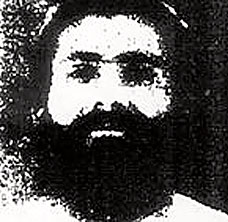
The Pakistanis seem to be doing the best they can to shield Rashid Rauf, short of simply saying, "You can't have him." Pakistani officials didn't even admit they were holding him on charges pertaining to the alleged liquid bombing plot until late in October.

Before that, they said he was being held on two charges, one related to altered travel documents and the other not related to terrorism! They've refused (or simply ignored) a request from Rashid Rauf's family to bring him to court, and they still haven't announced the specific charges under which he is being held.

And maybe they have a good reason for not doing so.

As Nafeez Mosaddeq Ahmed has pointed out, there's been precious little serious discussion of any of this in the British press during the past few months, and none of course on the American side, while airports all over the so-called free world now limit each passenger to a one-liter (1 qt) clear ziplocked plastic bag containing bottles and/or jars of no more than 100ml (3 oz) each.

It may seem extreme but it's better (for the passengers) than the red-hot-alert constraints, where passengers couldn't carry-on any liquid, cream or gel except for mother's milk, and then only if they had a baby with them and then only if the mother tasted the milk before boarding (to show the security guards it was really milk and not acetone or hydrogen peroxide or sulfuric acid!)

In one telling episode, William Blum wrote about a friend who had been prevented from carrying ice cream onto a plane, on the grounds that the ice cream might melt and become a liquid!

And even though Rashid Rauf's name hasn't appeared much in the western press, the Pakistani press has been mentioning him once a week or so, and with more or less the same story-line almost every week, buried amongst other news of the day:

A Pakistani official, asked about the status of extradition treaty negotiations and the prospects of Rashid Rauf being extradited, gives a more-or-less standard non-commital answer which somehow seems to imply that even though there's no extradition treaty, Rashid Rauf may soon be extradited.

And sometimes we see hints that a treaty is in the works or that his extradition is being considered. But so far nothing of the sort has happened.

Perhaps it's because of a lack of evidence?

Meanwhile, it's not just airport security that has changed. Authorities on both sides of the ocean have used the so-called plot to generate tremendous fear and to support a whole new wave of terror alerts, all of which have proved to be bogus or premature or overblown or all of the above.

And in the meantime, habeas corpus has been shredded in the US (not just for foreign terrorists but potentially for any law-abiding American), and Europe has been "harmonising security arrangements", slip-slidin' away to a place marked "continental police state".

So, for instance, there have been long lines and big delays at the airport in Cyprus because each passenger there is entitled to carry-on only a single one-liter clear ziplocked plastic bag containing an unlimited number of bottles and/or jars, each of no more than 100ml.

These restrictions, I must say, make it very difficult for "terrorists" to mix a bomb out of liquid explosives aboard a plane.

By my calculations, if you had...

  • a litre of the right liquids, in the right proportions, and sufficient ice (for the reactants must be kept cold),

  • enough glassware (lab-quality, unless you wish to blow yourself up prematurely without hurting anyone else),

  • enough time (at least six to eight hours, more likely three to four days),

  • proper ventilation (these are strong acids you're working with, and the smell of acetone is not exactly subtle),

  • and a proper filtering system (although an aircraft-quality serviette might do in a pinch -- at any rate this is the least of your technical problems),

  • ...you could possibly create (now pay attention, because this is important!) up to eight grams (a quarter of an ounce) of explosive crystals!

    (You'll excuse me, I hope, if I don't link to the bomb recipe from which I'm borrowing these numbers; I don't want to encourage anyone. I found a page whose owner was ecstatic over getting 8.3 grams of explosive crystals from a batch made in a one-litre flask, and since that was the largest yield I ever saw reported anywhere, 8 grams of crystals per batch seems like a generous estimate.)

    According to experts in the field, if you had a shaped charge, properly packed, and properly placed, you could conceivably knock a hole in the fuselage of a commercial aircraft using only 250 grams (half a pound) of explosive crystals.

    This means it could take as few as 32 passengers, all on the same flight, each carrying-on a litre of the right liquids, in the right proportions, each willing and able to find a separate private area in which to work undisturbed for at least six to eight hours, possibly three or four days.
    They couldn't all work together, of course, because if they pooled their resources and mixed all their liquids together, somebody would probably notice -- and it would smack of conspiracy!

    But if 32 passengers, acting independently, somehow fashioned a shaped charge containing roughly 250 grams of explosive crystals, without actually working together, it wouldn't really be a conspiracy, would it?

    So they might -- just might! -- be able to pull it off. Be very afraid.

    They would probably need only another 50 or 60 passengers in support, carrying-on the required glassware and ice (hopefully in insulated carry-on coolers).

    In other words, it would only take about 80 or 90 terrorists, working together but separately for six or eight hours, or maybe three or four days, to bring down a commercial aircraft using a bomb made from explosive liquids.

    As all can plainly see, the danger is certainly clear and present, the threat will obviously last at least a generation, and this is clearly a good enough reason to shred some fundamental legal rights, such as habeas corpus; we might as well legislate some immunity for war crimes already committed, while we're at it.

    So ... that's the reason for the plastic bags, and all the little bottles and jars, and the warnings about how al-Q'aeda terrorists might revive the liquid bombing plan in order to wreak havoc on unsuspecting intercontinental travelers this holiday season.

    And that's also why Tony Blair wants Rashid Rauf, but of course there's no extradition treaty between Pakistan and the UK, and that's why Tony Blair has just been visiting Pakistan looking for one. He hasn't been successful, not yet anyway.

    But he may not need it right away, as British authorities have announced the trial of the alleged liquid bombers will not begin until 2008 -- probably not until after Easter. So Blair still has time to work on a deal before the "speedy" trial begins. It might cost him another billion, and then again he still might not get it; we can only wait and see.

    If Tony Blair is wondering why he's been having so much trouble with Pakistan, supposedly a key ally in the war against terror, he might pause to consider what may have happened had he arrived in Pakistan three days earlier than he did.
    Had he landed on Tuesday rather than Friday, he could have enjoyed reading about Tanvir Hussain, the retired Pakistani army major, now a member of the Pakistani parliament and in fact the parliamentary Secretary of Defense, who declared on that day in a parliamentary debate that he had been a member of the banned terrorist group, Lashkar-e-Taiba (aka LeT) (aka LT).

    LeT is "the military wing of the Markaz-ud-Dawa-wal-Irshad (MDI), an Islamic fundamentalist organisation which advocates a fully Islamic India, and whose military wing has been involved in bombing attacks against India since 1990", according to Wikipedia.

    India and Pakistan have been at odds for a lifetime, having fought three wars against each other in the past sixty years. And they've just recently begun talking again after a horrific July 11 bombing attack against passenger trains in Mumbai.

    LeT are suspected of involvement in those bombings, as well as many other large and extremely violent attacks, including the Delhi train bombings of October 29, 2005, and the London train bombings of July 7, 2005.

    So this was probably a bad time for a Pakistani MP to say he had been a member of LeT.

    Initially I got the impression he was saying he was a former member. But is that really what he meant when he said "I have been a member of LeT"? Is he a "former member"? Well, not quite.

    According to more detailed accounts, published in India and Australia but not in Pakistan, Tanvir Hussain went on to explain that he is still associated with LeT, he goes to their conventions, he makes speeches for them there, and he gives them additional help when they ask for it.

    He claims he's a jihadi, not a terrorist, and I don't think anyone can argue with him on this point, since everyone knows one man's terrorist is another man's jihadi.

    Anyway, a Pakistani spokesman reportedly said we shouldn't worry about it, that we should focus "on what governments do and not on what individuals say". I'd find his advice easier to take if the individual in question were not part of the government, but nonetheless...

    Plus c'est la meme chose, plus c'est la meme chose.

    In other words, the status is still quo, for the most part. Tanvir Hussain is still an MP and the parliamentary secretary of defense. Nobody in Pakistan is screaming for his resignation, or even for a retraction. They probably just want him to stop talking.

    In the global game of foot-in-mouth, John Kerry's got nothin' on Tanvir Hussain.

    Meanwhile, Tony Blair still doesn't have an extradition treaty, and Rashid Rauf is still in Pakistan, looking more and more unlikely to face extradition. The only substantial difference is the money.

    Tony Blair just gave Pervez Musharraf an additional 250 million pounds for what appears to be three more years of more of the same.

    We're told we're at war against a network, not a country. We're told it's the elusive nature of the terrorist organizations -- networks of small and mostly independent "cells", with operational knowledge shared on a need-to-know basis -- that makes them so difficult to counter.

    Without hinting at how closely this form of organization follows standard CIA tradecraft, I can't avoid mentioning that the way to trace connections in such a network is to "follow the money".

    In this case the money -- an additional 250 million pounds sterling, nearly half a billion more dollars -- went from the government of a country which is said to be fighting terrorism, to the government of another country which is also said to be fighting terrorism, but whose parliamentary secretary of defense is closely affiliated with a notoriously violent terrorist -- oops! notoriously violent jihadi -- organization.

    Does this implicate Tony Blair in international terrorism? Is the UK money-laundering hundreds of millions through Pakistan to known terrorists? Was it simply a misguidedly hoped-for deal that didn't quite work out? Or does Blair sincerely believe that giving millions of pounds to Pakistan to promote non-violent schooling will give him the edge in the phony war on phony terror?

    Who can say? Tony Blair says we're finally fighting terrorism properly, so I guess we're bound to win sooner or later. Whatever that means.

    ===

    eighth in a series

    Wednesday, November 15, 2006

    Slanted Headline Of The Night

    Last night I compiled a list of the most current headlines on the Rumsfeld War Crimes suit. Please read the following headlines carefully. Can you spot the most slanted headline of them all?

  • People's Daily Online, China: Rumsfeld faces war crime lawsuit in Germany

  • Turkish Press, MI: Pentagon: Legal complaint against Rumsfeld unfounded

  • MSNBC: Rumsfeld target of war crimes-related lawsuit

  • Guardian Unlimited: War Crimes Probe Sought For Rumsfeld

  • Belleville News-Democrat: Civil liberties groups push for war-crimes investigation of Rumsfeld

  • AND, South Africa: Group Files Suit In Germany Against Rumsfeld For War Crimes

  • Contra Costa Times, CA: Civil liberties groups push for war-crimes investigation of Rumsfeld

  • Columbus Ledger-Enquirer, GA: Civil liberties groups push for war-crimes investigation of Rumsfeld

  • KFMB, CA: War Crimes Probe Sought for Rumsfeld

  • The State, SC: Civil liberties groups push for war-crimes investigation of Rumsfeld

  • ProgressiveU.org, CA: Rumsfeld charged with War Crimes?

  • Canada.com: Group seeks war crimes probe by Germany of Rumsfeld

  • Kansas City Star, MO: Civil liberties groups push for war-crimes investigation of Rumsfeld

  • Newsday, NY: War Crimes Probe Sought for Rumsfeld

  • Bradenton Herald: Civil liberties groups push for war-crimes investigation of Rumsfeld

  • Monterey County Herald, CA: Civil liberties groups push for war-crimes investigation of Rumsfeld

  • Myrtle Beach Sun News, SC: Civil liberties groups push for war-crimes investigation of Rumsfeld

  • Kentucky.com: Civil liberties groups push for war-crimes investigation of Rumsfeld

  • San Luis Obisbo Tribune, CA: Civil liberties groups push for war-crimes investigation of Rumsfeld

  • Times of India: Lawsuit filed in Germany against Rumsfeld

  • Centre Daily Times, PA: Civil liberties groups push for war-crimes investigation of Rumsfeld

  • Biloxi Sun Herald: Civil liberties groups push for war-crimes investigation of Rumsfeld

  • Jurist: Rumsfeld war crimes complaint filed in Germany

  • New York Times: German Prosecutor Asked to Investigate Rumsfeld

  • Monsters and Critics, UK: Pentagon: Legal complaint against Rumsfeld unfounded

  • BBC News: Rumsfeld faces German legal test

  • CTV, Canada: Group sues to have Rumsfeld investigated

  • Toronto Star: US officials face war crimes suit

  • RAW STORY: Legal complaint against Rumsfeld unfounded

  • What's going on here?

    It is (or should be) common knowledge that the Pentagon sees lying to the enemy as a legitimate tactic. It's quite clear that it considers the American public its enemy. Put two and two together. Why would RAW STORY use the Pentagon's denial for a headline? Even worse, why would it do so without even attributing the denial to the Pentagon? IMO, in this case, the news site that calls itself a "rational alternative" is showing itself to be neither.

    We expect RAW STORY to be better than most other news sources. Are our expectations unrealistic? And ... I hate to ask this, but ... is it more realistic to expect them to be among the worst?

    These are uncomfortable questions. Unfortunately I do not know the answers. But as usual I welcome your opinions.

    P.S. Hopefully I will be back soon with some details of the proceedings in the German courtroom.

    Friday, November 10, 2006

    Phony Terror Reaches Astonishing New Lows

    A thoroughly unauthenticated audio tape, allegedly from the putative "terror group" called "al-Q'aida in Iraq", was released earlier today and has been the subject of some extremely uncritical "reporting", especially in American "news" media.

    Meanwhile, in Britain, the "news" reports are trumpeting a "major" speech from the supposedly "anti-terror" wing of their secret government. Looks like another big terror-alert weekend looming. In light of some recent news (Democrats take control of both houses of Congress, Dumsfeld set to resign and may face charges for war crimes, and so on), it makes sense to say, once again, "How Incredibly Convenient!!"

    From the UPI wire service: Al-Qaida message hails U.S. elections
    A statement reportedly from the new leader of al-Qaida in Iraq saluted Republican defeats in Tuesday's U.S. elections.

    The audio message, said to be from Abu Hamza al-Muhajir, hailed Democrat victories as a move in the right direction as the United States "voted for a level of reason," the BBC said.

    Outgoing U.S. Defense Secretary Donald Rumsfeld stepped down to flee the Iraqi battlefield, the message said, and urged U.S. President Bush to "stay on the battleground."

    Muhajir, also known as Ayyub al-Masri, has been identified by U.S. forces as the successor to Abu Musab al-Zarqawi, killed in a raid last June.
    Ireland Online has an even wider variety of lurid ludicrous details: Al-Qaida: We'll blow up the White House
    Al Qaida’s leader in Iraq today vowed his fighters will never rest until they have blown up the White House and reached Jerusalem.

    In an audio tape made available on militant websites, Abu Hamza al-Muhajir claimed to be winning the war in Iraq and said the US President was “stupid”.
    It's hard to imagine where he got that idea!
    He praised the Republican defeat in the US midterm elections as “reasonable”, and claimed the al Qaida army has 12,000 fighters in Iraq, ready to die for their cause.
    ...
    “We haven’t had enough of your blood yet,” he told the US.

    He called on Mr Bush to remain “steadfast in the battlefield” so al Qaida would have more opportunities to fight his soldiers.

    “We call on the lame duck (Bush) not to hurry up in escaping the same way the defence minister did,” he said, referring to the removal of Donald Rumsfeld as US Defence Secretary following the Democrats’ victory in Midterm elections.

    “They are getting ready to leave, because they are no longer capable of staying,” the al Qaida leader said.

    “Remain steadfast in the battlefield you coward,” he called on the US President.

    “We will not rest from our Jihad until we are under the olive trees of Rumieh and we have blown up the filthiest house – which is called the White House,” al-Muhajir said.
    Blowing up the filthiest house? From under the olive trees of Rumieh? Yeah, sure!

    Of all the media reports I have seen so far, only the BBC has mentioned that the tape is unauthenticated. 'Iraq al-Qaeda' welcomes US poll
    A statement purportedly from the leader of al-Qaeda in Iraq hails the defeat of Republicans in the US mid-term polls.

    The audio message, whose authenticity has not been verified, was published on Islamist websites and was said to be the voice of Abu Hamza al-Muhajir.

    The Democrats' victory in Tuesday's Congressional elections was a move in the right direction, the speaker said.

    Outgoing US Defence Secretary Donald Rumsfeld had stepped down to flee the Iraqi battlefield, he added.
    And so on ... are you scared yet?

    Well, we should be scared, because we know who is behind all this, and we also know that they are ruthless and wicked, fabulously wealthy, and embedded deep within our own government.

    Oops! Did I really say that? Well, what do you know?

    Bring me the alleged Islamist website that hosts this audio tape! Where is it hosted this time? London? Houston? Maryland? And why does it always turn out this way?

    Every major "terrorist" attack in recent memory has been done by "terror cells" heavily infested with agents of CIA and/or FBI and/or MI5 and/or MI6. Every major terror alert has turned out to be phony, overblown, premature or all of the above. And now in Britain, the fear-mongering is moving up a couple of notches.

    From the Independent: MI5 head warns of up to 30 terror plots at work in Britain
    There are up to 30 alleged "mass casualty" terror plots in operation in Britain, as well as hundreds of young British Muslims on a path to radicalisation, the head of MI5 has said.

    In an unprecedented public announcement yesterday, the MI5 director general, Dame Eliza Manningham-Buller, revealed that the caseload of the Security Services had risen by 80 per cent since January, and that the counter-terrorism agency was fighting to keep the rapidly growing threat under control

    Describing the scale of the home-grown terrorist problem, she said MI5 and the police were tackling 200 groups or networks totalling more than 1,600 identified individuals in the UK who were "actively engaged in plotting or facilitating terrorist acts".
    And what is the reason for this unprecendented announcement? Are Britons finally starting to realize that the terror alerts that nearly shut down their airports in August were politically timed and seriously overblown? Or are they just getting a bit jaded?

    For those who are jaded, she adds:
    Islamic militants linked to al -Qa'ida were recruiting teenagers to carry out attacks using chemicals, bacteriological agents, radioactive materials and even nuclear technology.
    And for those who are starting to figure all this out, here's an expecially juicy morsel:
    Dame Manningham-Buller said she was not seeking to be alarmist, and did not wish to stir up fear.
    Oh no! Who would ever suspect that she wished to stir up fear?

    But not to worry! Here comes Tony Blair to the rescue with a statement that, on the face of it, seems to condemn his "anti-terror" program for incompetence. As reported by the New York Times: Blair Says Terrorist Threat to Last ‘a Generation’
    Prime Minister Tony Blair said today that the threat from home-grown Islamic terrorism would last “a generation,” reinforcing a highly unusual warning by the head of the MI5 domestic intelligence agency that some 1,600 suspects in 200 terrorist conspiracies were under surveillance.
    And so on.

    I can never resist the urge to yawn when I listen to this particular chronically lying sack of fertilizer.

    The NYT article takes some pains to reproduce the grand recurring canard of British/American anti-terror spin, which in this instance comes out as:
    Mrs. Manningham-Buller echoed arguments made by Mr. Blair, who has resisted critics’ accusations that his support of the United States in Iraq and Afghanistan had made Britain a target for terrorist attack. “Let there be no doubt about this,” she said, “the international terrorist threat to this country is not new. It began before Iraq, before Afghanistan and before 9/11.”
    As I have pointed out numerous times, apparently without making a dent in the official line, none of this is relevant to anything the critics of the Iraq war have been saying. We are saying the war makes terrorism worse. We never said there was no terrorism before the war started, or before the war in Afghanistan started, or before the obviously false-flagged attacks of 9/11. But I digress.

    The NYT does come close to answering a question I posed earlier, however:
    Historically, the head of MI5 does not make such public pronouncements. Mrs. Manningham-Buller acknowledged in a speech to academics Thursday night: “I rarely speak in public. I prefer to avoid the limelight and get on with my job.”

    But it was a sign of changed times — and, perhaps of MI5’s campaign to secure more government funding and expand its ranks of agents and recruits — that the text of her speech was posted today on the MI5 Web site...
    The campaign to secure more funding is surely only a part of the motivation, is it not?

    Looking at it from another angle, the Times of India plays a politically correct game (given its position) by highlighting the revelation of Pakistani connections, but without tracing them all the way to their source. UK's 'serious' terror threat linked to Pak
    Britain's lead security service is battling to contain a rapidly growing terrorist threat, represented by at least 30 serious plots that "often have links back to Al-Qaida in Pakistan", MI5's chief has revealed in a rare public speech.
    ...
    In the first clear public indication that Pakistan has firmly and damagingly been identified as the locus of international Islamist terrorism, the MI5 chief laid out the dangerous support provided to "largely British foot soldiers (of Al-Qaida) here" by Pakistan-based radical ideologues.

    In a startlingly specific speech, she said, "We are aware of numerous plots to kill people and to damage our economy. What do I mean by numerous? Five? Ten? No, nearer 30 that we currently know of. These plots often have linked back to Al-Qaida in Pakistan and through those links Al-Qaida gives guidance and training to its largely British foot soldiers here on an extensive and growing scale."
    If you're having trouble keeping all this straight, you are certainly not alone.

    Kurt Nimmo has been doing excellent work on this story (and others), and a series of excerpts from his most recent post on the subject will help you to understand where all this terror is coming from:
    “Describing the scale of the home-grown terrorist problem, she said MI5 and the police were tackling 200 groups or networks totalling more than 1,600 identified individuals in the UK who were ‘actively engaged in plotting or facilitating terrorist acts,’” never mind that such terrorist acts rarely come to fruition, usually instead sputtering out into absurd allegations of liquid bombs and other fantastical plots nipped in the bud, or so we are expected to believe, that is after we suspend credibility, again for the umpteenth time.
    ...
    A bit of Google sleuthing produces embarrassing results on the depth and breadth of British involvement in terrorism. For instance, as it now appears, the so-called Dirty War in Northern Ireland was an MI5 affair, with the Brits going so far as to provide “infra-red equipment which was used to provide the IRA with state-of-the-art bomb detonation technology,” according to the Sunday Herald. According to “a former soldier who joined the Provisional IRA at army intelligence’s request,” reported the Guardian in 2002, both MI5 and the FBI were in on the act. As well, it turns out some of the most violent and feared members of the IRA were in fact members of Britain’s special forces, including John Joe Magee, billed as the IRA’s “torturer-in-chief,” again according to Neil Mackay, Home Affairs Editor of the Sunday Herald.
    ...
    British intelligence put Abu Qatada—the “alleged spiritual leader of the al-Qaida terrorist network,” “Osama bin Laden’s right-hand man in Europe,” and “believed by several European countries to be a pivotal figure in international terrorism”—up in a safe house, an assertion apparently corroborated by French intelligence, according to the Guardian. Instead of delivering Qatada to justice, “British security services offered him a chance to escape to Afghanistan,” the Guardian reported elsewhere. In fact, if we are to believe a report published by the Times Online, Qatada “has been revealed as a double agent working for MI5.”
    ...
    Haroon Rashid Aswat, [...] “the mastermind of all the bombings in London,” according to intelligence expert John Loftus [...] had connections to British intelligence and while “the entire British police are out chasing him … one wing of the British government, MI-6 or the British Secret Service, has been hiding him.”
    ...
    According to two French intelligence experts, [...] “British intelligence paid large sums of money to an al-Qaeda cell in Libya in a doomed attempt to assassinate Colonel Gadaffi in 1996 and thwarted early attempts to bring Osama bin Laden to justice,” the London Observer reported in November, 2002.
    ...
    Because “of the sheer scale of what MI5 faces, the issue” of preventing terrorism “is a daunting one,” Manningham-Buller told the department of contemporary British History at Queen Mary College in London. Or rather, considering the above, because of the sheer scale of what MI5, MI6, the CIA, FBI, Mossad have created through collaboration, the issue of preventing “30 alleged ‘mass casualty’ terror plots” will be daunting unless the British people consent to live in a police state.
    Daunting indeed.

    You may notice that some of the most damning indictments of the British intelligence services have come from the French. This may be partially due to political correctness, but as Webster Tarpley has pointed out:
    NATO intelligence is essentially the British and the US acting together [...] De Gaulle kicked NATO out of France in 1966, and the French have been relatively free [...] of the kind of terrorism that you have in Germany and Italy… and Greece where the NATO infrastructure was very strong. So what he was suggesting was that if you kick out NATO, you won’t have a terrorist problem. Meaning, terrorism comes from NATO intelligence...
    Have a nice weekend.

    Boo!

    Sunday, September 10, 2006

    Blair Calls The Kettle Black While Labour Tries Not To Devour Itself

    Afghanistan: British Troops Promised, Denied, Dying ... And NATO Wants More ... Meanwhile: Humanitarian Crisis: Mass Starvation Looms ... but Opium Production Hits Another Record Level

    Originally blogged at The BRAD BLOG | September 10, 2006

    Here's a quick roundup of some relevant stories from far away and even farther. Let's see whether you can spot any connection between these stories and some others, from near and even nearer:

    In Great Britain, as you may already know, there is open revolt among the governing Labour Party.

    From September 6th:
    Gordon Brown scents victory as Blair suffers massive revolt
    Gordon Brown left Downing Street tonight looking like the cat that got the cream.

    After three hours of bad-tempered talks with Tony Blair, the Chancellor still wore a big smile.

    Mr Brown had apparently won a promise that the Premier will finally come clean about his departure plans.

    But sceptical allies of the Chancellor were still asking: Can we really believe Blair this time?

    The Labour crisis came to a head after one of the most tumultuous days Westminster has ever seen.

    Blairite MPs feared the Premier was being pushed to the brink of losing power as:

  • Seven Ministerial Parliamentary aides quit in protest at his refusal to name the day;

  • Junior defence minister Tom Watson resigned minutes before he was due to be sacked for signing a rebel ultimatum to the Premier;

  • His move triggered an acrimonious exchange of letters, with Mr Blair branding him discourteous, disloyal and wrong'.

  • Commons Leader Jack Straw and Education Secretary Alan Johnson met Mr Blair in Downing Street, fuelling the impression of a Premier in crisis.

  • More than 100 MPs hardened their plan to send a delegation into Downing Street this weekend to tell Mr Blair the game is up if he fails to budge.

  • Tory leader David Cameron said the Government was falling apart and called for an end to uncertainty'.


  • The day of drama, unmatched since the downfall of Margaret Thatcher, left Mr Blair at bay and Labour's claim to be a disciplined political force in tatters.
    If you're not familiar with British politics this may make no sense to you. You may be thinking "Labour? That must be like Work, with a U thrown in. And Party, well we all know what that means. So this must be an umbrella group, then; some people who work, and some people who party."

    I'd forgive you if you thought of it like that, but it's not quite right. More on that later, maybe ...

    But that was four days ago. And things didn't work out quite so simply for Gordon Brown. They never do.

    Cabinet turns on Brown in hunt for 'alternative PM'
    Gordon Brown's long-held dream of taking over as Prime Minister received a significant blow this weekend after it was revealed that up to 10 cabinet ministers are discussing backing an 'anyone but Gordon' candidate and that Tony Blair will not give the Chancellor a personal endorsement.

    Senior government figures are threatening to make the contest a bitter referendum on Brown's personal integrity after last week's vicious bout of infighting. They spent Friday discussing their choice of candidate and the mechanics of a bid after concluding they could no longer support him.

    This follows a serious breakdown between the two rival camps, culminating, according to one very close confidant of Tony Blair, in the Prime Minister telling friends: 'I have never known how mendacious he [Gordon] was, how full of mendacity.'
    Did you catch that?

    Not just mendacious but full of mendacity.

    He's a cocky and articulate little prick who spears his opponents with both adjectives (like "mendacious") and nouns (like "mendacity")!!

    Nice, fancy-pants words there, Tony. Who cares what they mean?

    mendacious:
    (adj) lying, given to lying : "a lying witness"; "a mendacious child"
    (adj) intentionally untrue : "a mendacious statement"
    mendacity:
    (n) mendacity (the tendency to be untruthful)
    So ... is this not the world's all-time most ironic example of the line about the kettle and the pot?

    Who could possibly imagine Tony Blair calling anyone mendacious?

    Only a glib, articulate, cocky little prick, a natural-born leader full of mendaciousness who can't quite get the kids to stop fighting.

    Blair Says Labor Party Must End Feuding
    Prime Minister Tony Blair warned on Saturday that Britain's Labor Party would lose power if it did not show it was "hungry for power" and halt the "irredeemably old-fashioned" personal feudings surrounding his succession.

    After a week of bitter infighting and pressure from his rival and onetime ally Gordon Brown, Mr. Blair was forced on Thursday to set a 12-month time-limit on his continued tenure after nine years in office.

    But the feuding has continued.
    ...
    Mr. Blair said, "We are not going to win if we have personal attacks by anybody on anyone because it turns the public off and makes them think we are interested again in ourselves and not in them."
    Right! We have to show that we are hungry for power but we want that power for the public and not for ourselves. Again! Gotcha, Tony!!

    Gordon Brown must be wondering whether he wants the job after all!

    And your prize, Gordon, is ... a poisoned chalice
    The rise of dissent against Blair can be mapped against two events: Labour’s decline in the opinion polls and the alignment of the government’s foreign policy with America’s.
    Those seem like one event to me. I mean, did the polls go south before or after Britain aligned its foreign policy with America's? Or more to the point, if hypothetically just suppose pretend if ever Britain were to cut herself loose from the Americans, would that result in a gain or a loss at the polls? Or maybe we should look at it from a different angle: suppose Britain remains in lockstep synch with the Americans on all "foreign" matters. How much and in what direction could those polls be swayed?

    Here's something else American readers might not understand right away: in Britain, probably because their system of government is so much more primitive than ours, it still matters what people think -- and an unpopular government can be toppled in a heartbeat!

    Some kinda primitive! But I digress...
    Labour finally lost its patience with Blair over his support for Israel in Lebanon. Following the catastrophe of the Iraq war, it was the last straw. The pressure is on Brown to divorce himself from the United States. He has kept (disgracefully) silent on Iraq and Lebanon, so his options are open. But it would be amazing if he began his premiership by pulling out of Iraq (and/or Afghanistan), causing a breach with Washington. He could not easily put an honourable gloss on a British retreat.

    Nor can we assume that the next US president will favour early troop withdrawal. It will be difficult for any presidential candidate to campaign as anti-war without appearing un-American. In any case, most of the presidential hopefuls have a track record of supporting the Iraq war.

    So it is likely that Brown, struggling to control a party accustomed to flexing its muscles and from which he cannot demand loyalty, will trail in the polls, and will not reverse Blair’s unpopular foreign policy positions.
    So ... the next British Prime Minister -- no matter who -- is going to be bound by a blood oath, one sworn in his absence, no less: Stay The Course!

    Staying the course is not going to be easy; it was never going to be easy; only the maddest of hatters would even bring the word "easy" close to a phrase like "troops in Afghanistan".

    Britain has fallen down a rat-hole.
    Into the Long War
    Many people expected that the termination of the Taliban regime nearly five years ago would mean that Afghanistan would no longer be a country of concern, and would be able to make the transition to peace for the first time in nearly three decades.

    Instead, the past few months have seen a Taliban revival that is causing concern around the world and may suggest that the 2001 war is actually far from over.

    Some analysts were predicting a Taliban resurgence last summer, but that did not happen, almost certainly because the Taliban were developing their capabilities and planning for the longer term.

    Instead, it has been this year that has seen the upsurge, most worryingly with Taliban units able to operate in groups of a hundred or more, in marked contrast to their much smaller-scale activities in recent years.
    ... where stuff like this happens with ever-increasing frequency:

    Afghan suicide attack kills 16
    A suicide bomber smashed his car into an American military vehicle just yards from the U.S. Embassy in downtown Kabul on Friday morning, killing as many as 16 people and wounding 29, Afghan and American officials said.

    The bombing was one of the most powerful to shake the capital since American forces drove the Taliban from power in 2001. The U.S. military issued a statement confirming the deaths of two American soldiers and said two others were wounded.

    The Afghan police at the scene put the toll at 11 civilians and five American soldiers killed, including a woman soldier. Witnesses said they saw three American soldiers lying in the street. Other soldiers might also have been killed, they said, as the blast ripped apart the armored Humvee, making it hard to believe anyone inside could have survived.

    Soldiers later pulled shredded American uniforms off the trees and picked up body parts. A seat from the Humvee was left hanging in a tree.

    Kabul residents said they were bracing for still more violence as they prepared to mark the five-year anniversary on Saturday of the death of the warlord Ahmed Shah Masood, who was killed by two Qaida suicide bombers in an assassination linked to the 9/11 attacks. The Kabul bombing came amid a sharp escalation of violence in Afghanistan, where NATO and American military commanders are waging an offensive to crush a Taliban insurgency that has revived with unexpected strength this year.

    Suicide bombers have struck more than 50 times in the last year, killing more than 100 civilians. Most often the attacks have come in the country's south, where the insurgency thrives.
    But don't worry! We support the troops! We've got your back!! Yes Indeed and Jolly Good, Old Chap! ... and Let's Roll! too ... but in the meantime it turns out that Britain originally promised to send more troops to help the troops already there; then didn't send 'em. Guess who got ambushed? Oops!

    Troops die as UK holds back Afghan reinforcements
    BRITAIN agreed to provide an extra 800 troops to allied forces fighting the Taliban in southern Afghanistan but later withdrew the offer, Nato officials disclosed last week.

    Lieutenant General David Richards, the commander of Nato forces in Afghanistan, planned to use the 800-man force as troubleshooters, sending them into any area where fighting broke out.

    However, John Reid, then the defence secretary, was so angry at the reluctance of other Nato countries to supply troops that the offer was retracted.

    Reid, who famously said that he hoped British troops would leave Afghanistan without firing a single shot, indicated that the UK would send no more troops other than the 3,300 men to be based in Helmand province.

    Last week the US general in charge of Nato made the obvious link between the shortage of troops and the casualties faced by the allied forces in southern Afghanistan.

    Appealing to Nato countries to send more soldiers, General James Jones, Supreme Allied Commander Europe, said: “It will help us to reduce casualties and bring this to a successful conclusion in a short period of time.”
    Well, that's what they say. That's what they always say ...

    But would sending 'em have been an even bigger mistake?

    We may find out soon because NATO wants more ...

    NATO Officials Want More Troops for Afghanistan
    Senior military officials from NATO’s 26 nations agreed Saturday that they needed more troops and fewer limitations on the use of their forces to step up the fight against insurgents in the violent south of Afghanistan.

    NATO planners have said they want 2,000 to 2,500 extra troops, plus helicopters and transport aircraft, to fuel the offensive in the south.

    “Our collective assessment is that we are satisfied with military-related progress to date, particularly in the north and in the west but less so in the south,” Gen. Ray Henault, a Canadian who was chairman of the talks, said at a news conference.
    ...
    “Raising the number of troops will be a political decision,” he added.
    Hmmmm ... a political decision? Hmmmm ... hadn't thought of that before!

    What to do? What to do?

    Well, what are our frozen friends thinking?

    Funny you should ask. There's a loud and growing chorus of "get us outta there" being sung in The Great White North:
    NDP delegates vote for Afghan troop pullout
    The New Democratic Party has made it official party policy to oppose the current mission in Afghanistan and to call for the immediate withdrawal of Canadian troops from there.

    On Saturday, NDP delegates at a party convention in Quebec voted overwhelmingly in favour of leader Jack Layton's call for a pullout.

    About 90 per cent of more than 1,500 delegates voted for a "safe and immediate" withdrawal from the region, which has seen a spike in Canadian casualties recently.

    Sustained applause swept over the convention floor after officials announced the vote results.

    "We have a really strong show of support from our members here today," Layton told reporters following the vote.

    "Now we're calling on Canadians to join with us in calling on the Harper government to change the track he's currently on with (U.S. President) George Bush."
    Oooh, a great many Canadians are very unhappy with their new pro-US minority government ... and for a variety of reasons:

    NDP slams Harper Tories
    NDP Leader Jack Layton saved his toughest words for Harper's foreign policy, which he said is moving in lockstep with U.S. President George W. Bush, while avoiding the world's most significant issues.

    "When it comes to those issues affecting human security on this planet, our government is dramatically and significantly failing to take action," Layton told reporters.

    "All of the focus has been on the issues and the world view as identified by George Bush and what he regards to be the greatest threat," Layton said.

    Thus, he said, the Conservatives are ignoring crises such as the AIDS pandemic, global poverty and climate change.

    "The toll is taken in lives. This isn't political rhetoric," he said.
    ...
    Speaking at the convention was an Afghan parliamentarian who says Canadian soldiers are fighting to sustain a government that includes murderers, rapists, drug-dealers and warlords.

    Malalai Joya says the new government is just as repressive as the Taliban and is even more dangerous because it has powerful international support.

    "They are like brothers of the Taliban and this is the main reason why the security situation in Afghanistan is getting worse and worse," Joya told Canadian Press.
    ... so the battles continue, have continued, will continue, have always continued, will always continue ...

    Nato forces battle Taliban in southern Afghanistan
    Nato forces battled Taliban holdouts in the deserts of southern Afghanistan today amid a security crackdown in the capital after at least 16 people were killed by a suicide bomber.

    Ali Shah Paktiwal, head of the police crime bureau, said officers were checking every main intersection in Kabul after Friday's blast near the US embassy, which killed at least two American soldiers.
    ...
    A resurgent Taliban have mounted daily attacks during the summer, primarily against foreign forces in the south where Nato took over security from the United States at the end of July.
    ...
    Many military officials and analysts say the fighting in Afghanistan is now heavier and worse than Iraq.
    ...
    More than 2,300 people have died his year in the Taliban resurgence that has led to the heaviest fighting since US-led troops toppled the hard-line Islamists.
    ...
    The guerrillas have moved beyond small-scale hit-and-run operations to pitched battles and larger strikes, sheltering and training in Pakistan despite efforts by Islamabad to stop them.
    What to do? What to do?

    The mixed messages don't really help much, truth be told.

    Taliban `surrounded' in stronghold -- But general wants 2,000 more troops
    PANJWAII, Afghanistan—Canadian commanders said yesterday a NATO assault in southern Afghanistan has Taliban forces "surrounded" and on the verge of collapse.

    But a different assessment seemed to come from Warsaw, where a Canadian general said at least 2,000 more North Atlantic Treaty Organization troops are needed to battle the region's unexpectedly strong insurgency.
    ...
    "There's good indication that they are on the brink of collapse in a number of different areas," said Lavoie, commander of Canadian troops on the ground in Afghanistan. He gave few details as to how he reached the conclusion.

    "Like most insurgents, they don't have the sustainment ability to have long, protracted engagements. What we see is mostly hit-and-run tactics."
    Mostly Hit-And-Run Tactics? This is worth mentioning? This is surprising?

    Sniff Sniff Sniff. Fishy Fishy Fishy. They're using hit-and-run tactics! Who could have guessed??

    What to do? What to do?

    Nato Afghan troops talks continue
    A number of Nato soldiers, most of them British or Canadian, have been killed in recent weeks.

    Gen Henault urged member states to send "all the people and the capability" that had been signed up to.

    "We are currently at about 85% of the requirements and want the remainder," he was quoted as saying by AFP news agency.
    ...
    Officials from Turkey, Germany and Italy have expressed reluctance to move their troops from reconstruction work in safer parts of Afghanistan to the troubled south, our correspondent adds.
    Of course, all this is doing the people of Afghanistan an enormous amount of good:

    UK charity warns of Afghan famine

    Millions of people in Afghanistan face starvation after a drought destroyed crops, a UK charity has warned.

    A Christian Aid survey of 66 villages suggests farmers in the worst affected areas have lost all their produce.

    The aid agency is urging the British government and international bodies to give money to prevent people starving in north and west Afghanistan.

    The crop failure comes as fighting continues in the south between the Nato-led troops and the Taleban.

    Most of the water has dried up in the provinces of Herat, Badghis and Ghor, and the wheat harvest is down by 90% to 100% in parts of Faryab province, the study indicates.

    The Afghan government has set up a drought appeal which needs £41m.
    Well, not all the people are starving. In fact some of them are making money by the kilogram!

    Afghanistan ready to flood Europe with first-grade heroin
    For the umpteenth time now, Afghanistan is breaking all records in opium production, and is ready to flood Europe with first-grade heroin.

    According to the United Nations Office on Drugs and Crime (UNODC), the area sown to opium poppy has increased this year by 59%, and reached 165,000 hectares against 100,000 hectares last year, while the gross opium harvest will amount to 6,100 tons.

    Afghan experts maintain that this year opium will be exceedingly rich in morphine. A mere seven kilograms of raw opium will produce one kilogram of heroin.

    This ratio is very rare. Usually it takes from 10 to 15 kilograms of opium to make this amount.
    ...
    UNODC Executive Director Antonio Maria Costa has dispelled the illusions about Europe's potential anti-drug action at the international conference on Afghan drugs in Moscow. In his words, pilot ISAF involvement for the destruction of opium fields and chemical labs did not produce the desired effect in 2005, but only generated tension in relations with the locals. Now the efforts will concentrate exclusively on logistics and training of the Afghan personnel.

    Inadvertently, Maria Costa also put an end to the myth about "caravans with drugs" next to the U.S. and ISAF troops. There are caravans indeed, but with precursors rather than drugs both in Afghanistan, and especially around it. Precursor is any chemical reagent, which takes part in the production of a toxic chemical by any method. From two to six tons of acetic acid anhydride is a reagent required to produce heroin from one ton of raw opium.

    Maria Costa said that more than 10,000 tons of this anhydride was brought to Afghanistan last year to produce heroin from the 4,000 tons of raw opium harvested. This was a real caravan of more than 500 twenty-ton trailers.

    The acetic acid anhydride is not made in Afghanistan, and is only available in China, India, and Russia. It is a real mystery how such caravans can remain unnoticed in Afghanistan with its poor road network, or in approaches to it.
    It can't ALL be about money, can it? No, not quite!

    Al Qaeda Finds Its Center of Gravity
    OVER the last year, as Iran, Iraq and Lebanon have dominated headlines, hopes of gaining firmer control of a largely forgotten corner of the war on terrorism — the lawless Pakistan-Afghanistan border region — have quietly evaporated.

    On Tuesday, the Pakistani government signed a “truce” with militants who have resisted Pakistani military efforts to gain control of the region, which is roughly the size of Delaware. The agreement, which lets militants remain in the area as long as they promised to halt attacks, immediately set off concern among American analysts.

    Al Qaeda’s surviving leadership is suspected of using the border areas as a base of operation to support international terrorist attacks, including possibly the July 2005 London subway bombings. Meanwhile, the Taliban leadership is widely believed to be using another border area to direct spiraling attacks in Afghanistan.

    “There’s a link with broader international terrorism,” said Robert Grenier, the former top counterterrorism official for the Central Intelligence Agency. “There’s a link with what is happening in Afghanistan. Al Qaeda, such as it is now, really has its center of gravity in the area.”
    ...
    Analysts say the problem in the border region is an explosive mix of conditions: a lack of government authority, a vast amount of weaponry and the rise of Islamic militancy. Until the 1980’s, the area was ruled by local tribes, whose brute self-government kept the population isolated and impoverished but allowed for a degree of stability.

    In the 1980’s, the American-backed anti-Soviet jihad unfolded in the region and began to wear away longstanding tribal structures. Huge piles of weapons and cash empowered Islamist organizations to open dozens of training camps, hard-line mosques and conservative religious schools along the border. In the 1990’s, the Taliban emerged there.
    Huge piles of weapons and cash from where?

    The Taliban emerged how?

    You can start connecting the dots now ...

    But no matter what sorts of connections you make, always remember: there's
    One friend Britain must stand by
    If the next prime minister is a real leader, and not a mere implementer of the latest public opinion trends, he will take a firm stand against the seductive anti-Americanism that has Britain and much of Europe in its grip.

    He should state, categorically, that whatever our reservations, whatever our irritations, Britain will stand with America. Not because Britain is a weaker power that has little choice, or in the hope of some quid pro quo, but because it is the right thing to do.
    ...
    The post-Blair foreign policy should above all seek to elevate the British public’s vision above the trials and errors of the past five years. It should remind the people that America represents still, as it has for the past 60 years, the last best hope of freedom.
    One would hope for a slightly sharper analysis, at this point, surely. Dismissing all the deliberate and clearly criminal behavior of the Bush administration(s) as "trials and errors"??? Puh-lease!

    But on the other hand, "elevating the British public's vision" might be a good idea -- if their collective vision could somehow be elevated to the point where they could recognize what they -- and we -- are dealing with here!!

    Oops! I nearly forgot: If you're a world leader, it almost never hurts to be away from home during a domestic crisis, especially if you can can spend some of your time impersonating a statesman.

    Blair to meet Palestinian leader
    Tony Blair is to meet the president of the Palestinian Authority on the second day of his visit to the Middle East.

    The prime minister's meeting with Mahmoud Abbas comes a day after he met the Israeli Prime Minister Ehud Olmert.

    Mr Olmert said he was ready to meet the Palestinian leader to advance peace efforts. It follows Mr Abbas's calls for fresh negotiations with Israel.

    Mr Blair will not be meeting the leaders of the Hamas-controlled Palestinian government.
    Well then. I guess that's settled, too.

    What else? Only one question still outstanding, I believe. And the question is: Why?

    Why is Tony Blair such a glib articulate little prick?

    Because that's exactly the type that was needed to play the role he has played -- the role he will allegedly vacate before the end of May, 2007. Supposedly.

    Many Americans do not "get" this. And that's easy to understand, because in America, the type needed to play the corresponding role is almost the opposite: a glib inarticulate cocky little prick.

    And you see, the glib inarticulate cocky little prick we have in America right now is so thoroughly incompetent -- not so much "intellectually challenged" as "comprehensively defeated" -- that I would have bet (Euros to crumpets) on the glib articulate cocky little prick being in office long after the glib inarticulate cocky little prick was dismissed. Or hanged. Or both.

    But apparently I was wrong. This makes twice so far that I've been wrong. Oh well. No wonder I don't make my living at the racetrack! But don't tell anyone, and I'll cover for it by insisting I've never been wrong at all, and if that doesn't work I'll call all my critics "crazy conspiracy theorists" ... and it that fails, I'll do my statesman impression.

    Should keep me going till the spring, anyway ... maybe even longer ...

    Hey, Wait!!! I've got an idea!!

    What if I Launched a Peace Mission???

    Blair Launches Mideast Peace Mission
    Mr. Blair opened his visit in Jerusalem, meeting with Israeli Prime Minister Ehud Olmert. At a joint news conference, the British Prime Minister said they discussed shoring up the fragile cease-fire in Lebanon and reviving the Israeli-Palestinian peace process.

    "The majority of people here, I'm sure, want to see what the majority of people in my country want to see, which is a Middle East that is stable, and democratic, with people living side by side in peace. It is very easy to be pessimistic in the light of everything that has happened recently, but I do believe that with good will and the right leadership it can be done," he said.
    Sure, Tony. But where is "the right leadership" gonna come from? Unless it turns up by next May, you're cooked!

    Ahhh, well, never mind. You're cooked anyway.